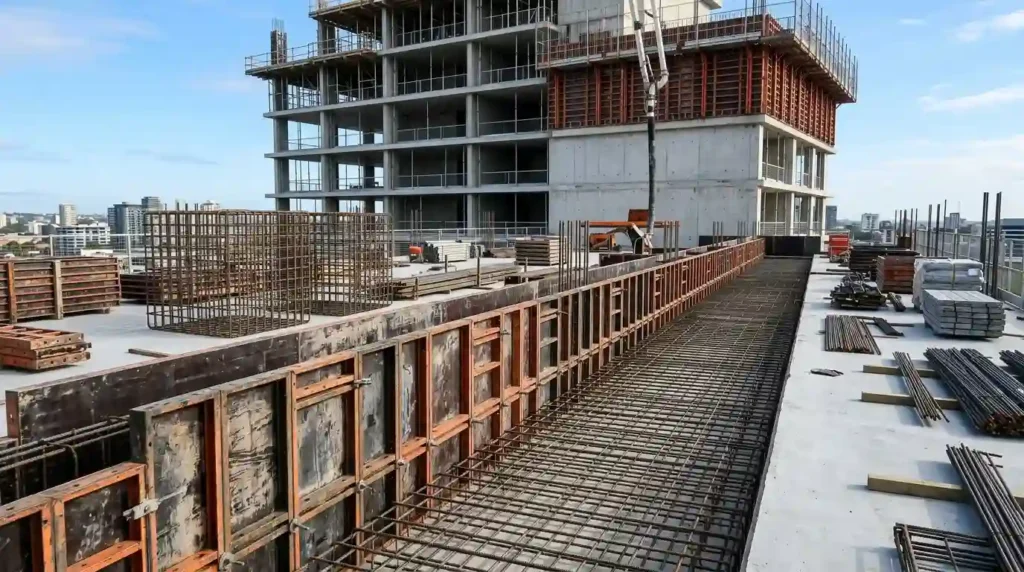
Waste in construction is often treated as something that happens at the end of a job, when skip bins are full, offcuts are piling up and teams are clearing space for the next stage. In reality, waste usually begins much earlier. It starts in planning, sequencing, coordination and the everyday site decisions that shape how form, reo and pour activities move.
In FRP construction, where formwork, steel fixing and concrete placement are closely connected, one missed detail can create unnecessary material use, rework, delays and avoidable cost. Sustainable formwork is not only about choosing greener materials. It is about designing smarter systems, reducing waste before it occurs, and making every stage of the structural package work with better intent.
For developers, construction professionals, industry partners, suppliers and clients delivering large-scale projects, sustainability now needs to sit beside productivity, safety and quality. Most countries are placing stronger expectations on construction waste reduction, circular economy practices and more efficient use of resources. Construction and demolition waste remains a major challenge, with large volumes of concrete, masonry, metals, timber and related materials requiring better recovery and reuse pathways.
This is where Future Form can bring practical value to the conversation. Through its integrated FRP solutions, Future Form supports clients with coordinated formwork, steel fixing and concrete planning that helps reduce waste, improve sequencing and strengthen structural package delivery. Backed by an experienced team that understands the pressures of large-scale construction, Future Form helps sustainability move from a project goal into a practical part of how FRP work is planned and delivered.
Why sustainable formwork matters in FRP construction
Formwork is temporary, but its impact is not. It shapes the concrete structure, supports site productivity and influences how efficiently reo and pour stages can follow. When formwork is poorly planned, incorrectly installed or changed too late, the waste can show up in multiple ways: damaged sheets, excess timber, unused materials, concrete over-ordering, incorrect steel fixing, patching, rework and extended labour hours.
Sustainable formwork matters because it targets one of the most practical waste points in FRP. Rather than focusing only on what can be recycled later, it asks a better question: how can the project avoid generating waste in the first place?
Reusable, repairable and recyclable formwork systems can reduce reliance on single-use materials, especially when they are selected early and matched properly to the structure. Research into reusable formwork also shows that formwork material choice affects environmental outcomes, embodied energy and life-cycle cost, which makes early system selection an important project decision.
Waste starts when form, reo and pour are disconnected
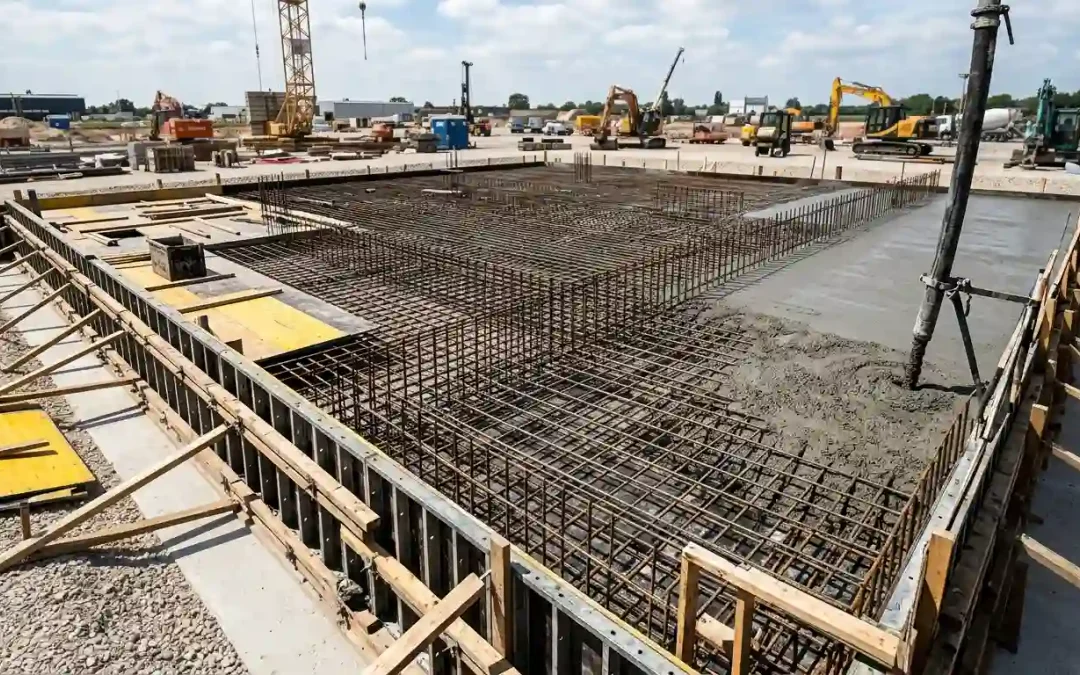
One of the biggest waste drivers in FRP construction is disconnected coordination. If formwork is planned separately from reo, and reo is planned separately from the pour, the project becomes more vulnerable to clashes, late changes and site inefficiencies.
For example, a formwork adjustment may look minor on paper. On site, it can affect reo placement, access, concrete volume, pour sequencing and inspection timing. If those flow-on effects are not considered, teams may be forced to cut, modify, remove or reinstall work that could have been coordinated earlier.
This is why integrated FRP solutions are important. When FRP contractors understand the relationship between form, reo and pour, they can identify waste risks before they become expensive site problems. Good coordination reduces double handling, limits unnecessary material movement and helps each trade work from a clearer plan.
Smarter formwork reuse and material control
One of the most effective ways to reduce waste is to reuse formwork wherever practical. However, reuse only works when materials are protected, stored, handled and planned properly. A reusable formwork system that is damaged through poor site handling can quickly lose its sustainability value.
Smarter reuse starts with standardisation. Repeating panel sizes, aligning design zones and reducing unnecessary one-off modifications can help increase the number of formwork cycles. This is especially valuable on large-scale projects where repeated structural elements create opportunities for system efficiency.
Material control also matters. Ordering too much “just in case” may feel safe, but it often leads to excess stock, site congestion and damaged materials. Ordering too little can cause delays and rushed substitutions. The better approach is accurate forecasting, clear inventory tracking and practical communication between planning teams and site crews.
Future Form can support this by applying experience across the structural package, helping clients consider how formwork choices will affect downstream reo and pour activities. The goal is not just less waste in the formwork area. It is a cleaner and more efficient FRP construction process overall.
Better concrete planning reduces waste at the pour
Concrete waste is one of the most visible signs of poor planning. Over-ordering, rushed changes, failed inspections, poor sequencing and unclear pour breaks can all lead to wasted concrete. Once concrete is batched and delivered, the margin for error becomes much smaller.
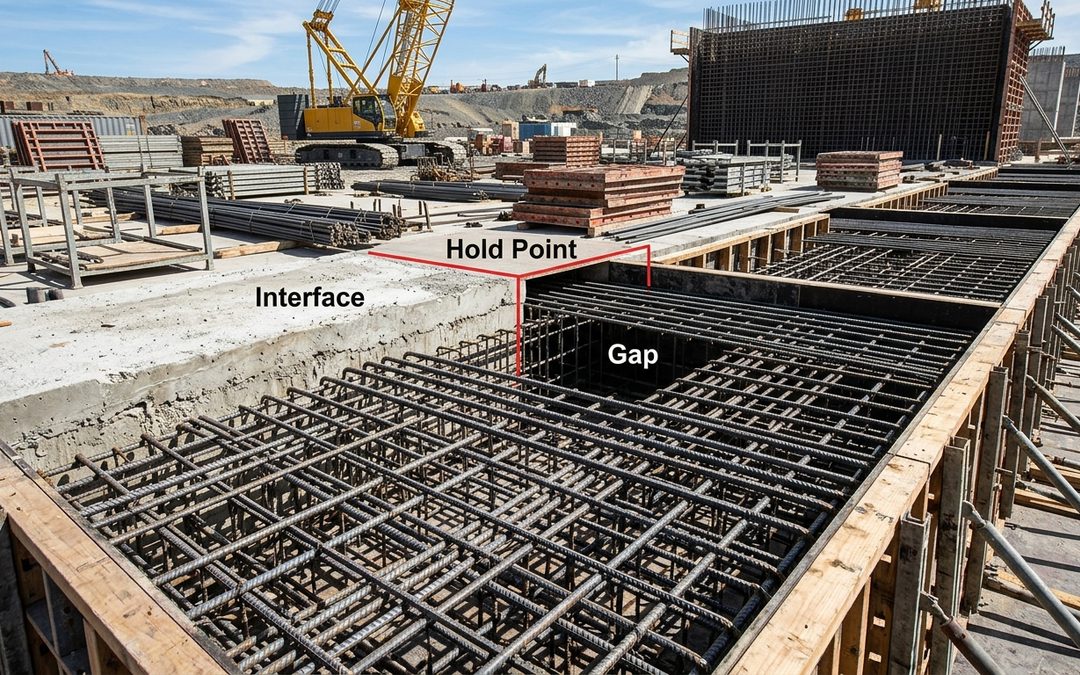
Sustainable FRP construction requires better concrete planning before pour day. This includes accurate volume calculations, clear pour sequencing, coordinated access, confirmed formwork readiness, completed steel fixing checks and properly communicated hold points.
A strong pour is rarely the result of one good decision. It is the result of many connected decisions made earlier. When the form is right, the reo is correct and the pour plan is clear, there is less risk of waste, rejection, over-supply or rework.
This is also where quality control supports sustainability. Defects are not only a quality issue. They are a waste issue. Every patch, correction, delay or re-pour consumes additional material, labour and time. Reducing defects helps reduce waste while protecting the structural outcome.
Accurate steel fixing helps prevent hidden waste
Steel fixing may not always be the first thing people think of when discussing sustainable formwork, but reo accuracy is central to waste reduction. Incorrect bar placement, missed laps, poor cover, congestion or late design clarification can all create rework.
The challenge is that steel fixing errors can remain hidden until inspections, concrete placement or later structural checks. By then, fixing the issue may require removing work, delaying the pour or modifying the sequence. That means more labour, more material handling and more pressure on the programme.
Accurate steel fixing supports efficient FRP delivery because it keeps the structural package moving as intended. It also helps ensure the concrete pour can proceed without unnecessary disruption. In sustainable FRP construction, every avoided correction matters.
Future Form’s integrated approach helps reduce this risk by treating reo as part of the full FRP sequence, not as an isolated task. When steel fixing is planned alongside formwork and concrete, teams can better manage access, inspections and sequencing before waste is created.
Efficient sequencing creates cleaner sites
Site sequencing has a direct impact on waste. Poor sequencing can cause double handling, damaged materials, blocked access, rushed work and unnecessary waiting time. A congested site can also increase the chance of materials being moved, stacked, cut or replaced more often than needed.
Efficient sequencing allows form, reo and pour activities to follow a logical flow. Materials arrive when they are needed. Crews understand what comes next. Inspection points are clearer. Work areas can be maintained with less clutter and fewer disruptions.
This is not only better for sustainability. It is also better for safety and productivity. Formwork and falsework guidance places strong emphasis on planning, design, erection, alteration, maintenance and removal because these activities carry practical risks when not managed properly. Better planning supports safer work and can also reduce the waste that comes from rushed or reactive decisions.
Sustainability is also a commercial decision
Sustainability is sometimes viewed as a separate environmental goal, but in FRP construction it is closely tied to commercial performance. Reducing waste can reduce unnecessary material costs, labour hours, disposal fees and programme delays. It can also improve site organisation, support quality outcomes and strengthen client confidence.
For large-scale projects, small efficiencies can multiply quickly. A small amount of avoidable waste repeated across levels, zones or pours can become a significant cost. The same is true for rework. One preventable coordination issue may create a chain reaction that affects formwork, steel fixing, concrete supply, inspections and programme certainty.
That is why sustainable formwork should be seen as part of strong project delivery. It is not an add-on. It is a smarter way to manage resources, protect the structural package and keep FRP construction moving with fewer avoidable interruptions.
How Future Form supports waste reduction
Reducing waste in FRP construction starts with looking at the full structural package, not just one stage of the build. Future Form can support clients by bringing sustainability into the way FRP work is planned and delivered. This includes considering formwork reuse, improving sequencing, coordinating reo and pour requirements, reducing rework risk and applying practical quality control across the structural package.
The value of integrated FRP solutions is that they create a more connected view of the work. Instead of treating form, reo and pour as separate activities, Future Form can help align the full FRP process so decisions made in one area do not create waste in another.
For developers, builders, consultants, suppliers and project teams, this approach can help reduce uncertainty. It supports cleaner sites, more efficient resource use and better control over structural delivery. It also reflects where the construction industry is heading, with greater focus on circular economy thinking, material efficiency and responsible project outcomes.
Sustainability as a project delivery standard
The construction industry is under increasing pressure to improve its environmental performance. Clients, particularly in the institutional, government and commercial sectors, are setting sustainability targets that flow directly into their procurement decisions. Green Star ratings, embodied carbon targets and waste reduction benchmarks are becoming standard elements of project briefs.
For FRP contractors and structural package providers, this creates both a challenge and an opportunity. The challenge is that meeting these requirements demands a higher level of planning, coordination and documentation than many teams have historically invested in. The opportunity is that those who can demonstrate genuine sustainability outcomes, not just aspirations, will be better positioned to win work, retain clients and build long-term partnerships.
At Future Form, sustainability is viewed as a project delivery standard, not an add-on. It is part of how projects are planned, how teams communicate and how successful outcomes are measured. When a client reduces concrete waste on a major pour, or achieves a clean formwork cycle with no remediation required, those are sustainability wins. They are also delivery wins. The two are inseparable.
The construction industry still has a long way to go, but the path forward does not need to be complicated. It starts with better decisions: smarter formwork selection, more accurate steel fixing, tighter concrete planning and more integrated sequencing. It starts with treating the full form, reo and pour cycle as a system, then holding that system to a higher standard.
Building with less waste and better intent
Sustainable formwork is not about making construction slower or more complicated. It is about making the right decisions earlier so the work can move more smoothly on site. In FRP construction, waste reduction starts with coordination. It starts with understanding how formwork decisions affect steel fixing, how reo affects the pour, and how each stage contributes to the final structural package.
The most effective FRP contractors are not only focused on completing the next task. They are thinking about the full sequence, the materials being used, the risks of rework and the quality of the final result.
Future Form’s approach positions sustainability as part of reliable project delivery. Through smarter planning, efficient formwork systems, accurate steel fixing, coordinated concrete planning and integrated FRP solutions, projects can reduce waste while still meeting the demands of large-scale construction.
For clients looking to build with more control, less waste and stronger structural outcomes, sustainable FRP delivery is a practical place to start. To continue the conversation around cleaner, more coordinated FRP construction, Future Form’s team can help project partners explore practical ways to improve form, reo and pour outcomes from the early planning stage through to delivery.
References
Balasbaneh, A. T., et al. (2024). Life cycle assessment and economic analysis of reusable formwork materials in building construction. Cleaner Engineering and Technology. Retrieved from: https://www.sciencedirect.com/science/article/pii/S2090447923004744
Safe Work Australia. (2014). Formwork and falsework: General guide. Retrieved from: https://www.safeworkaustralia.gov.au/system/files/documents/1702/formwork-falsework-general-guide.pdf
SafeWork NSW. (2021). Formwork code of practice. Retrieved from: https://www.safework.nsw.gov.au/__data/assets/pdf_file/0004/845887/Formwork-code-of-practice.pdf
She, Y., et al. (2024). Circular economy-related strategies to minimise construction and demolition waste in construction projects. Buildings, 14(8), 2487. Retrieved from: https://www.mdpi.com/2075-5309/14/8/2487
Wijewickrama, M. K. C. S., et al. (2022). Construction and demolition waste management: A mini-review. Retrieved from: https://research.usq.edu.au/download/15ff0115fd3682595d56edaf0547db8e8fe90649fce0efa512f3d6a4b4ff09c0/422436/Author%20Accepted%20Manuscript_Construction%20and%20demolition%20waste%20management%20in%20Australia_A%20mini-review.pdf
Zhang, H., et al. (2024). Integrated benefits of sustainable utilisation of construction and demolition waste. Sustainability, 16(19), 8459. Retrieved from: https://www.mdpi.com/2071-1050/16/19/8459