
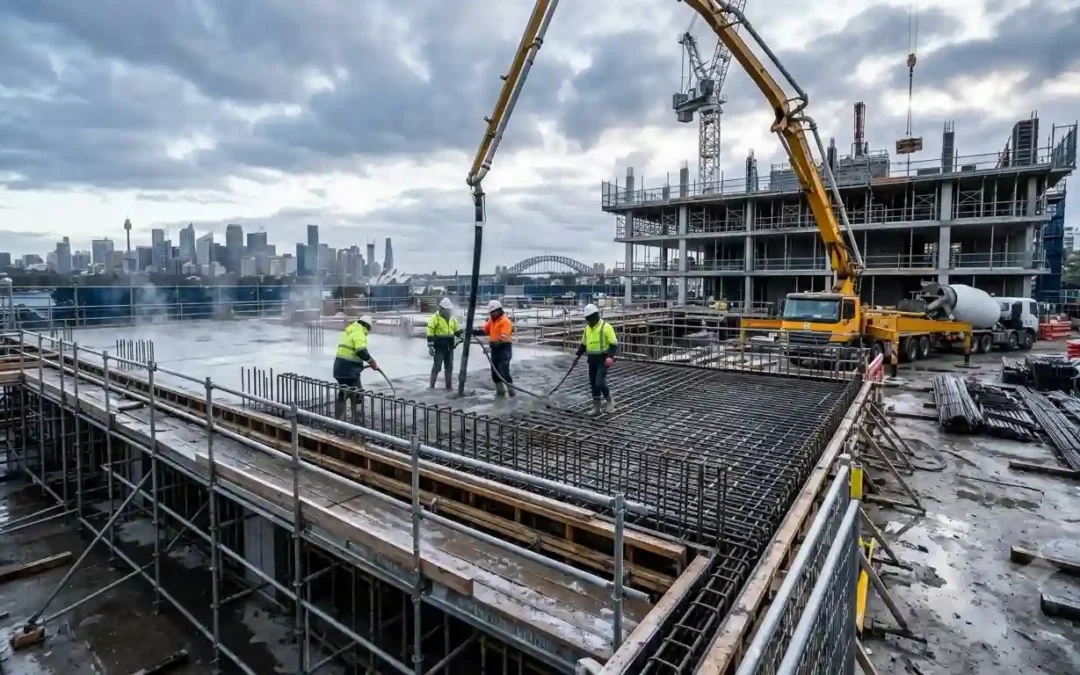
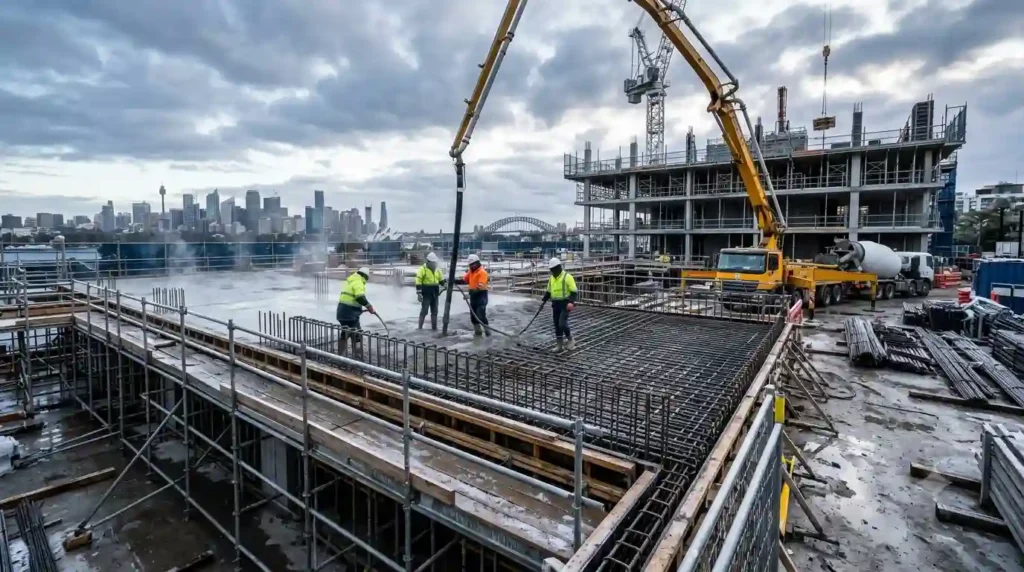
Winter can significantly change how structural works are delivered across construction sites. Lower temperatures, shorter daylight hours, wet surfaces, strong winds and restricted access can all influence how formwork, steel fixing and concrete pours are prepared and completed.
In this blog, FRP means form, reo and pour: the connected delivery of formwork, reinforcement or steel fixing, and concrete placement. Each stage depends on the one before it, which means winter conditions affecting one part of the process can quickly influence the entire structural package.
For developers, builders, construction professionals, industry partners, suppliers and clients delivering large-scale projects, it is important to understand how cold weather changes FRP delivery and what should be considered before work begins.
As an experienced FRP contractor, Future Form supports major construction projects through coordinated structural delivery. Its formwork, steel fixing and concrete services are supported by an experienced project and delivery team that understands the importance of communication, sequencing and consistent execution across every stage of the structural package.
Winter FRP is not simply about continuing work through lower temperatures. It requires stronger sequencing, closer communication and a more realistic approach to productivity, safety and performance.
Why winter changes the FRP delivery cycle
FRP delivery relies on a continuous sequence of activities.
The form must be erected, checked and prepared. Reo must then be installed accurately and inspected. Once those stages are complete, concrete can be poured, compacted, finished and cured before the next section of work progresses.
During warmer and drier conditions, this sequence may follow a relatively predictable rhythm. In cold weather, however, additional variables can disrupt that flow.
Rain may delay deck preparation. Wet surfaces may slow steel fixing. Strong winds may affect crane lifts or concrete pump operations. Shorter daylight hours may reduce the available time for inspections, finishing and clean-up. Concrete may also take longer to gain the early strength required for stripping or loading.
A delay in one stage can create a chain reaction across the structural package.
For example, if formwork preparation is delayed by overnight rain, reo installation may start later than expected. This can push inspections into the afternoon and place pressure on the scheduled pour. If the pour is moved, it may affect concrete bookings, pump availability, labour allocation and the following section of the programme.
This is why effective FRP coordination becomes especially important during winter.
The aim should not be to rush through delays or force warm-weather production targets into colder conditions. Instead, project teams should use realistic sequencing and clear communication to maintain safer and more consistent delivery.
How cold weather affects concrete curing
Concrete performance is one of the most important considerations during winter FRP delivery.
Concrete strength develops through a chemical reaction known as hydration. This process is affected by temperature. When temperatures fall, the rate of hydration generally slows, meaning concrete may take longer to develop the early strength required for stripping formwork, applying construction loads or progressing to the next stage.
This does not mean concrete cannot be poured in cold weather. It means the pour may require additional controls and closer monitoring.
The concrete mix, ambient temperature, element type, concrete temperature, exposure, curing method and engineering requirements should all be considered before the pour begins.
Depending on the project, the response may include adjusting pour times, using approved admixtures, protecting exposed surfaces, monitoring temperatures or applying insulated coverings.
The timing of the pour can also make a difference.
A pour scheduled for the coldest part of the morning may create different risks from one scheduled later in the day. However, delaying the pour too far may reduce the available daylight for finishing and curing protection.
The right timing should therefore be based on site conditions, supply arrangements, labour availability and the technical requirements of the concrete.
One of the most important points is that stripping decisions should not be based on appearance alone.
Concrete may appear firm at the surface while still not having achieved the required in-place strength. Removing formwork or changing reshoring arrangements too early may affect safety, structural performance and the quality of the finished element.
For this reason, cold weather can affect the entire FRP cycle, not only the pour itself.
Preparing formwork for winter conditions
Formwork is the first physical stage of the FRP cycle, and its condition can influence every activity that follows.
During winter, rain, condensation, debris and water build-up can affect deck surfaces, shutters, joints and access points. Water may collect around penetrations or low areas, while mud and residue can be carried onto the deck by workers and equipment.
Before reo installation begins, the form should be checked for cleanliness, stability, dimensions, line, level, penetrations, edge protection and safe access.
Standing water should be removed using an agreed method. Debris, loose materials and contaminants should also be cleared before reinforcement is installed.
Release agents need to be applied carefully. They should not contaminate reinforcement, construction joints or areas where a strong bond is required.
Temporary works also require close attention.
Formwork supports significant loads during concrete placement and early curing. Props, bracing, supports, connections and working platforms must remain consistent with the engineered design and relevant site requirements.
Winter conditions may create pressure to modify access, move equipment or resequence work. However, temporary works should never be altered informally to solve a short-term site issue.
Any proposed changes should be properly reviewed and approved.
Housekeeping also becomes more important in wet conditions. Hoses, leads, timber offcuts and loose materials can create slip and trip hazards, particularly when visibility is reduced.
Keeping formwork areas clean and organised helps improve safety, productivity and readiness for reo installation.
Steel fixing accuracy during colder months
Steel fixing can become more physically demanding during winter.
Workers may be handling cold reinforcement, wearing additional layers or gloves, and moving across wet or slippery surfaces. These conditions can reduce dexterity and slow detailed work.
Despite these challenges, reinforcement accuracy must remain consistent.
Bar size, spacing, laps, cover, couplers, starter bars, ligatures, penetrations and cast-in items all need to align with the drawings and approved details.
Winter programme pressure should not lead to rushed installation or incomplete checks.
Rework discovered late in the process can delay inspections and place the pour at risk. It can also create congestion on the deck if multiple trades are trying to complete work at the same time.
Reinforcement should also be stored and handled in a way that supports safe installation and protects it from excessive contamination.
Mud, oil, heavy scale or other substances may need to be assessed before concrete placement.
Good FRP coordination can support more efficient steel fixing by releasing work areas in logical zones, confirming drawing information early and identifying congestion or clashes before the final inspection.
Progressive checking is especially valuable.
Instead of waiting until the entire deck is complete, smaller sections can be reviewed as work progresses. This can help identify missing bars, incorrect laps, service conflicts or access issues earlier.
Early identification gives the team more time to correct the issue without disrupting the pour programme.
Managing winter pour timing and logistics
Concrete pours require coordination between the site team, concrete supplier, pump operator, traffic management, crane activities, finishing crews and inspectors.
Winter makes this coordination less predictable.
Rain may affect pump setup areas, access roads, washout zones and vehicle movements. Soft or muddy ground can create stability concerns for heavy equipment. Strong winds can affect booms, suspended loads, temporary screens and crane operations.
Shorter daylight hours can also reduce the available working window.
A pour that begins later than planned may continue into low-light conditions. This can affect visibility during placing, finishing, cleaning and demobilisation.
A winter pour plan should therefore consider more than the scheduled concrete arrival time.
It should also address site access for concrete trucks, pump setup and stability, lighting requirements, worker movement, drainage, washout arrangements, emergency access, weather monitoring, labour availability, concrete supply delays, finishing and curing requirements.
Responsibilities should be clear before the pour starts.
The team should know who is responsible for monitoring formwork, reinforcement, concrete supply, vibration, levels, exclusion zones, finishing and curing protection.
There should also be clear thresholds for pausing, delaying or rescheduling the pour.
Making these decisions early is generally more effective than reacting after trucks, pumps and workers have already mobilised.
Winter safety across form, reo and pour
Winter hazards are often created by a combination of conditions rather than one issue alone.
A wet deck may be manageable in good lighting but significantly more hazardous before sunrise or after sunset. Cold hands may reduce grip while workers are carrying tools or handling reinforcement. Wind and rain may affect communication while pumps, cranes and delivery vehicles are operating nearby.
Common winter controls may include suitable lighting, maintained access routes, drainage, slip-resistant footwear, weather-appropriate personal protective equipment, secured materials and regular housekeeping.
Cold weather can also affect concentration and fatigue.
Workers may need additional time to move safely, adjust equipment or complete detailed tasks. Reduced productivity should be recognised in the programme rather than ignored.
Site-specific risk assessments and safe work method statements should reflect the actual conditions and activities taking place.
This is particularly important for high-risk construction work involving formwork, concrete placement, mobile plant, work at height and temporary structures.
After a delayed start, the solution should not be to stack multiple trades into the same work area or rush pre-pour checks.
A safer response may involve resequencing work, protecting critical zones and adjusting the planned output for the day.
Winter safety depends on realistic decisions, not simply stronger instructions to work faster.
The importance of sequencing and communication
Winter FRP delivery depends heavily on information flow.
Weather forecasts, drawing changes, inspection bookings, concrete availability, labour allocation and crane access should be reviewed together rather than managed as separate issues.
Daily pre-start meetings can identify immediate weather and access changes.
Short look-ahead reviews can also help confirm which areas will be ready, what inspections are required, whether materials are available and which activities are most exposed to weather.
Effective FRP coordination should be specific.
Instead of saying a pour is “on track”, teams should confirm whether the form is complete, reo is progressing, services are coordinated, survey requirements are finished, inspections are booked, access is ready and concrete has been confirmed.
This creates better visibility across the structural package.
It also reduces the risk of late discoveries after pumps, concrete trucks and finishing crews have already been booked.
Clear communication between FRP contractors, the builder, engineer, concrete supplier and other trades is essential.
Even small changes should be shared quickly.
A delayed crane lift, incomplete penetration or revised drawing can affect form, reo and pour sequencing. The earlier the issue is communicated, the more options the project team has to adjust.
Protecting productivity without compromising quality
Winter often reduces productivity, but that does not mean project teams should accept uncontrolled delays.
The focus should be on protecting productive hours and removing avoidable inefficiencies.
Materials should be positioned before they are needed. Access routes should be maintained. Lighting should be prepared in advance. Inspections should be scheduled with realistic lead times. Concrete bookings should reflect likely weather conditions.
Work areas can also be divided into manageable zones.
If one area is affected by weather or access, another area may still be able to progress. This gives the team more flexibility without compromising the overall sequence.
However, productivity should never come at the expense of quality.
Formwork still needs to meet dimensional and temporary works requirements. Steel fixing still needs to comply with drawings and specifications. Concrete still needs to be placed, compacted, finished and cured correctly.
The strongest winter FRP strategies are not based on working faster. They are based on preparing earlier, communicating clearly and reducing preventable disruption.
How Future Form supports winter FRP delivery
Responding effectively to winter conditions requires more than individual trade performance; it calls for an experienced FRP team that can keep every stage of the structural package connected.
Future Form supports large-scale projects through coordinated form, reo and pour delivery that responds to changing site and weather conditions.
Its role is to help maintain alignment across the structural package, from formwork readiness and steel fixing progress through to inspection coordination and concrete placement.
Through integrated FRP solutions, Future Form can help builders improve visibility across the workface, identify sequencing risks earlier and maintain clearer communication between crews and project stakeholders.
This becomes particularly valuable during winter, when site access, labour productivity, surface preparation, pour timing and curing requirements can change quickly.
Reliable FRP delivery depends on understanding how each stage affects the next.
By coordinating form, reo and pour as one connected package, Future Form can support safer work areas, more consistent sequencing and clearer progress reporting.
For developers and builders managing large-scale projects, working with an experienced FRP team can help reduce uncertainty during colder months and support more dependable structural outcomes.
Building winter resilience into the structural package
Cold weather does not have to bring structural delivery to a standstill.
It does, however, require realistic programming, stronger communication and closer attention to the conditions affecting formwork, steel fixing and concrete.
The strongest winter FRP outcomes begin before weather conditions change.
They come from understanding concrete curing requirements, maintaining safe and clean work areas, protecting access routes, preparing pour logistics and confirming that each stage is genuinely ready before the next one begins.
The goal should not be to force warm-weather production assumptions into winter conditions.
Instead, the structural package should be delivered in a way that can adapt without compromising engineering, safety or quality.
When form, reo and pour are treated as one connected system, winter risks become easier to identify and manage.
That is the value of disciplined FRP coordination: fewer surprises, clearer decisions and more consistent progress throughout the colder months.
For builders, developers and project teams preparing for winter FRP delivery, early coordination can make a measurable difference. Start a conversation with the Future Form team to discuss how coordinated formwork, steel fixing and concrete delivery can support your upcoming structural package.
In winter, strong FRP delivery is not about controlling the weather—it is about being prepared for whatever the site brings.
References
Cement Concrete & Aggregates Australia. (2020). Guide to concrete construction 2020. Retrieved from: https://www.ccaa.com.au/common/Uploaded%20files/CCAA/Publications/Technical%20Publications/Complete_Guide_to_Concrete_Construction_2020_Edition.pdf
Cement Concrete & Aggregates Australia. (2020). Curing. In Guide to concrete construction 2020. Retrieved from: https://www.ccaa.com.au/common/Uploaded%20files/CCAA/Publications/Technical%20Publications/PART_V_-_15_-_CURING_GTCC_2020.pdf
Cement Concrete & Aggregates Australia. (2020). Hot- and cold-weather concreting. In Guide to concrete construction 2020. Retrieved from: https://www.ccaa.com.au/common/Uploaded%20files/CCAA/Publications/Technical%20Publications/PART_V_-_18_-_HOT_AND_COLD_WEATHER_CONCRETING_GTCC_2020.pdf
Cement Concrete & Aggregates Australia. (2020). Formwork. In Guide to concrete construction 2020. Retrieved from: https://www.ccaa.com.au/common/Uploaded%20files/CCAA/Publications/Technical%20Publications/PART_IX_-_27_-_FORMWORK_GTCC_2020.pdf
Workplace Health and Safety Queensland. (2016). Formwork code of practice 2016. Queensland Government. Retrieved from:[Text Wrapping Break] https://www.worksafe.qld.gov.au/__data/assets/pdf_file/0019/15823/formwork-cop-2016.pdf
Workplace Health and Safety Queensland. (2019). Concrete pumping code of practice 2019. Queensland Government. Retrieved from: https://www.worksafe.qld.gov.au/__data/assets/pdf_file/0019/18127/concrete-pumping-cop-2019.pdf