You can have a strong construction programme, an experienced crew, quality concrete, and a site team that knows how to move quickly. But if the FRP coordination is not right, the structural package can still start slipping before anyone realises where the delay actually began.
In this blog, it refers to the way formwork, steel fixing and concrete placement are planned, sequenced and delivered as part of one connected structural process.
As an experienced FRP contractor, Future Form supports large scale structural packages through practical planning, coordinated delivery and hands-on site expertise. Through our integrated FRP services, our teams work together to help projects move with greater clarity, consistency and control. Behind that delivery is the Future Form team, bringing the supervision, communication and buildability thinking needed to manage complex structural work from early planning through to pour completion.
The problem is that delays in FRP construction rarely come from one dramatic mistake. More often, they come from the small things that get missed. A drawing revision that does not reach the right team. A reo detail that works on paper but creates congestion on site. A pour date that is locked in before the form and reo sequence has been properly checked. A handover between subcontractors that leaves everyone assuming someone else has it covered.
That is where FRP coordination becomes so important.
On large scale projects, the structural package sets the pace for everything that follows. If the FRP sequence is clear, the site has a better chance of moving with confidence. If it is unclear, the programme can start compressing fast, with delays spreading across trades, inspections, crane bookings, concrete supply and follow-on works.
At Future Form, we have seen how these coordination gaps appear, and how quickly they can turn into pressure at site level. The key is not just reacting when something goes wrong. It is spotting the risk early, understanding the flow-on effect, and making sure the full FRP sequence is planned as one coordinated process.
Here are the top five mistakes in FRP coordination that can delay your structural package, and what smarter integrated FRP solutions look like in practice.
Treating form, reo and pour as separate tasks
One of the biggest mistakes in FRP coordination is treating form, reo and pour as three separate jobs instead of one connected sequence.
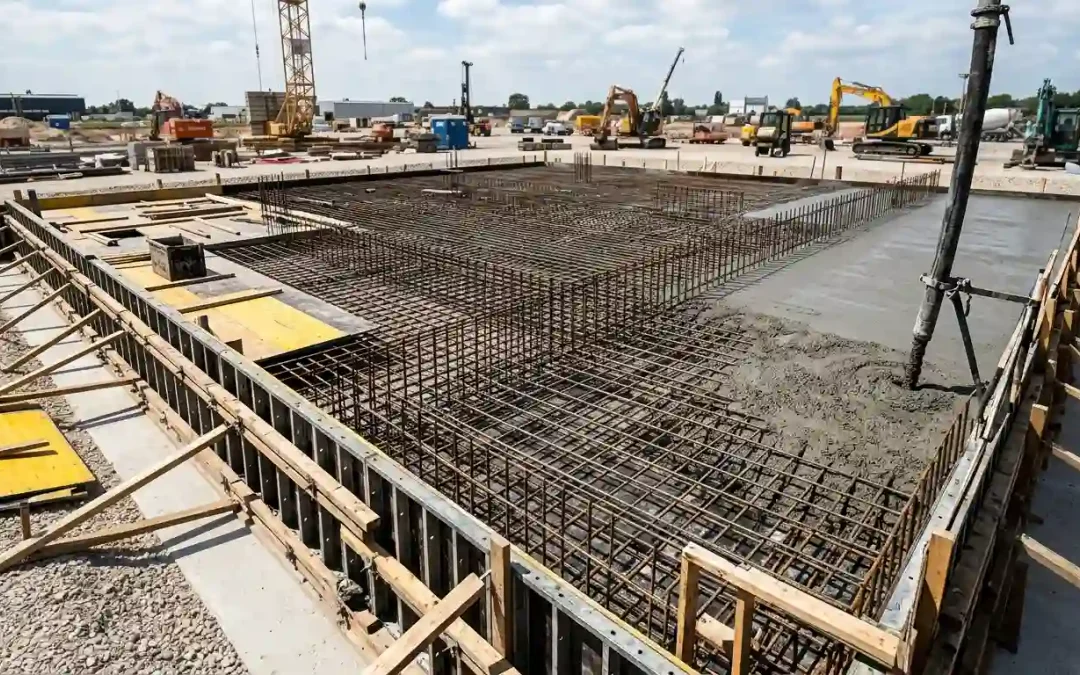
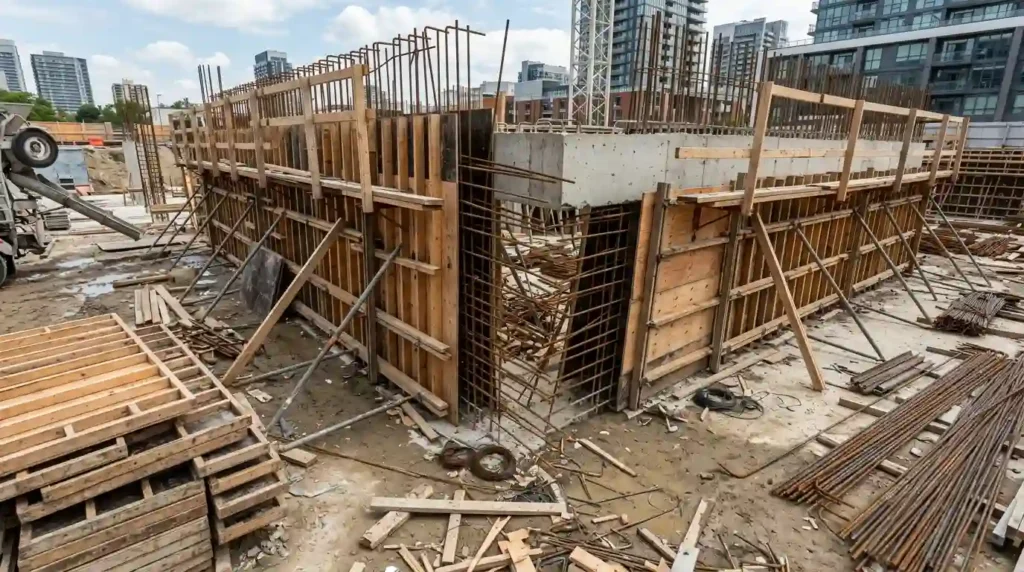
On paper, the process looks simple. The formwork is installed, the reo is fixed, and the concrete is poured. Then the cycle repeats. But on site, each stage depends on the one before it. If the form is not ready, steel fixing cannot progress properly. If the reo is incomplete or incorrect, the inspection may be delayed. If the inspection is delayed, the pour may move. If the pour moves, the next section of the structural package can start losing time.
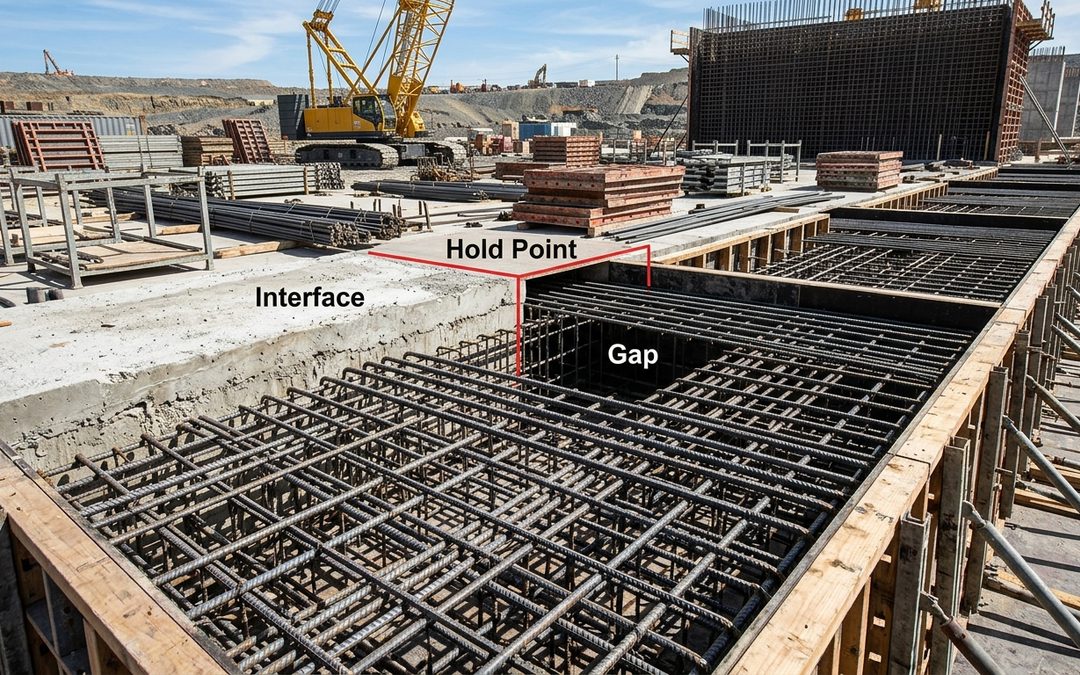
Fun fact: the most common FRP delays are not always caused by poor workmanship. They are often caused by the gap between scopes. The formwork team may think their area is ready. The reo team may still be waiting on access. The concrete team may already have labour and pump bookings locked in. Each team is working hard, but not necessarily working from the same coordinated plan.
This is where the problem starts.
When form, reo and pour are managed separately, each subcontractor naturally focuses on their own scope. That can create grey areas around handover, responsibility and timing. If something shifts, the site team then has to work out who knew what, who should have acted, and who now needs to fix it.
Integrated FRP solutions help remove that grey area. When formwork, steel fixing and concreting are coordinated under one delivery approach, the sequence is easier to manage. The team can see how one decision affects the next stage and can adjust before the issue reaches the pour.
For developers, builders, suppliers and industry partners, this matters because the structural package is not just a set of tasks. It is a chain. If one link is weak, the whole programme can feel it.
Making late formwork changes without checking the flow on effect
Formwork changes happen on complex projects. A slab level may be revised. A wall setout may change. A beam profile may be adjusted. A penetration may move. None of this is unusual, especially when design coordination is still evolving around live project conditions.
The mistake is not the change itself. The mistake is making the formwork change without checking how it affects the reo, the pour and the wider structural package.
A small formwork revision can create a large downstream issue if it is not communicated properly. The steel fixing team may arrive on site working from an earlier layout. The bar chairs may not sit correctly. Cover may be affected. Lap locations may no longer suit the revised form. By the time the issue is found, the form may already be set and the pour may already be booked.
Fun fact: one uncommunicated formwork revision can create a rework chain across form, reo and concrete in less than two days. It starts with a small change on paper, moves into steel fixing confusion on site, and can finish with a pour that needs to be delayed, redesigned or rechecked.
That is why late changes need a proper coordination process.
A revised drawing sitting in a document management system is not the same as communication. The right people need to know what changed, why it changed, and what it affects. That includes supervisors, steel fixers, formwork crews, concreters, engineers and project managers.
Before a late formwork change is released to site, the team should check the flow on effect. Does it change the reinforcement layout? Does it affect inspection timing? Does it impact concrete volume or pour sequence? Does it create access issues? Does it require a different build method?
Smarter formwork coordination is about catching those questions early. At Future Form, this is where practical experience matters. A change is not just viewed as a drawing update. It is viewed as part of the full FRP sequence, because every adjustment to the form has the potential to affect reo and pour.
Missing small reo details that matter later
Reo details can look minor on a drawing, but they can cause major delays on site.
This is especially true when reinforcement is congested, when bar arrangements are complex, or when starter bars, laps, penetrations and cover requirements are not fully considered during planning. A detail may be technically correct on paper but difficult to build once the form is in place and the steel fixing team has to work within real site conditions.
Common problem areas include beam-column junctions, slab edges, wall starters, penetrations, set downs and zones where multiple bars meet from different directions. If these details are not reviewed early, the issue may only become obvious when the team is already trying to close out the area for inspection.
Fun fact: congested reo zones can delay a pour even when the concrete, pump and crew are ready. The issue is not that the site is waiting for concrete. It is that the steel cannot be signed off because it has not been placed as required, and in some cases, it could not physically be placed the way the detail was drawn.
This is why buildability thinking is so important in FRP coordination.
Good steel fixing is not just about following the drawing. It is about understanding whether the detail can be built safely, efficiently and correctly on site. If there is a likely clash or congestion issue, it needs to be identified before the steel is fabricated and before the pour date is locked in.
Experienced FRP contractors know where these risks usually appear. They understand which details need a second look, which areas may require early clarification, and where a conversation with the engineer can save days of site pressure later.
The earlier these details are reviewed, the easier they are to fix. Once the form is closed, the steel is partly installed and the pour is scheduled, every change becomes harder, slower and more expensive.
Unclear sequencing between form, reo and pour
FRP construction is not three separate jobs that happen to share a site. It is one interconnected sequence, and if the timing between form, reo and pour is not clearly established and shared across the whole team, gaps appear fast.
The classic version of this problem looks like this: the formwork team strips a deck earlier than expected to free up materials for the next level. The reo team, working off a programme that had that deck available for another two days, has not finished the starter bars. The pour date for the level above is locked in. Suddenly, everyone is scrambling, and the project manager is having conversations that nobody wanted to have.
Fun fact: sequencing conflicts between FRP trades are often invisible until they become urgent. The programme shows three separate lines for formwork, reo and concrete, but nobody has mapped where those three lines depend on each other. When one shifts, the others move too, and the structural package starts compressing from both ends.
This is why sequencing needs to be treated as a live coordination process, not just a set of dates on a programme.
The team needs to understand what must happen before each stage can begin. They need to know which areas are genuinely ready, who is responsible for sign off, what information is current, and where one delay could affect the next activity.
Unclear sequencing can also create pressure on quality and safety. When the programme becomes tight, teams may feel pushed to work faster, overlap tasks too heavily or solve issues in the moment instead of properly planning them. That is when mistakes become more likely.
Integrated FRP solutions address this by treating the sequence as a single coordinated programme rather than three separate subcontractor deliverables. At Future Form, our formwork, steel fixing and concreting teams work from the same plan, which means sequencing risks are identified and resolved before they create delays at site level.
That is what smarter formwork coordination actually looks like in practice.
Poor communication between site teams, supervisors and decision makers
Even with good drawings and a strong programme, poor communication can still delay the structural package.
FRP coordination depends on the right information reaching the right people at the right time. If that does not happen, mistakes can move through the site quickly. A supervisor may not know a drawing has been revised. A steel fixing crew may be working from an older detail. A concreting team may not know that an inspection is not ready. A project manager may think an area is on track because nobody has escalated the issue clearly.
The site may look busy, but the coordination is not actually working.
Fun fact: many FRP delays are not caused by a lack of information. They are caused by information sitting in the wrong place. A detail may be available in the system, but if the people delivering the work do not know it has changed, it may as well not exist.
This is where supervision and communication rhythms become important.
Good FRP communication does not mean adding more meetings for the sake of it. It means having clear handovers, current drawings, practical lookaheads, quick clarification pathways and supervisors who understand what needs to be checked before each stage moves forward.
The formwork team needs to understand what the steel fixing team requires before they can start. The steel fixing team needs to know when the form is ready and whether any changes affect their work. The concreting team needs confidence that the pour area is ready, inspected and properly prepared. Decision makers need visibility before the issue becomes urgent.
Poor communication often creates blame. Strong communication creates control.
At Future Form, coordination is supported by experienced supervision across the full FRP sequence. That means the people overseeing the work understand formwork, steel fixing and concreting, not just one part of the package. When issues arise, they can make informed decisions faster and keep the structural package moving with less confusion.
How smarter FRP coordination supports structural package delivery
Smarter FRP coordination is not about making the process more complicated. It is about making it clearer.
A well coordinated structural package gives everyone a better understanding of what needs to happen, when it needs to happen, and what could stop it from happening. It creates fewer surprises because the risks are being discussed before they become site problems.
This starts early. Before the work reaches the deck, the team should be thinking about buildability, formwork requirements, reinforcement congestion, access, sequencing, pour logistics and inspection timing. The earlier these items are reviewed, the more options the project has.
Once the work is underway, smarter coordination depends on constant alignment. Are the drawings current? Has the reo detail been checked? Is the form ready for the next stage? Is the pour realistic based on actual site progress? Are supervisors aware of any risks? Has the programme allowed enough time for inspection and close out?
These questions are simple, but they are powerful.
They help teams avoid the situation where a delay only becomes visible when the concrete trucks are already booked. They also help protect quality, because teams are not being forced to solve preventable issues under last minute pressure.
For developers and construction professionals, this is where strong FRP coordination adds real value. It reduces uncertainty inside the structural package and supports smoother delivery across the wider programme.
For suppliers and industry partners, it also makes collaboration easier. When the sequence is clear, materials, labour, equipment and technical input can be planned more accurately.
Good FRP coordination does not guarantee that nothing will change. Construction always involves movement, pressure and unexpected conditions. But it does mean the team is better prepared to respond when things shift.
What Future Form brings to FRP coordination
Avoiding FRP delays starts with having one coordinated team that understands how every stage connects. Future Form brings an integrated approach to FRP coordination by aligning formwork, steel fixing and concreting within one delivery model.
That matters because many of the mistakes that delay structural packages happen in the handover between scopes. When form, reo and pour are split across separate teams, communication gaps can appear more easily. Each party may be focused on their own deliverables, while the overall sequence depends on everyone working together.
Future Form’s integrated FRP solutions are designed to reduce those gaps.
The focus is on early planning, buildability thinking, experienced supervision and clear communication across each stage of the FRP process. Instead of treating formwork, reo and concrete as separate activities, the sequence is managed with a broader view of how each decision affects the next stage.
This approach helps identify risks earlier. A formwork change can be checked against reo requirements. A congested steel fixing detail can be raised before it affects the pour. A sequencing issue can be resolved before it compresses the programme. A supervision concern can be addressed before it becomes a site delay.
Innovation in FRP construction is not always about using the newest technology. Sometimes, it is about improving accountability, communication and sequencing so that the basics are done properly and consistently.
That is the strength of an experienced integrated FRP contractor. The team is not only focused on completing one part of the job. It is focused on protecting the full structural package.
For large scale projects, that level of coordination can make a significant difference.
Building stronger outcomes through integrated FRP solutions
Strong FRP delivery is not just about getting the job done. It is about understanding the full sequence, recognising where the risks sit, and having the right people in place to make decisions before small issues become expensive delays.
The most damaging FRP coordination mistakes are often the ones that look minor at first. A late formwork change. A missed reo detail. An unclear sequence. A communication gap. A handover that was assumed rather than confirmed.
Individually, these issues may seem manageable. Together, they can affect inspections, pours, labour, equipment, programme milestones and the confidence of everyone working around the structural package.
That is why integrated FRP solutions are so valuable.
When form, reo and pour are coordinated as one process, there is less room for confusion and more opportunity to plan ahead. The structural package becomes easier to control because the team can see how each stage connects.
At Future Form, this is the foundation of our approach. We support structural package delivery through practical planning, experienced supervision and coordinated formwork, steel fixing and concreting solutions that are built around the realities of site work.
For developers, builders, construction professionals, suppliers and industry partners, the message is simple: the quality of FRP coordination you build in before and during construction can shape the strength of the entire programme.
If you are planning a large scale structural package and want to work with an FRP contractor that understands how small risks can affect big outcomes, Future Form is ready to support the conversation.
References
Australian Building Codes Board. (2022). National Construction Code 2022: Volume one — Building Code of Australia. Australian Building Codes Board. Retrieved from: https://ncc.abcb.gov.au/
Cement Concrete & Aggregates Australia. (2021). Concrete basics: A guide to concrete practice (5th ed.). Cement Concrete & Aggregates Australia. Retrieved from: https://www.ccaa.com.au/
Engineers Australia. (2022). Engineering and construction project management: Best practice in structural works delivery. Engineers Australia. Retrieved from: https://www.engineersaustralia.org.au/
Standards Australia. (2018). AS 3600:2018 — Concrete structures. Standards Australia. Retrieved from: https://www.standards.org.au/standards-catalogue/standard-details?designation=AS%203600:2018
Standards Australia. (2001). AS 4671:2001 — Steel reinforcing materials. Standards Australia. Retrieved from: https://www.standards.org.au/standards-catalogue/standard-details?designation=AS%204671:2001