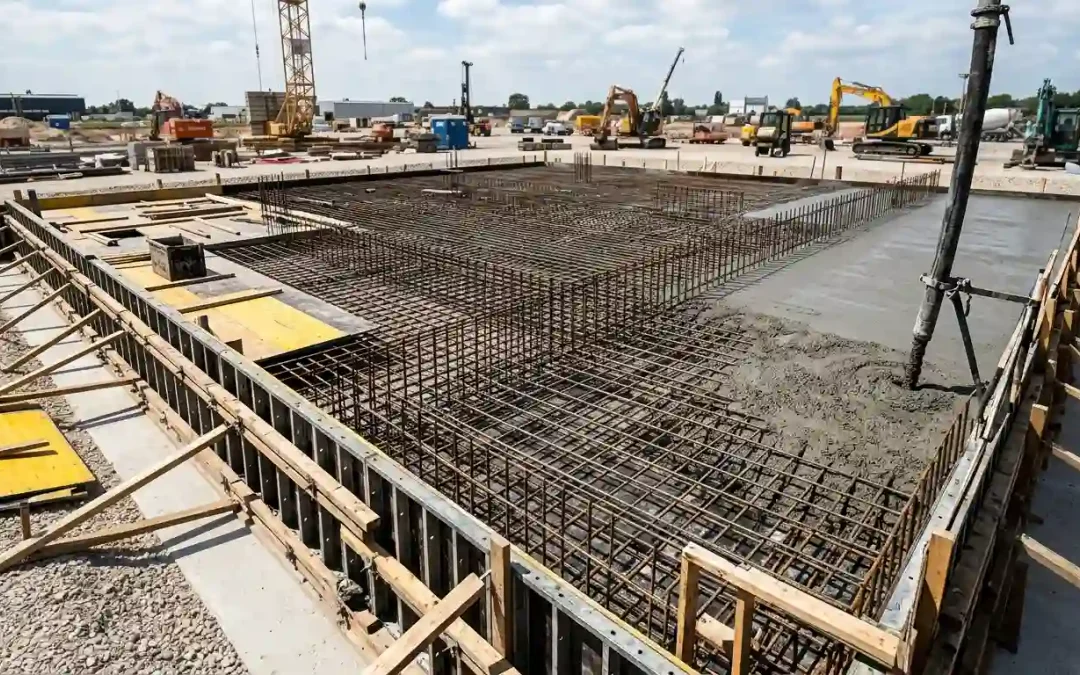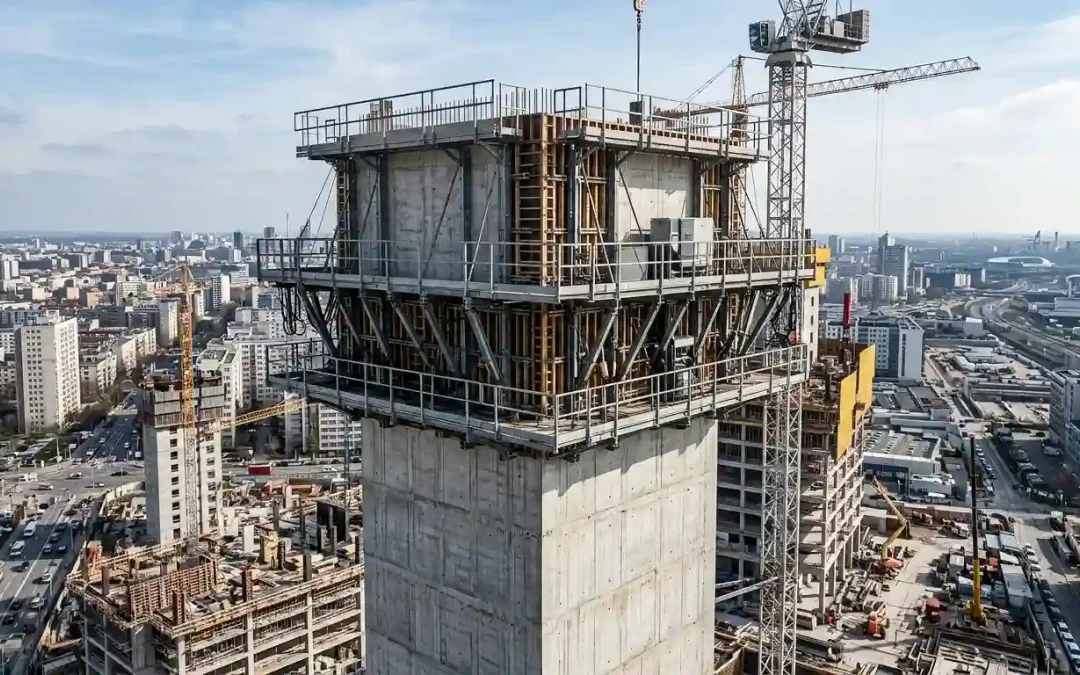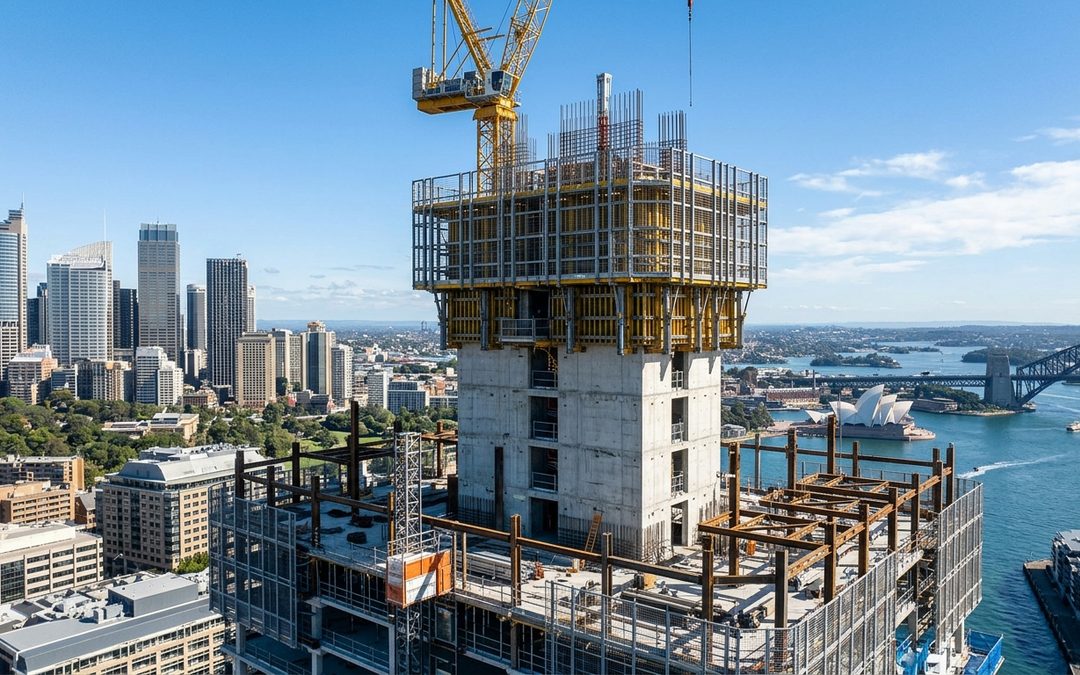
On a large construction site, structural progress depends on far more than individual trades completing isolated tasks. Formwork must be installed safely and accurately, reinforcement must match engineering requirements, and every concrete pour must be properly coordinated. When these activities are disconnected, delays and rework can quickly affect the wider construction program.
This is why selecting the right FRP partner matters.
In this context, FRP means form, reo and pour: the coordinated delivery of formwork, reinforcement or steel fixing, and concrete placement. An experienced FRP partner does not simply supply labour for each stage. They understand how these activities interact, how decisions made during formwork affect reinforcement, and how both influence pour readiness.
For a builder managing large-scale projects, the quality of FRP delivery can determine whether the structural package progresses efficiently or becomes a recurring source of delays, defects and coordination problems.
Future Form is a specialist FRP contractor focused on delivering fully integrated form, reo and pour solutions across complex structural projects. Through a coordinated approach that brings together experienced teams, practical site knowledge and clear communication, Future Form supports builders in maintaining control of their structural program from early-stage planning. through to final concrete placement.
A capable FRP team should help identify issues early, maintain clear communication and work effectively with engineers, suppliers, concrete contractors and other trades. Most importantly, they should take practical responsibility for keeping the structural works moving.
Here are five things every builder should expect from their FRP partner.
1. Reliable delivery that supports the construction program
Reliability is one of the most important qualities a builder should expect from an FRP partner. On major projects, one missed activity can create delays across several connected work areas.
If the form is not completed on schedule, steel fixers may not be able to begin. If the reo is delayed or incorrectly installed, inspections and concrete bookings may need to be changed. If the work is not ready when the pump, concrete supplier and placing crews arrive, the consequences can include wasted resources, additional costs and disruption to other trades.
Reliable delivery starts with realistic commitments. Experienced FRP contractors should understand their labour capacity, material requirements, access limitations and expected production rates before agreeing to a program.
A dependable FRP partner should be able to:
- Plan labour and supervision around upcoming work fronts.
- Coordinate formwork materials and reinforcement deliveries.
- Identify potential delays before they affect critical activities.
- Track progress against agreed milestones.
- Adjust sequencing when site conditions change.
- Communicate immediately when a commitment is at risk.
Reliability does not mean that unforeseen issues will never occur. Large-scale construction environments are constantly changing. Design updates, weather conditions, delayed deliveries and access restrictions can all affect progress.
The difference is how the FRP partner responds.
A reliable team raises issues early, explains their likely impact and proposes practical options. An unreliable contractor waits until a deadline has already been missed.
Builders should therefore look beyond promises made during tendering. The stronger indicator is whether the FRP team demonstrates program awareness, provides accurate updates and consistently follows through on its commitments.
2. Clear and practical communication
Effective FRP coordination relies on clear communication between everyone involved in the structural works. This may include the builder, project manager, site manager, engineers, surveyors, reinforcement suppliers, concrete suppliers, pump operators and adjoining trades.
When information is not shared clearly, small misunderstandings can become expensive site problems.
For example, an updated drawing may change slab thickness, reinforcement details, penetrations or set-down locations. If those changes are not communicated to the formwork and steel fixing teams, the work may continue using superseded information. The result could be rework, delayed inspections or a cancelled pour.
A strong FRP partner should establish practical communication routines from the beginning. These may include daily site discussions, look-ahead meetings, drawing reviews, progress reporting and clearly defined escalation processes.
Communication should also be direct and useful. Builders do not need vague statements such as “the deck is nearly ready”. They need to know what has been completed, what remains outstanding, which inspections are required and whether the programmed pour can proceed.
Good communication should answer questions such as:
- Is the work progressing according to the current program?
- Are the latest drawings and specifications being used?
- Are there unresolved design queries?
- Have reinforcement and formwork materials arrived?
- Are penetrations, cast-ins and set-downs confirmed?
- Is the work ready for inspection?
- Are there risks to the planned concrete pour?
The right FRP partner should also maintain communication between its own form, reo and pour teams. Integrated delivery becomes ineffective when the three stages operate as separate crews with limited information sharing.
True integrated FRP solutions depend on everyone understanding the same drawings, priorities and pour sequence.
3. Safe and well-planned formwork systems
Formwork is a temporary structure, but its performance is critical to the safety and quality of permanent concrete construction. It must support wet concrete, reinforcement, workers, equipment and construction loads until the concrete develops sufficient strength.
Industry guidance explains that formwork performs two key functions: supporting plastic and hardening concrete until it can support the required actions, and shaping the concrete to the specified dimensions and finish (Cement Concrete & Aggregates Australia, 2020a).
A builder should expect their FRP partner to treat formwork as an engineered system rather than a collection of timber, frames and props assembled on site.
Safe formwork delivery requires careful consideration of:
- Design loads and pour pressures.
- Foundations and supporting surfaces.
- Bracing and stability.
- Access platforms and edge protection.
- Penetrations and void protection.
- Material storage and point loads.
- Erection and stripping sequences.
- Inspection and certification requirements.
The formwork team must understand how the system is intended to be erected, loaded and dismantled. Guidance for formwork work also highlights the need for competent design, documented systems and appropriate controls for temporary work platforms and specialised equipment (Safe Work Australia, 2014).
Formwork safety should remain a priority throughout the entire cycle. The system may change as sections are completed, concrete is placed and components are stripped or reused. Unauthorised alterations, missing bracing or overloaded decks can introduce significant risk.
Formwork also affects the quality of the finished structure. Poor alignment, incorrect dimensions, movement during the pour or inadequately sealed joints can lead to concrete defects and additional finishing work.
An experienced FRP partner should therefore check line, level, dimensions, penetrations, set-downs, edge profiles and overall stability before the work progresses to the next stage.
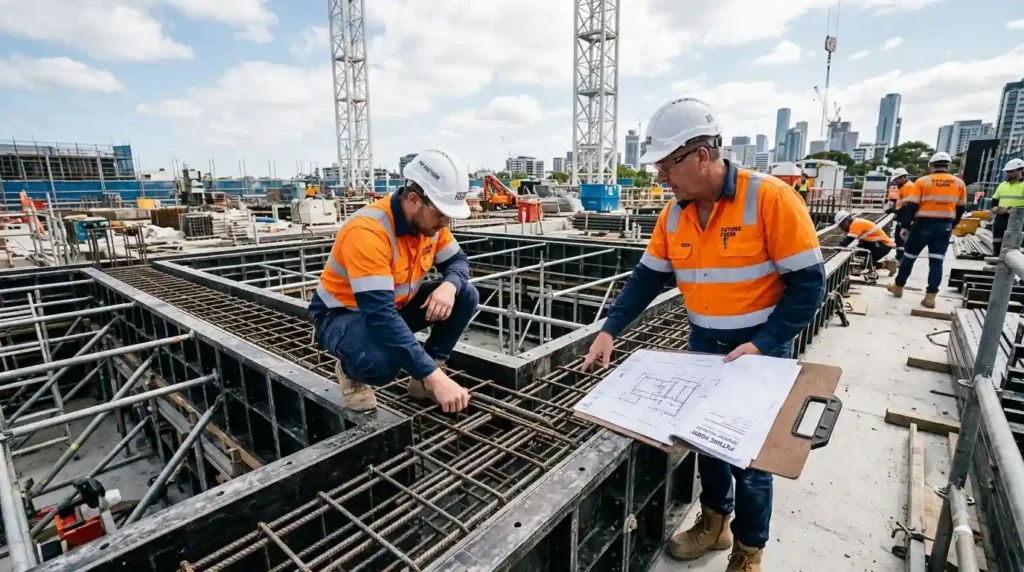
4. Accurate steel fixing and thorough pour readiness
Reinforcement is installed to help the concrete structure perform as designed. Accuracy is essential because incorrect bar sizes, spacing, laps, cover or placement may affect structural performance and prevent the work from passing inspection.
A professional steel fixing team should work from the current engineering drawings, reinforcement schedules and approved construction information. Questions or inconsistencies should be raised before installation continues, rather than being concealed or left for the builder to discover during the inspection.
The FRP partner should check:
- Bar sizes, quantities and spacing.
- Lap locations and lap lengths.
- Reinforcement cover and chair spacing.
- Starter bars and vertical reinforcement.
- Ligatures, mesh and trimming bars.
- Congested connections and penetrations.
- Cast-in items and embedded components.
- Cleanliness of the form before the pour.
However, completing the reinforcement does not automatically mean the area is ready for concrete.
Pour readiness is a coordinated checkpoint involving the formwork, reinforcement, access, safety controls, concrete supply and placement methodology. The Guide to Concrete Construction identifies reinforcement handling and fixing, concrete placing, compaction, finishing and curing as connected site practices that must be properly managed.
Before the pour, the FRP partner should confirm that inspections have been completed, outstanding items are closed and the work can be placed safely. The team should also understand the intended pour sequence, concrete volumes, pump location, placing rate, vibration requirements and finishing arrangements.
A clear pre-pour process helps prevent last-minute surprises. It allows the builder to confirm that the pump, concrete deliveries, labour and inspections are aligned before resources arrive on site.
5. Program awareness and coordination with other trades
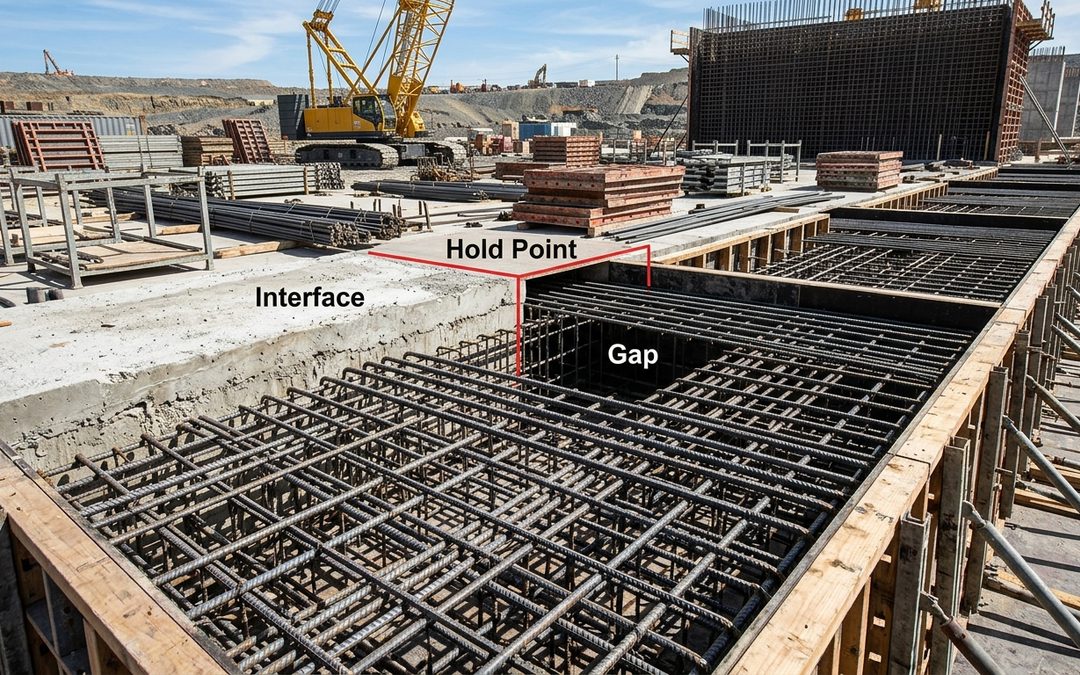
An FRP team does not work in isolation. Structural works regularly interface with hydraulic, electrical, mechanical, façade, precast, surveying and crane operations.
A capable FRP partner should understand these interfaces and plan around them.
For example, service penetrations may need to be installed before reinforcement is completed. Surveyors may need access to check gridlines and levels. Crane availability may influence the movement of formwork materials, reinforcement cages and concrete placing equipment. Other trades may also require access to the completed deck before the next pour cycle begins.
Without coordination, crews can obstruct one another, materials can be installed in the wrong sequence and completed work may need to be altered.
The FRP partner should participate actively in short-term programming and coordination meetings. Rather than focusing only on today’s work, the team should understand what is required over the coming days and weeks.
This forward view allows labour, materials, access and inspections to be arranged before they become urgent.
Program awareness also means recognising how productivity in one area affects another. A delay to a vertical element may restrict access to the next deck. Slow stripping may reduce the amount of formwork available for the following cycle. Late reinforcement deliveries may affect several scheduled pours.
The right partner identifies these connections and works with the builder to protect the broader construction program.
How Future Form supports integrated FRP delivery
In practice, this means taking a proactive role in simplifying coordination across all structural stages.
Future Form approaches FRP as an integrated structural service rather than three disconnected activities.
By coordinating form, reo and pour within one delivery structure, Future Form can help builders improve communication, clarify responsibilities and manage structural work fronts more effectively. This integrated approach supports continuity from the initial formwork system through reinforcement installation and final concrete placement.
Future Form’s role can include reviewing upcoming work areas, coordinating labour and materials, communicating site constraints and preparing each section for inspection and concrete placement. The team works with builders, engineers, suppliers and other trades to identify issues early and keep the structural package progressing.
For large-scale projects, this approach can provide several practical advantages:
- Better coordination between formwork and steel fixing teams.
- Earlier identification of drawing or access issues.
- More structured pre-pour preparation.
- Improved alignment with the builder’s program.
- Consistent communication across multiple work fronts.
Rather than waiting for instructions at every stage, an effective FRP partner should contribute practical construction knowledge and help the builder manage the sequence ahead.
Future Form’s focus is to provide dependable delivery, experienced supervision and integrated FRP solutions that support safe, coordinated and efficient structural construction.
Choosing a partner who strengthens the structural package
The right FRP partner should do more than supply workers and complete allocated tasks. They should understand the entire structural process and recognise how formwork, reinforcement and concrete placement influence the wider project.
Builders should expect reliability, transparent communication, safe formwork systems, accurate steel fixing and genuine program awareness. They should also expect their FRP team to work collaboratively with engineers, suppliers and other contractors.
When these qualities are present, FRP delivery becomes easier to manage. Risks are identified earlier, inspections are better prepared, pours are more organised and the structural package is more likely to remain aligned with the construction program.
For builders delivering complex and large-scale projects, choosing the right FRP partner is not simply a subcontracting decision. It is an investment in safer delivery, stronger coordination and more predictable structural progress.
To discuss how an integrated form, reo and pour approach could support your next structural package, start a conversation with the Future Form team.
Strong structures begin with strong coordination — and strong coordination begins with the right FRP partner.
References
Cement Concrete & Aggregates Australia. (2020). Guide to concrete construction 2020. Retrieved from: https://www.ccaa.com.au/common/Uploaded%20files/CCAA/Publications/Technical%20Publications/Complete_Guide_to_Concrete_Construction_2020_Edition.pdf
Cement Concrete & Aggregates Australia. (2020). Curing. In Guide to concrete construction 2020. Retrieved from: https://www.ccaa.com.au/common/Uploaded%20files/CCAA/Publications/Technical%20Publications/PART_V_-_15_-_CURING_GTCC_2020.pdf
Cement Concrete & Aggregates Australia. (2020). Hot- and cold-weather concreting. In Guide to concrete construction 2020. Retrieved from: https://www.ccaa.com.au/common/Uploaded%20files/CCAA/Publications/Technical%20Publications/PART_V_-_18_-_HOT_AND_COLD_WEATHER_CONCRETING_GTCC_2020.pdf
Cement Concrete & Aggregates Australia. (2020). Formwork. In Guide to concrete construction 2020. Retrieved from: https://www.ccaa.com.au/common/Uploaded%20files/CCAA/Publications/Technical%20Publications/PART_IX_-_27_-_FORMWORK_GTCC_2020.pdf
Workplace Health and Safety Queensland. (2016). Formwork code of practice 2016. Queensland Government. Retrieved from:[Text Wrapping Break] https://www.worksafe.qld.gov.au/__data/assets/pdf_file/0019/15823/formwork-cop-2016.pdf
Workplace Health and Safety Queensland. (2019). Concrete pumping code of practice 2019. Queensland Government. Retrieved from: https://www.worksafe.qld.gov.au/__data/assets/pdf_file/0019/18127/concrete-pumping-cop-2019.pdf