High-rise construction projects depend on precision, coordination, and structural reliability. As towers continue to rise higher and programmes become tighter, the margin for error within the structural stage of construction continues to shrink. Even small misalignments between trades can cause cascading delays, rework, or structural defects that impact the entire programme.
One of the most critical yet commonly misunderstood stages in high-rise development is the coordination between formwork installation, steel fixing, and concrete placement. These three components, commonly referred to as form, reo, and pour (FRP), form the backbone of every structural floor cycle. When these processes are disconnected, risk multiplies rapidly. However, when coordinated through integrated FRP construction, the result is faster structural progress, reduced defects, and a far more predictable programme.
Today, developers, contractors, and consultants are increasingly recognising that FRP construction risk is not simply about workmanship on site. Instead, risk arises from fragmented coordination between trades responsible for the structural package. Addressing this challenge requires a more integrated approach to managing formwork, steel fixing, and concrete placement as a unified system.
Companies specialising in integrated FRP construction and formwork systems are playing an increasingly important role in supporting this shift towards coordinated structural delivery. At Future Form, teams focus on aligning formwork installation, steel fixing, and concrete placement to help projects maintain consistent structural progress while minimising construction risk across complex high-rise developments.
Future Form brings together experienced professionals, specialised formwork expertise, and coordinated FRP delivery strategies to support developers and contractors through the structural stage of large-scale builds. By combining technical knowledge, on-site experience, and collaborative planning, integrated structural packages can be delivered with greater certainty, efficiency, and quality.
This blog article explores where risk typically occurs within the form, reo, and pour cycle of high-rise construction and how integrated FRP solutions can eliminate many of these structural and scheduling issues.
Why the FRP stage is the most critical point in high-rise construction
The structural phase of a tower build is the engine that drives the entire project timeline. Every subsequent trade relies on the completion of the structural frame. If delays occur during FRP construction, the effects ripple throughout the entire development.
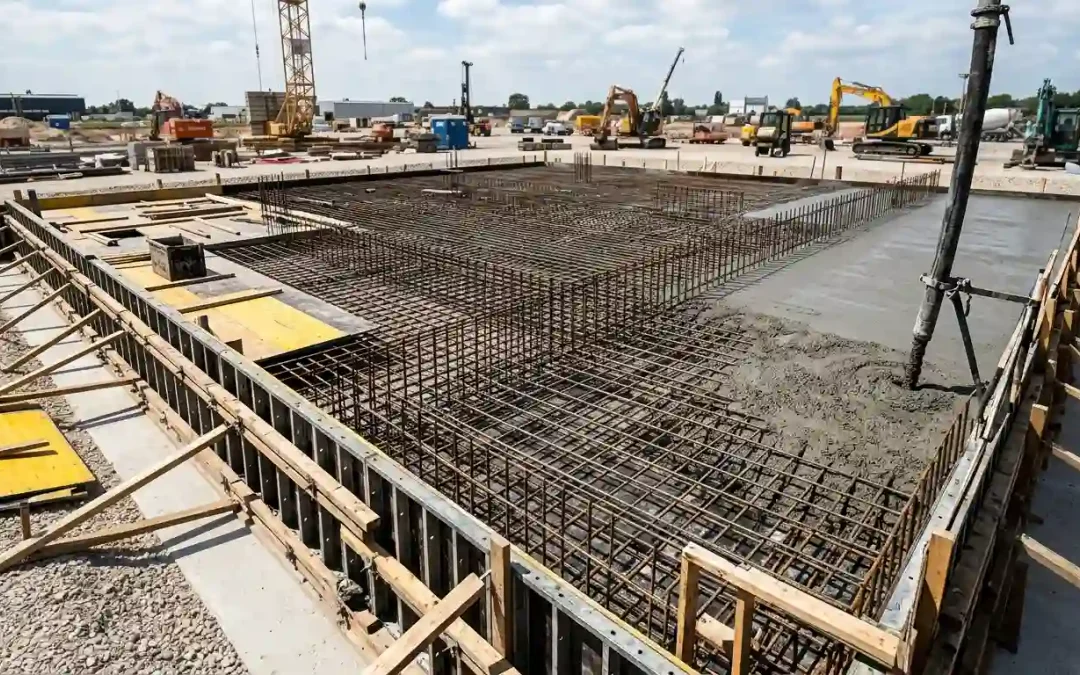
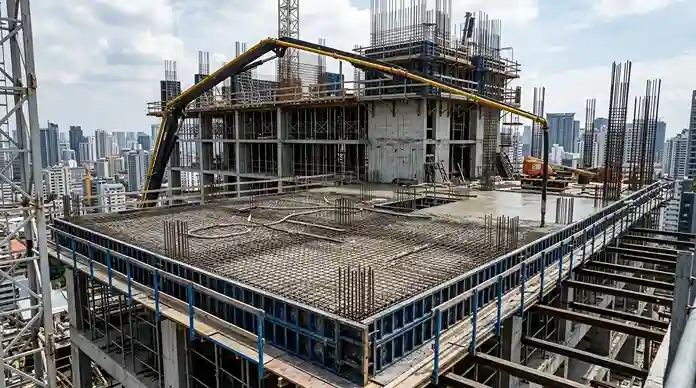
Within a typical high-rise floor cycle, multiple specialised teams must work in tight succession. Formwork crews establish the mould that shapes the concrete elements. Steel fixing teams then install reinforcement to ensure structural strength and load-bearing capacity. Finally, concrete placement completes the structural element.
Each of these activities is deeply interconnected. If the formwork system is not installed with precision, reinforcement placement may be compromised. If steel fixing is delayed, the pour sequence is disrupted. If the concrete placement is rushed or poorly coordinated, defects such as honeycombing, misalignment, or cold joints may occur.
Because these tasks are sequential and interdependent, FRP construction represents one of the highest risk points in high-rise development. Without careful coordination, even minor issues can escalate into costly structural corrections or programme disruptions.
As buildings grow taller and more complex, the need for integrated FRP coordination becomes increasingly essential.
Where risk commonly occurs between form, reo, and pour
Despite its importance, the FRP cycle is often managed by separate subcontractors working under tight timelines. When coordination between these teams is limited, several common risk points emerge.
One major risk lies in the handover between formwork and steel fixing. If formwork installation is not aligned with the reinforcement schedule, steel fixing teams may arrive before areas are ready. This can lead to congestion on site, inefficient labour use, or rushed work that compromises quality.
Another frequent issue occurs when reinforcement detailing clashes with the formwork system. Reinforcement bars may interfere with form ties, openings, or embedded services. When these conflicts are identified late, adjustments must be made on site, often delaying the pour sequence and affecting structural progress.
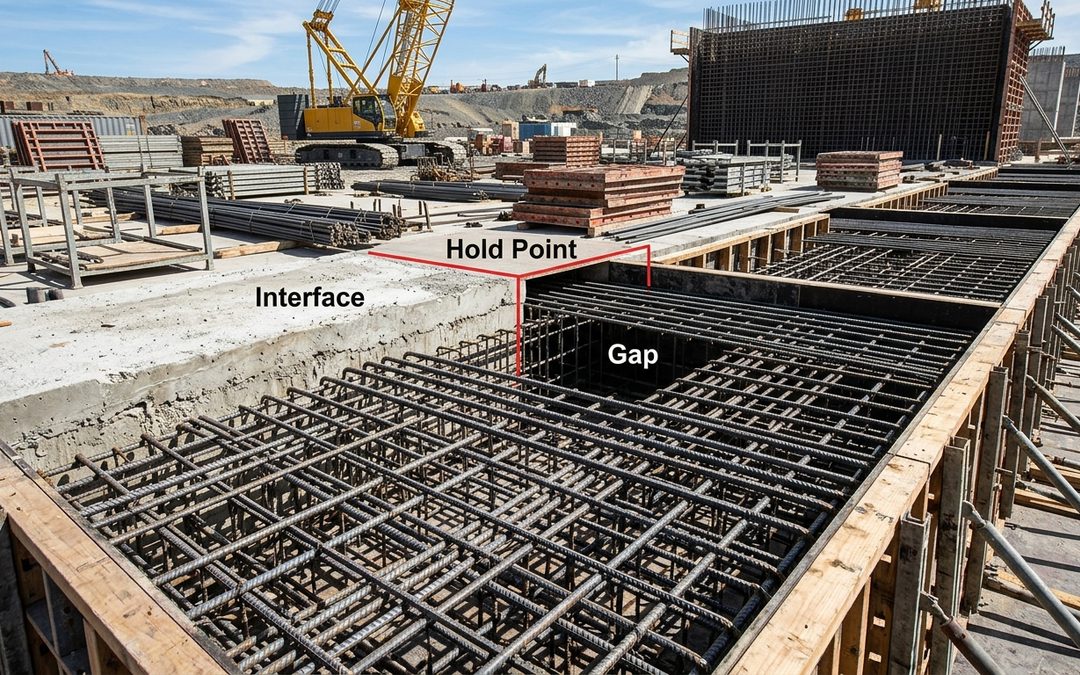
The transition from steel fixing to concrete placement also presents challenges. If inspections, reinforcement approvals, or embed installation are not completed on time, concrete pours must be postponed. This creates idle time for crews and disrupts the carefully planned floor cycle that many high-rise projects rely upon.
Finally, poor communication between teams can lead to inconsistencies in sequencing. For example, concrete trucks may arrive before reinforcement inspections are complete, or formwork stripping may occur before the concrete has reached adequate strength.
These types of issues highlight why FRP construction risk is often not caused by a single trade but rather by the lack of integration between them.
How integrated FRP construction reduces structural risk
A growing number of high-rise developments are addressing these challenges by adopting integrated FRP solutions, where formwork, steel fixing, and concrete placement are coordinated as a single structural system rather than separate subcontracted activities.
This approach focuses on aligning planning, sequencing, and execution across the entire structural package. Instead of working in isolation, FRP contractors collaborate from the early stages of project planning to ensure each stage of the form, reo, and pour cycle flows efficiently.
One of the primary benefits of integrated FRP construction is improved sequencing. When formwork installation, steel fixing, and concrete pours are planned together, crews can move smoothly from one activity to the next without unnecessary downtime.
Integrated coordination also reduces the likelihood of clashes between reinforcement layouts and formwork systems. With early collaboration, reinforcement detailing can be optimised to suit the chosen formwork system, eliminating the need for last-minute adjustments during construction.
Additionally, integrated planning improves inspection processes. Reinforcement inspections, embed installation checks, and pour approvals can be scheduled as part of a streamlined workflow rather than handled reactively.
The result is a more controlled and predictable structural process, enabling high-rise projects to maintain consistent structural progress across each floor cycle.
The role of formwork systems in controlling FRP risk
While all components of the FRP cycle are important, formwork systems often play the most influential role in determining the success of structural sequencing.
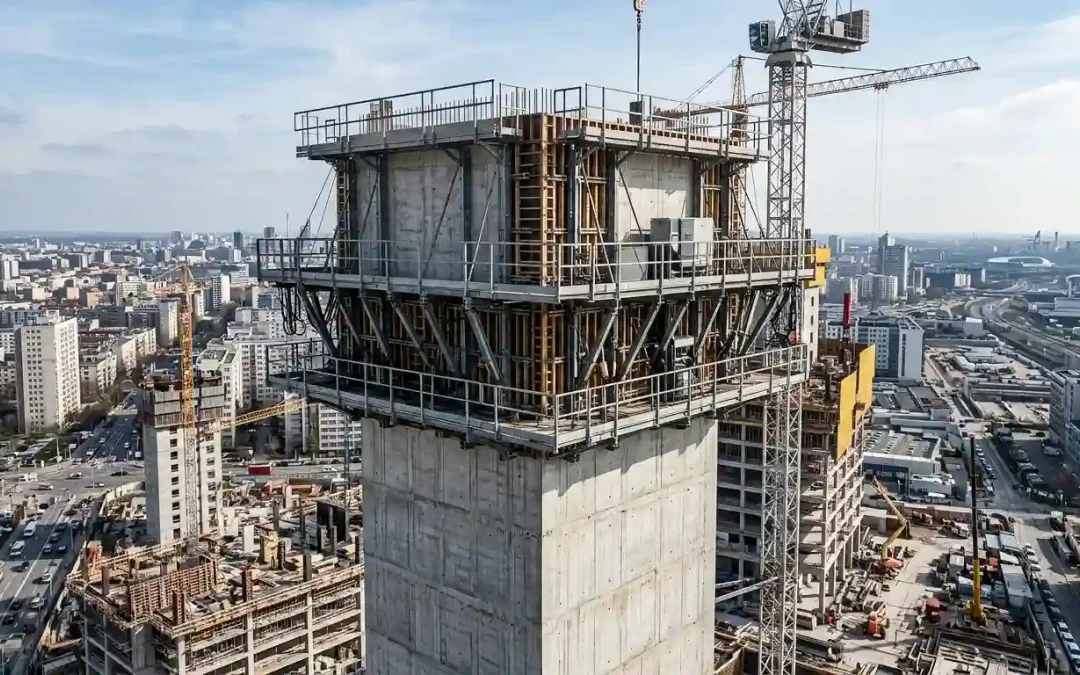
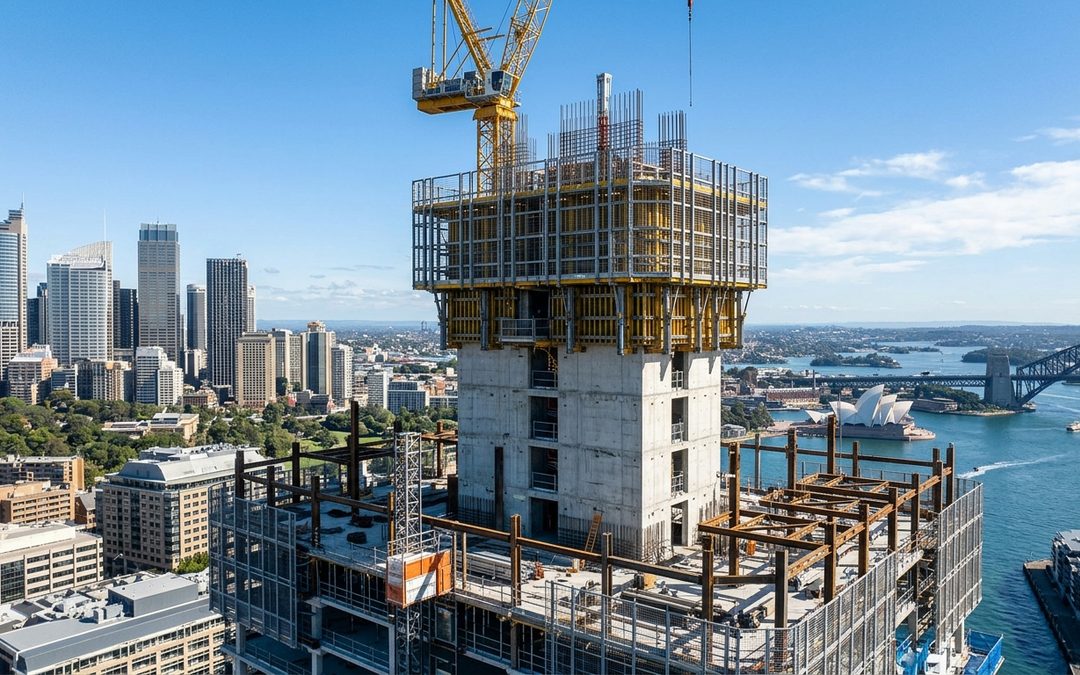
Modern high-rise construction relies on advanced formwork solutions that allow crews to repeat floor cycles efficiently. Systems such as climbing formwork, table forms, and modular panels enable teams to move quickly between floors while maintaining structural accuracy.
However, even the most advanced formwork systems can introduce risk if they are not coordinated with reinforcement and concrete placement strategies.
For example, complex reinforcement cages may require adjustments to formwork tie locations or openings. Similarly, heavy reinforcement densities may influence how concrete is poured and vibrated to ensure full compaction.
When formwork planning is integrated with steel fixing and concrete placement, these potential conflicts can be addressed before work begins on site.
Through early engineering coordination, FRP contractors can design formwork layouts that accommodate reinforcement requirements and optimise the pour sequence. This proactive planning significantly reduces the likelihood of delays, structural defects, or rework.
Improving structural progress through coordinated FRP sequencing
High-rise projects often operate on strict structural cycles, with each floor scheduled for completion within a defined timeframe. Achieving consistent structural progress requires seamless coordination between all trades involved in the form, reo, and pour process.
Integrated FRP planning allows project teams to establish predictable floor cycles. Crews understand exactly when formwork will be installed, when steel fixing will begin, and when concrete placement will occur.
This clarity enables more efficient labour allocation and reduces congestion on site. Rather than multiple teams competing for space, the project operates as a coordinated sequence of structural activities.
Another benefit is improved safety. When the FRP workflow is clearly defined, workers are less likely to encounter unexpected hazards or rushed working conditions.
In large high-rise developments where hundreds of structural pours may occur throughout the project lifecycle, even small improvements in FRP coordination can deliver substantial gains in productivity and programme reliability.
How Future Form supports integrated FRP construction
Successful FRP construction depends on experience, coordination, and a clear understanding of how formwork, steel fixing, and concrete placement interact within the structural system.
Future Form supports this process by delivering integrated FRP solutions that align the entire structural package from form installation through to the final pour. By coordinating formwork systems, steel fixing teams, and concrete placement strategies, projects can maintain consistent structural progress while reducing construction risk.
Through careful planning and on-site coordination, the form, reo, and pour cycle becomes a structured workflow rather than a series of disconnected tasks. This integrated approach helps eliminate common issues such as reinforcement clashes, sequencing delays, and rushed pours.
For developers and contractors delivering complex high-rise projects, integrated FRP contractors provide a valuable advantage. By managing the full structural package, teams can maintain quality, safety, and programme reliability throughout the construction process.
For projects seeking greater certainty during the structural phase, coordinated FRP construction offers a practical pathway to reducing risk while maintaining efficient delivery.
Looking ahead: A more integrated future for high-rise FRP construction
As high-rise construction continues to evolve, the importance of integrated structural coordination will only increase. Projects are becoming taller, timelines tighter, and structural systems more complex.
Within this environment, treating formwork, steel fixing, and concrete placement as isolated activities is no longer sustainable. Instead, successful developments are moving towards fully coordinated FRP construction strategies that integrate planning, sequencing, and execution.
By addressing the risk points between form, reo, and pour, project teams can achieve faster structural progress, improved build quality, and more predictable delivery outcomes.
For developers, consultants, and contractors working on complex towers, understanding and implementing integrated FRP solutions is becoming a key factor in delivering successful high-rise structures.
Projects that embrace this coordinated approach will be better positioned to minimise risk, maintain structural integrity, and deliver the next generation of high-rise buildings with confidence.
For teams planning upcoming developments, taking a coordinated approach to FRP construction can significantly reduce risk during the structural stage of a project. Future Form brings together experience across formwork, steel fixing, and concrete placement, helping project teams deliver high-rise structural packages with greater certainty and efficiency. If you are exploring ways to strengthen coordination across your next build, speaking with the Future Form team can provide practical insight into how integrated form, reo, and pour solutions support safer and more consistent structural progress.
References
American Concrete Institute. (2014). ACI 347R-14: Guide to formwork for concrete. American Concrete Institute. Retrieved from: https://www.concrete.org/store/productdetail.aspx?ItemID=34714
American Concrete Institute. (2019). ACI 318-19: Building code requirements for structural concrete. American Concrete Institute. Retrieved from: https://www.concrete.org/store/productdetail.aspx?ItemID=31819
Council on Tall Buildings and Urban Habitat. (2020). Outrigger design for high-rise buildings. Council on Tall Buildings and Urban Habitat. Retrieved from: https://www.ctbuh.org
Council on Tall Buildings and Urban Habitat. (2022). Tall buildings and construction innovation. Council on Tall Buildings and Urban Habitat. Retrieved from: https://www.ctbuh.org/research
Hurd, M. K. (2012). Formwork for concrete (7th ed.). American Concrete Institute. Retrieved from: https://www.concrete.org/store/productdetail.aspx?ItemID=SP4
Illingworth, J. (2013). Construction methods and planning (3rd ed.). Routledge. Retrieved from: https://www.routledge.com/Construction-Methods-and-Planning/Illingworth/p/book/9780415501873
Kosmatka, S., Kerkhoff, B., & Panarese, W. (2002). Design and control of concrete mixtures. Portland Cement Association. Retrieved from: https://www.cement.org/learn/concrete-technology
National Institute of Standards and Technology. (2018). Best practices for structural concrete construction. Retrieved from: https://www.nist.gov
The Concrete Centre. (2020). Guide to concrete construction. The Concrete Centre. Retrieved from: https://www.concretecentre.com