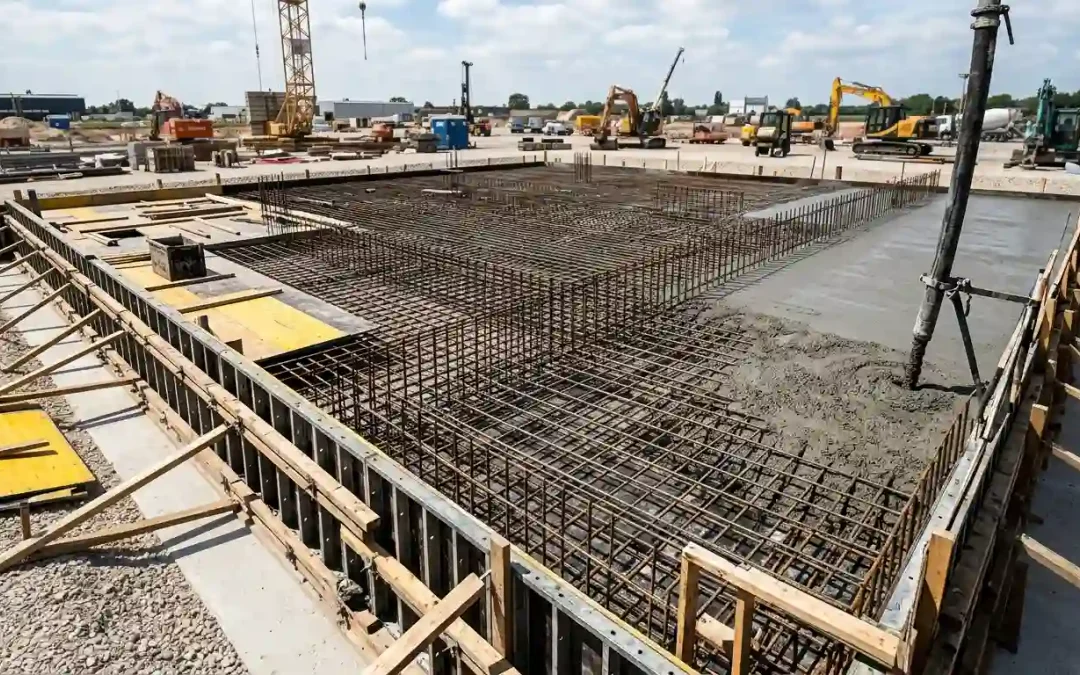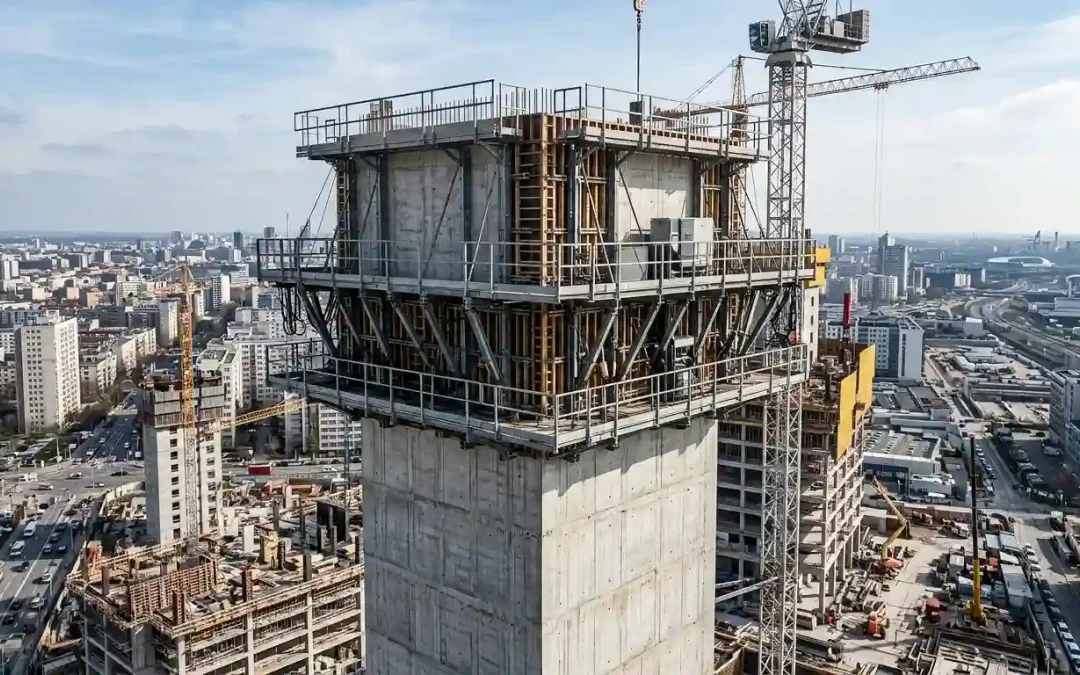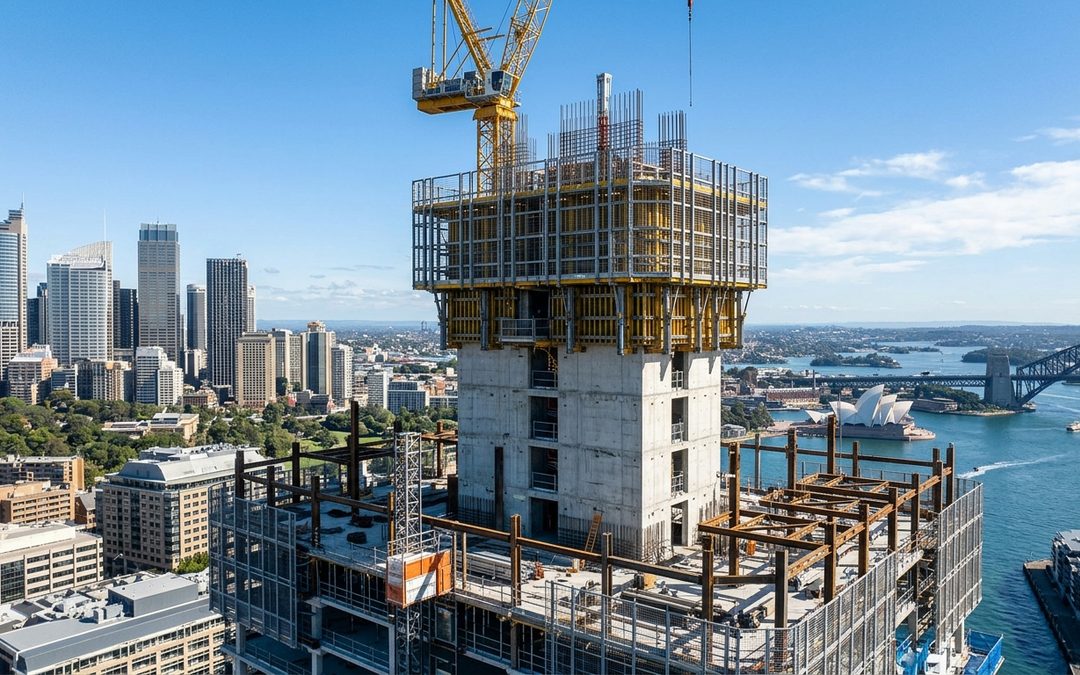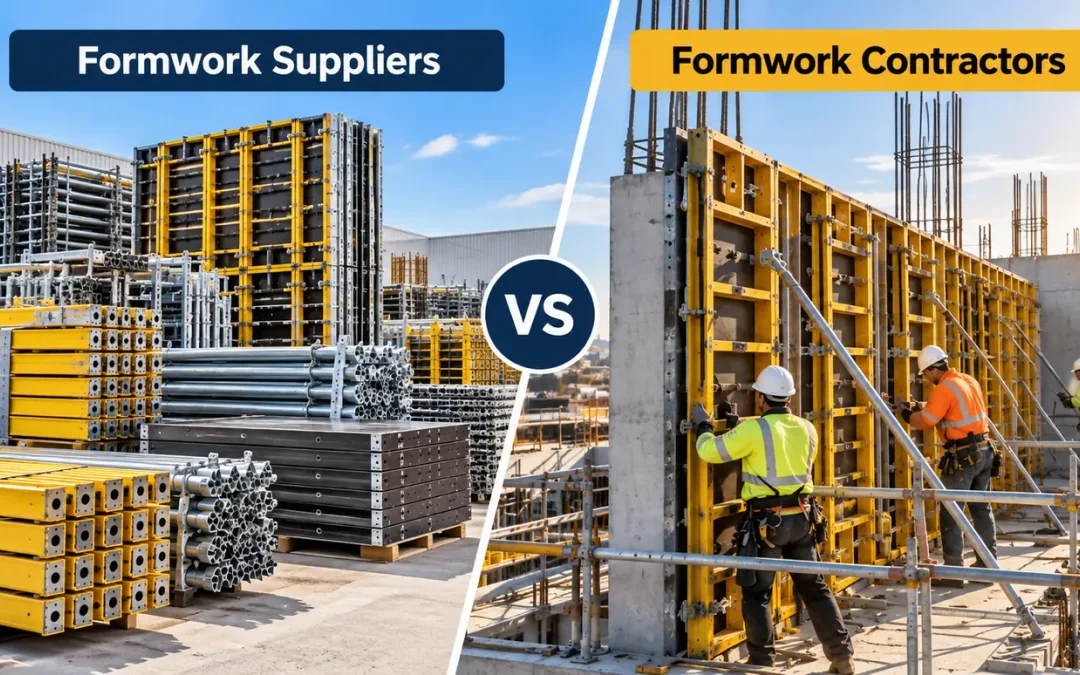
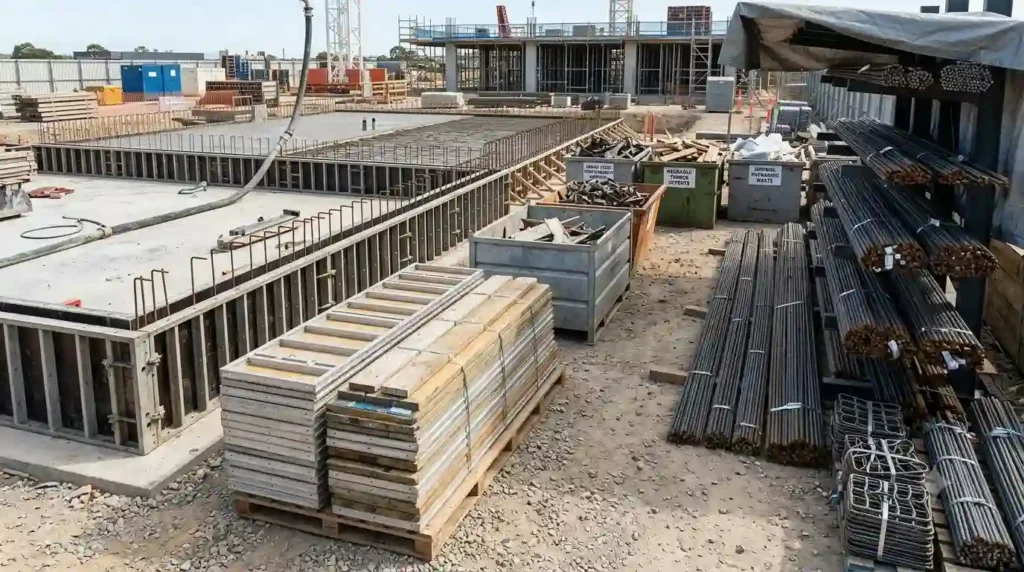
Waste on a construction site is rarely caused by one dramatic mistake. More often, it develops through small inefficiencies repeated across the structural program: formwork materials cut unnecessarily, reinforcement delivered too early, concrete over-ordered, packaging left unmanaged, or completed work damaged and rebuilt.
On large-scale projects, these issues can multiply quickly. A minor material loss on one deck may appear manageable, but the same habit repeated across multiple levels can affect material costs, labour productivity, site access and the overall construction program.
For FRP contractors, reducing waste is therefore not simply about placing more bins around the site. It requires better coordination across form, reo and pour, supported by accurate information, suitable storage, disciplined handling and clear responsibility. The most effective approach is to prevent waste before it is created, reflecting the waste hierarchy’s priority on avoidance over recovery and disposal.
Future Form approaches FRP delivery as an integrated process, combining formwork, steel fixing and concrete placement into a coordinated system rather than separate trades. Through its services, project teams can align sequencing, material planning and site logistics to reduce unnecessary handling, over-ordering and rework. Backed by an experienced team with practical site knowledge, Future Form focuses on delivering structural packages efficiently while supporting cleaner, more organised construction environments.
A smarter site does not necessarily work more slowly. In many cases, cleaner material flows, fewer unnecessary movements and reduced rework help teams maintain momentum. By treating waste reduction as part of structural package delivery, project teams can improve environmental performance and everyday construction efficiency.
Why reducing waste begins with FRP coordination
Formwork, steel fixing and concrete placement are closely connected. Waste generated during one stage often creates additional waste during another.
Incorrect form dimensions can require material to be removed and rebuilt. Poorly coordinated penetrations may result in reinforcement being cut or repositioned. Incomplete pre-pour checks can lead to concrete defects, remedial work or damaged finishes. Excess materials can also obstruct working areas, increasing handling requirements and making it harder for crews to identify what is actually needed.
Integrated FRP solutions help reduce these risks by creating a clearer sequence between trades, drawings, deliveries and inspections. Rather than viewing form, reo and pour as separate trades, the structural team can plan each stage around shared information and a coordinated construction sequence.
This matters because waste prevention is usually most effective before materials arrive onsite. Accurate take-offs, buildable details, realistic delivery schedules and early design clarification allow the team to order closer to actual requirements while avoiding unnecessary last-minute changes.
Use formwork materials more strategically
Formwork is one of the most visible material systems within an FRP package. It is installed, stripped, moved and reused repeatedly, creating significant opportunities to improve material efficiency.
The first step is selecting formwork systems that suit the project’s geometry, repetition and program. Reusable proprietary systems may be effective across repeated floorplates, while traditional formwork may remain appropriate for complex details or irregular areas. The objective is not to force one system across the entire project, but to match the formwork method to the structure.
Good formwork planning should consider panel sizes, reuse cycles, stripping sequences, storage locations and lifting requirements. Where layouts are standardised, teams may reduce unnecessary cutting and preserve materials for later stages. Offcuts can also be reviewed before disposal, as some may remain suitable for stop-ends, infill areas, boxing or temporary protection works.
Careful stripping is equally important. Panels and components damaged during rushed removal may become unusable, even when they could have completed several more cycles. Clear stripping procedures, appropriate release agents and suitable handling equipment can extend the usable life of formwork materials.
Storage conditions also influence waste. Formwork should be stacked securely, kept away from standing water and organised so that reusable items can be identified quickly. A mixed pile of damaged and serviceable materials encourages unnecessary disposal and duplicate ordering.
Improve reo scheduling and steel fixing accuracy
Reinforcement steel is highly recyclable, but recycling should not be the first response to avoidable site waste. The stronger outcome is to order, cut, bend, deliver and install reinforcement accurately from the beginning.
For large-scale projects, reo waste can be reduced through accurate bar schedules, coordinated shop drawings and staged deliveries. Reinforcement should arrive in quantities and sequences that reflect the installation program rather than occupying the site weeks before it is required.
Bundles should be clearly labelled by level, zone, element or pour sequence. When steel fixing crews can identify the correct material quickly, they spend less time sorting, moving and searching through stock. This also reduces the likelihood of suitable bars being overlooked and reordered.
Storage is another practical consideration. Reo should be placed on suitable supports, separated by work area and protected from excessive contamination. Poorly stored reinforcement may become mixed, difficult to access or exposed to mud and debris, creating additional cleaning and handling requirements.
Changes to penetrations, services or structural details should also be communicated before steel fixing progresses too far. Late instructions can require bars to be removed, recut or replaced. Coordinated information between the builder, engineers, services trades and FRP contractors helps prevent these disruptions.
Steel can be recovered and recycled repeatedly, making it well suited to circular material systems. However, every unnecessary offcut still represents purchasing, fabrication, transport and handling that could potentially have been avoided (World Steel Association, 2024).
Order concrete around verified site requirements
Concrete waste is often associated with over-ordering, rejected loads, poor placement preparation or leftover material at the end of a pour. Some contingency is necessary, but excessive allowances repeated across multiple pours can create avoidable cost and waste.
More accurate ordering begins with verified dimensions and a realistic understanding of the pour. The team should review slab thicknesses, beams, columns, upstands, set-downs and other volume changes before confirming quantities. Pour records from similar areas can help refine future orders and identify where estimates have consistently exceeded actual demand.
Communication with the concrete supplier and pump operator is also important. Delivery timing should reflect placement speed, crew capacity, access conditions and weather. Loads arriving too quickly may create congestion or placement pressure, while long gaps can affect continuity and increase the risk of quality issues.
Pre-pour inspections are one of the strongest waste-prevention tools available. Before concrete arrives, the team should confirm that formwork, reinforcement, embeds, penetrations, access, pumping arrangements and labour are ready. Finding an unresolved issue after trucks have been dispatched may result in delays, returned concrete or hurried decisions.
Concrete washout must also be controlled. Industry guidance highlights the importance of managing concrete by-products and high-pH wash water through suitable collection, treatment, reuse or authorised disposal processes (Cement Concrete & Aggregates Australia, 2019). Dedicated washout areas can protect the site and prevent concrete residues from entering soil, drains or general waste.
A disciplined pour process supports both quality and reducing waste. The objective is not to eliminate reasonable contingency but to replace habitual over-supply with informed ordering and reliable site data.
Control packaging and delivery waste
A smarter site establishes packaging expectations with suppliers before deliveries begin. Reusable pallets, stillages and transport frames may be returned where practical. Bulk delivery options can reduce individual wrapping, while supplier take-back arrangements may help keep selected materials in circulation.
Clearly separated collection areas for timber, steel, cardboard, plastics and general waste can improve material recovery. However, separation only works when locations are convenient, signage is clear and crews understand the process. Bins positioned too far from working areas or changed without notice are less likely to be used correctly.
Project teams should also consider how much packaging is required before products are ordered. Preventing unnecessary packaging from entering the site is generally more effective than trying to sort and process it later. This reflects the broader waste hierarchy, which places waste prevention above recycling and disposal.
Suppliers can support this process by consolidating deliveries, removing transport packaging and providing materials in quantities that reflect the active work sequence. Clear procurement requirements help make packaging control part of normal delivery management rather than an afterthought.
Avoid rework across the structural package
Rework is one of the most expensive forms of waste because it consumes materials, labour, plant time and program capacity at once.
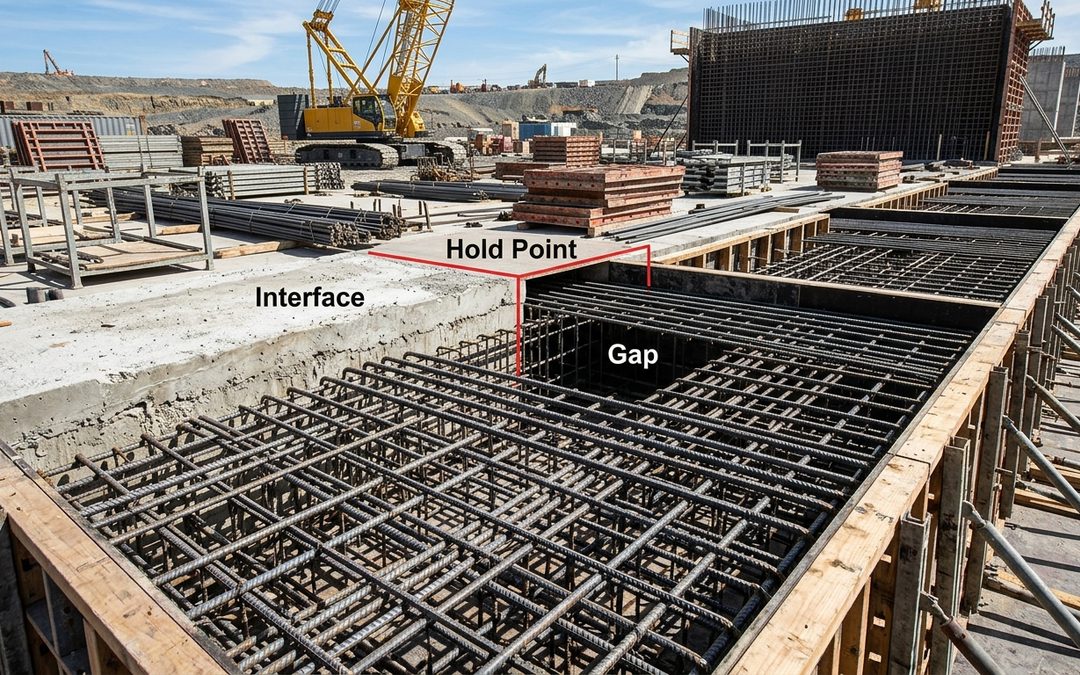
Avoiding rework requires current drawings, clear hold points and visible communication. Supervisors and crews need confidence that they are building from the latest approved information. Changes should be documented and communicated to every affected work area, rather than being passed informally to only part of the team.
Quality checks should occur progressively rather than being left until the final inspection. Checking form dimensions before reo installation, reviewing reinforcement before services restrict access and confirming penetrations before the pour can make corrections easier and less disruptive.
The structural package should also be reviewed as one connected system. A formwork change may affect reinforcement, embeds, pumping access and concrete volumes. Assessing the full impact of a change before work proceeds can prevent one correction from creating several new problems.
Measure practical waste indicators
FRP teams may track damaged formwork components, reo offcut volumes, surplus concrete, rejected loads, packaging quantities and rework events. These observations can be reviewed by level, zone or pour cycle to identify patterns.
The purpose is not to blame individual workers. It is to understand where the delivery system is creating unnecessary losses. For example, repeated concrete surplus may indicate inaccurate take-offs, while repeated formwork damage may point to stripping methods, handling practices or storage problems.
These findings can be discussed during toolbox meetings, coordination sessions and project reviews. Site crews often recognise waste-producing habits before they appear in formal reports, making their feedback valuable when improving work methods.
Performance can also be compared between similar levels or repeated pour cycles. When one area produces less waste or requires less rework, the project team can identify what was done differently and apply that approach elsewhere.
How Future Form supports cleaner structural package delivery
Reducing waste across the structural package requires consistent coordination and clear site practices.
Future Form’s role in reducing waste is centred on organised delivery across form, reo and pour.
Through coordinated site processes, efficient formwork methods, disciplined steel fixing and structured pour preparation, Future Form can help builders manage the structural package as one connected workflow.
This coordinated approach can identify issues earlier, align materials with the construction sequence and create clearer handovers between FRP stages. It can also support more accurate ordering, improved material protection, cleaner work areas and fewer avoidable changes after installation.
For developers and builders delivering large-scale projects, the value is practical: stronger control of the workface, improved productivity and greater confidence that labour and materials are being used effectively.
Future Form’s integrated FRP solutions focus on supporting reliable structural delivery without adding unnecessary complexity to the project.
Building better outcomes through smarter site practices
Reducing waste across FRP does not depend on one product or a dramatic change to the construction program. It comes from practical decisions made across procurement, delivery, storage, installation, inspection and concrete placement.
When formwork is planned for reuse, reo arrives in coordinated packages, concrete is ordered accurately and rework is prevented through clear checks, the entire structural package becomes more efficient.
The result is not only less material entering waste streams. It is also a cleaner, safer and more productive site.
For project teams seeking stronger control across form, reo and pour, smarter site practices provide a realistic starting point. By treating waste as an FRP coordination and construction efficiency issue, Future Form can protect the program, improve quality and deliver better outcomes across large-scale projects in countries around the world.
If you are exploring ways to improve efficiency, reduce waste and strengthen coordination across your next project, it may be worth starting a conversation early. Understanding how integrated FRP solutions can support your construction approach can help set clearer expectations from day one. To learn more or discuss your project requirements, feel free to get in touch with our team. Build smarter today to deliver stronger results tomorrow.
References
Cement Concrete & Aggregates Australia. (2019). Best practice guidelines for concrete by-product re-use at concrete batch plants. https://www.ccaa.com.au/
Department of Climate Change, Energy, the Environment and Water. (2025). Waste generation and prevention: National waste and resource recovery reporting 2024. https://www.dcceew.gov.au/
Green Building Council of Australia. (2025). A practical guide to circular procurement for new buildings and major refurbishments. https://new.gbca.org.au/
Green Building Council of Australia. (2025). Green Star Buildings v1.1. https://new.gbca.org.au/
World Steel Association. (2024). Circular economy. https://worldsteel.org/
World Steel Association. (2024). Guidance on methodologies for modelling reuse and remanufacture in life cycle assessment studies. https://worldsteel.org/