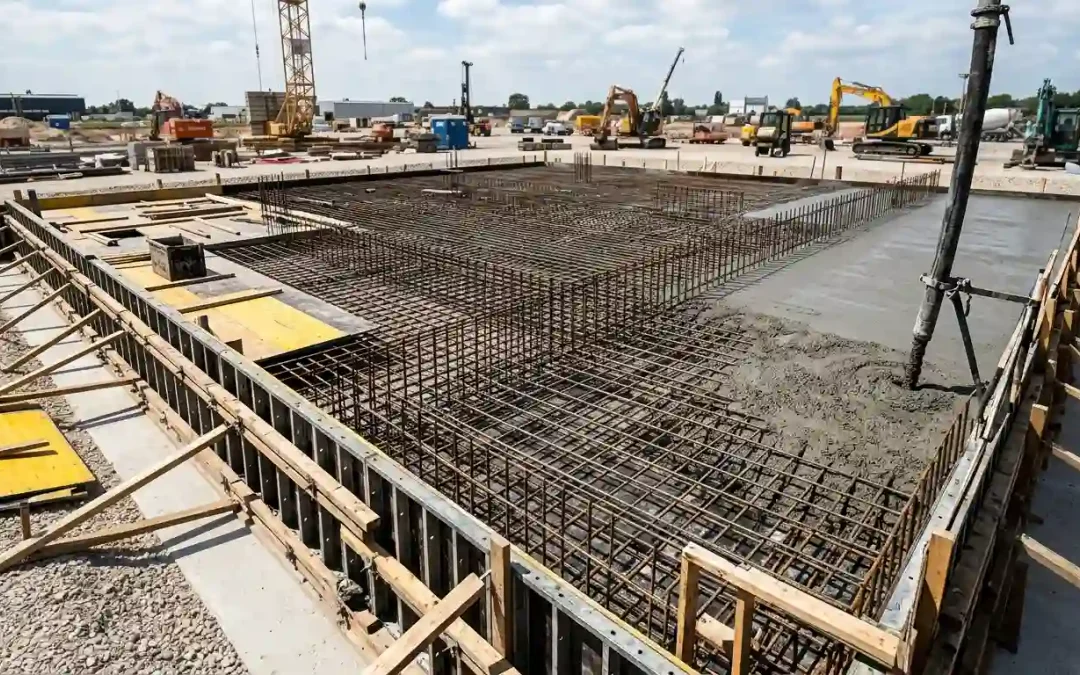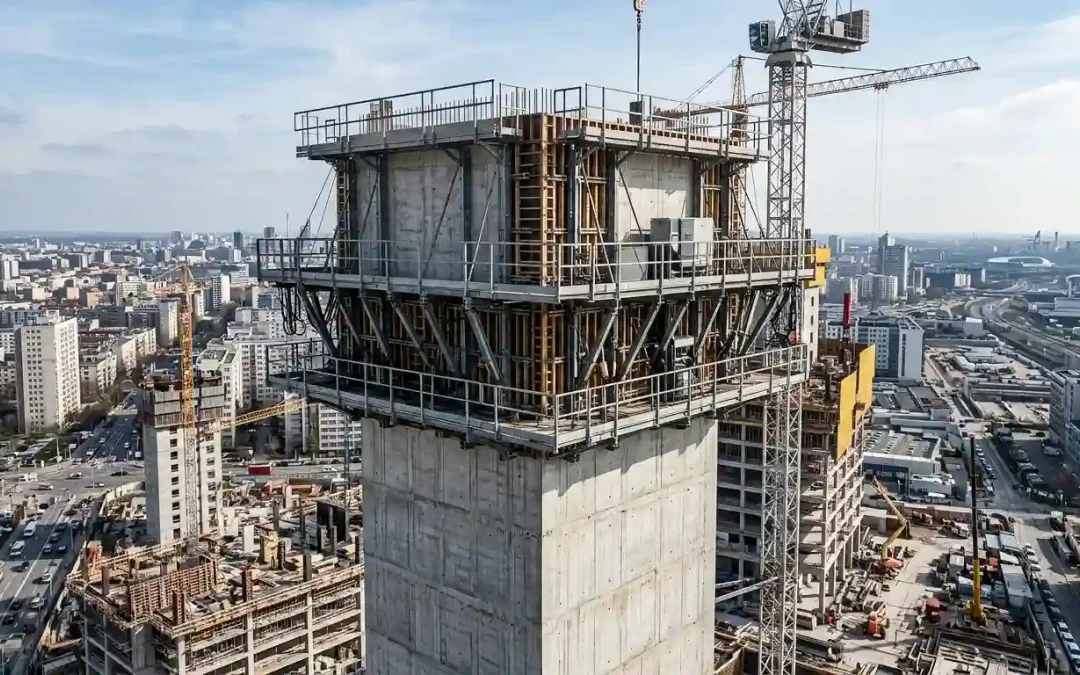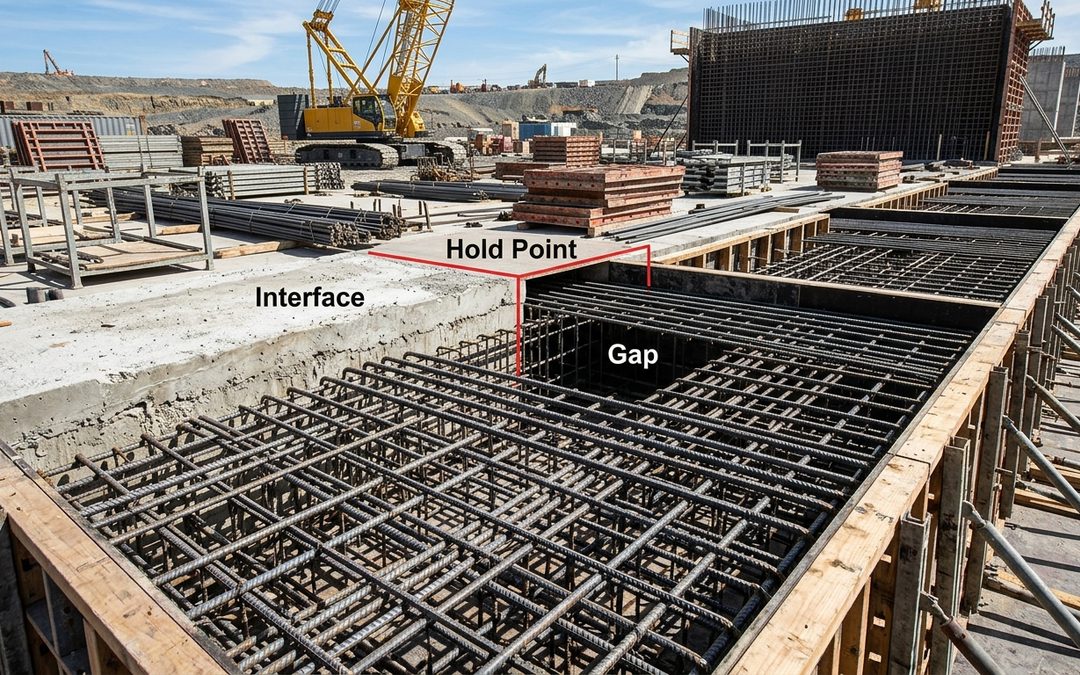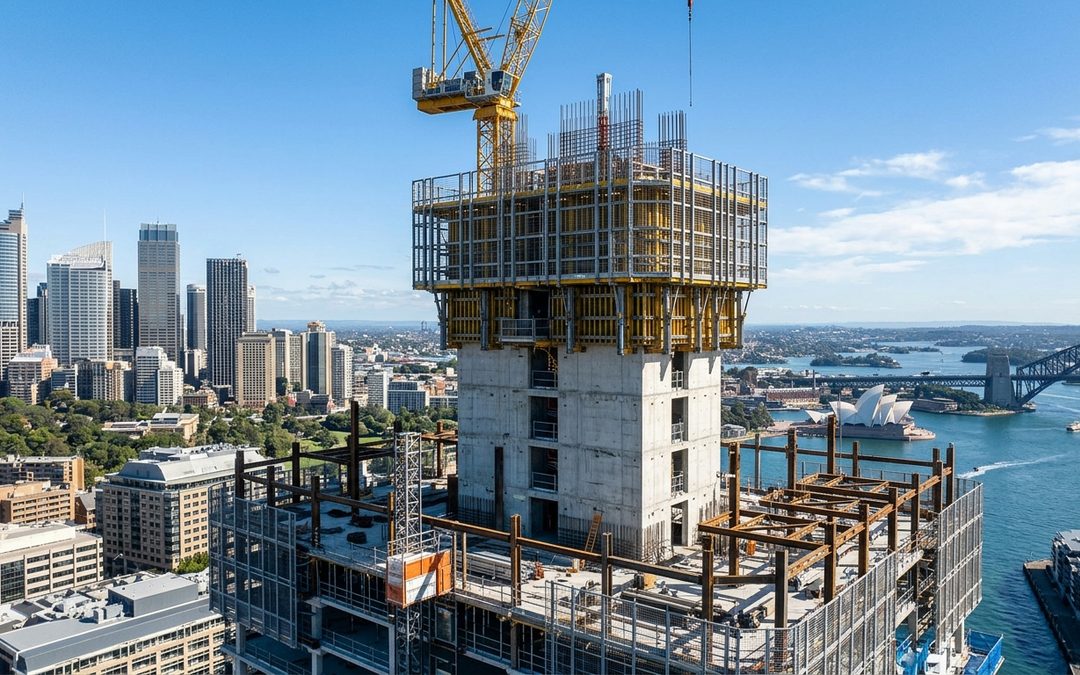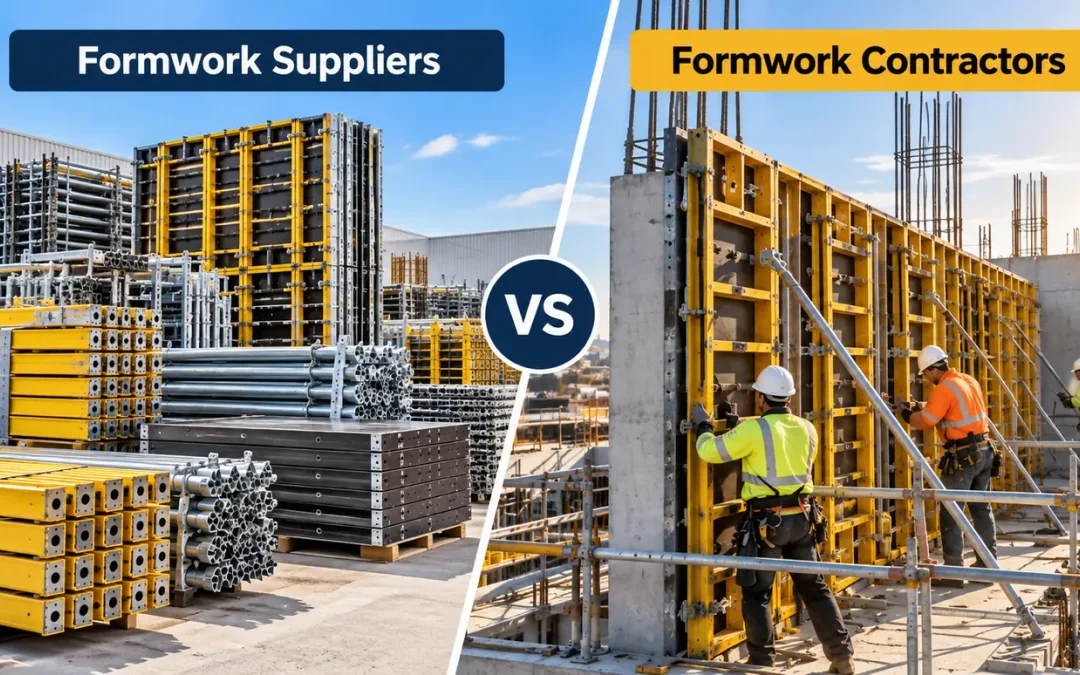
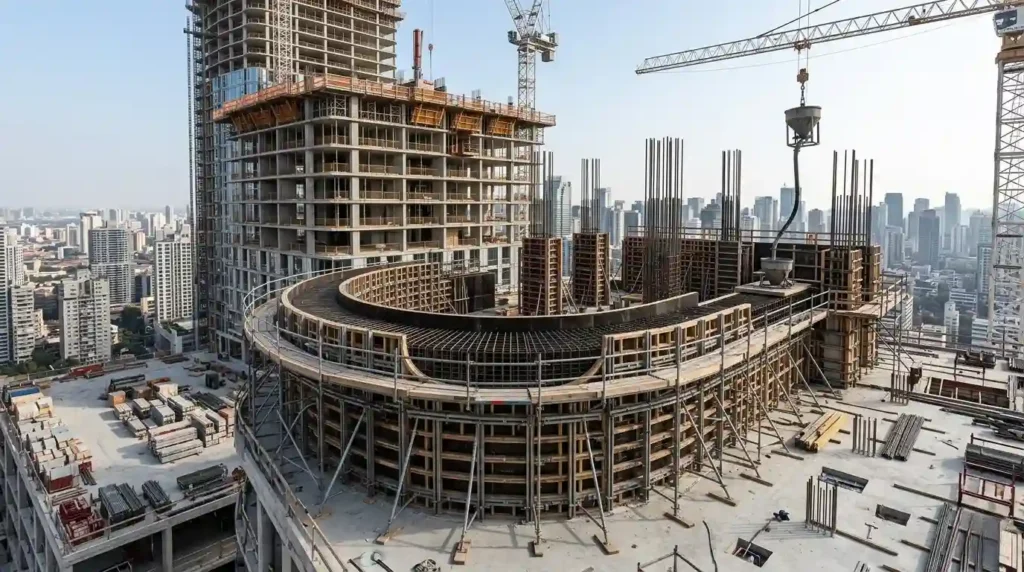
There’s a familiar story in large-scale construction. The formwork goes up without full coordination with the reo crew. The steel fixers arrive to find they’re working around decisions made weeks earlier without their input. Then the concrete pour reveals the gaps — literally and figuratively — and suddenly the site is dealing with rework, delays, and budget blowouts that nobody budgeted for.
Sound familiar? It should. It’s one of the most common and preventable sources of inefficiency on major construction projects across the world.
The fix isn’t complicated in theory. But in practice, it requires a fundamental shift in how FRP contractors, clients, and project managers think about the relationship between form, reo, and pour. At Future Form, we call this approach integrated FRP solutions — and it’s the foundation of everything we do.
Future Form is a structural package specialist with over 20 years of experience delivering precision formwork and integrated structural solutions on some of the most ambitious builds across the country. Built on a culture of safety, integrity, and innovation, we’ve earned our place as a trusted partner behind landmark projects that shape skylines and support communities.
At the core of what we offer are integrated FRP solutions — a delivery model that aligns form, reo, and pour from the very start of a project, rather than treating them as separate trades handed off in sequence. It’s not just a smarter way to build. It’s the only way to consistently achieve the structural performance that complex, large-scale projects demand.
That kind of integration doesn’t happen by accident. It’s driven by the people behind Future Form — an experienced team of formwork specialists, project managers, and structural professionals who understand that precision on site begins long before the first prop is set.
What does “integrated FRP” actually mean?
Before we go further, let’s be clear about what FRP stands for in this context: form, reo, and pour. These three elements are the backbone of structural delivery, and yet, on many projects — particularly complex, large-scale ones — they are still treated as separate trades, handed off sequentially with minimal coordination between them.
Integrated FRP solutions take a different approach. Rather than treating form, reo, and pour as independent phases, an integrated model aligns all three from the very beginning of a project. This means shared planning, shared accountability, and shared performance outcomes.
The result? Precision in formwork that isn’t undone by steel fixing decisions made in isolation. Reinforcement placement that reflects what the pour actually demands. Concrete outcomes that meet structural specifications — without the costly surprises.
Why is precision in formwork the starting point?
Ask any experienced FRP contractor and they’ll tell you: precision in formwork is non-negotiable. The formwork is the mould. If it’s unclear, your structural program will not be clear either.
A form that’s out of tolerance by even a few millimetres can result in structural concrete elements that fail to meet design intent. On high-rise residential towers, commercial buildings, infrastructure bridges, or civil buildings, those margins matter enormously. The cost of pulling down and re-forming a concrete wall or slab is significant — not just in materials, but in programme time, work, and the knock-on effects across an entire project schedule.
But here’s the nuance that’s often missed: precision in formwork is only fully achievable when the reo and pour stages are considered from the outset.
Consider the common scenario where formwork is designed without detailed knowledge of the reinforcement layout. The steel fixers come in and discover that bar spacings, laps, and cover requirements create access problems — or worse, that congested reo zones require the form to be modified after the fact. Every one of those modifications is a cost. Every delay is a risk.
This is why the “form first, figure out the rest later” approach consistently underperforms. Precision in formwork isn’t just about accurate setting out and quality sheeting. It’s about designing the form stage with full visibility of what the reo and pour stages require.
What makes a great integrated FRP contractor?
Not every formwork company can deliver genuine integration across form, reo, and pour. It requires a specific combination of capabilities, systems, and culture.
Technical depth across all three trades: An integrated FRP contractor needs genuine expertise in formwork design, steel fixing, and concrete placement. These aren’t interchangeable skills — they require experienced people in each discipline who can also communicate effectively across the trades.
Early engagement capability: Integration only works if it starts early. The best FRP contractors engage during design development, not just when the programme says “formwork commences.” Early engagement allows the formwork design to be informed before reo and pour requirements.
Robust coordination systems: Integrated delivery requires strong systems for information sharing, programme coordination, and issue resolution. This includes the use of digital tools for clash detection, sequencing, and site communication — not just traditional paper-based methods.
A culture of shared accountability: Perhaps most importantly, genuine integration requires a contractor where every team member — from the leading hand to the project manager — understands that their work is part of a connected system, not an isolated trade package.
Real-world impact: what integrated FRP looks like on a large-scale project
To understand the value of integrated FRP solutions, it helps to think about what they look like in practice.
On a large mixed-use development, the structural package might include post-tensioned suspended slabs, reinforced concrete cores, and complex transfer structures. Each of these elements places demands on the formwork, the reinforcement, and the pour that are deeply interconnected.
A post-tensioned slab, for example, requires precision in formwork that is extraordinarily high — deflection tolerances are tight, and any variation in slab soffit levels has implications for the entire building above. But the formwork design also needs to accommodate tendon placement, anchor pockets, and stressing access — all of which are reo and pour considerations.
In a structured delivery model, these interdependencies get discovered on site, one by one, as each trade encounters the decisions made by the previous one. In an integrated FRP model, they’re resolved in the planning phase, before a single prop is set.
The future of formwork is integrated
The construction industry globally is under pressure to perform better: to deliver more complex projects, to tighter timescales, with greater predictability of cost and quality. The traditional model of sequential, siloed trade delivery is increasingly unable to meet those demands.
Integrated FRP solutions aren’t a new idea — but they’re becoming an expectation rather than a differentiator as clients and builders demand higher performance from their structural contractors.
For developers, builders, and project managers who are serious about performance on large-scale projects, the question isn’t whether to pursue integrated FRP delivery. It’s whether the FRP contractors they’re working with are genuinely capable of delivering it.
At Future Form, we’ve spent more than two decades building the capability, the systems, and the culture to deliver integrated FRP solutions that perform. From complex high-rise concrete structures to landmark and infrastructure projects, our approach to precision in formwork and the integration that makes it possible is what sets our work apart.
Why partner with Future Form?
When it comes to delivering complex structural packages, who you work with matters as much as how you work. Future Form is a structural package specialist with a track record of delivering integrated FRP solutions on some of the most ambitious and technically demanding projects across the country. Our team brings expertise in formwork, steel fixing, and concrete construction together under a single, accountable delivery model.
We engage early, plan thoroughly, and execute with precision — because we understand that the performance of a structure depends on the alignment of every stage, from the first form to the final pour.
Ready to build smarter? Let’s talk about your next project
Precision in formwork doesn’t happen in isolation. It’s the result of careful planning, experienced people, and a delivery model that treats form, reo, and pour as a single, connected system — not three separate trades passing the baton.
Whether you’re in early design development, pricing a structural package, or looking for FRP contractors who can genuinely deliver integrated FRP solutions at scale, the conversation is worth having sooner rather than later. The earlier integration begins, the greater the impact on your programme, your costs, and your structural outcomes.
At Future Form, we work alongside developers, builders, engineers, and industry partners who care about getting it right — from the first form to the final pour. If that sounds like the kind of collaboration you’re looking for on your next large-scale project, we’d love to hear from you. Get in touch with the Future Form team and let’s talk about what integrated FRP solutions can do for your next project.
In construction, standards are not a badge. They are a system.
Future Form achieving triple ISO certification is not about ticking boxes. It is about proving that every process, every decision and every outcome is built on consistency, safety and accountability.
This is what it takes to operate at the highest level.
Read the full article here: https://www.buildaustralia.com.au/business_insight/future-form-iso/
References
Australian Institute of Building. (2022). Best practice in structural concrete delivery: Coordination of formwork, reinforcement, and concrete operations. AIB Press. Retrieved from https://www.aib.org.au
Concrete Institute of Australia. (2020). Recommended practice: Formwork for concrete (3rd ed.). Concrete Institute of Australia. Retrieved from https://www.concreteinstitute.com.au
Construction Industry Training Board (CITB). (2021). Reinforced concrete construction: Integration of trades for complex structures. CITB Publications. Retrieved from https://www.citb.co.uk
Hurd, M. K. (2005). Formwork for concrete (7th ed.). American Concrete Institute. Retrieved from https://www.concrete.org
Neville, A. M., & Brooks, J. J. (2010). Concrete technology (2nd ed.). Pearson Education. Retrieved from https://www.pearson.com
Standards Australia. (2018). AS 3610-2018: Formwork for concrete. Standards Australia. Retrieved from https://www.standards.org.au
Standards Australia. (2019). AS/NZS 4671:2019: Steel reinforcing materials. Standards Australia. Retrieved from https://www.standards.org.au
Concrete Construction. (2023). Coordination of formwork and reinforcement trades: Lessons from complex projects. Concrete Construction, 68(4), 22–29. Retrieved from https://www.concreteconstruction.net
Institution of Structural Engineers. (2012). Standard method of detailing structural concrete: A manual for best practice (3rd ed.). Institution of Structural Engineers. Retrieved from https://www.istructe.org
BuildingPoint. (2023). Digital coordination tools for structural concrete: A guide for contractors. BuildingPoint Industry Resources. Retrieved from https://www.buildingpoint.com.au