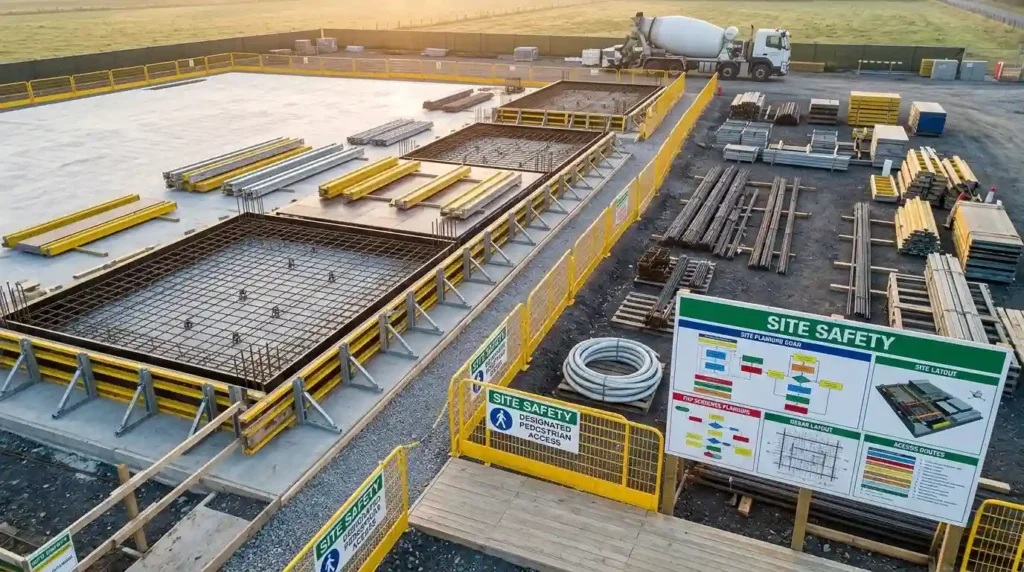
In construction, safety is often discussed when work is already happening on site. Toolbox talks, inspections, permits, exclusion zones and daily checks all play an important role. But when it comes to FRP, the safest outcomes are usually shaped much earlier.
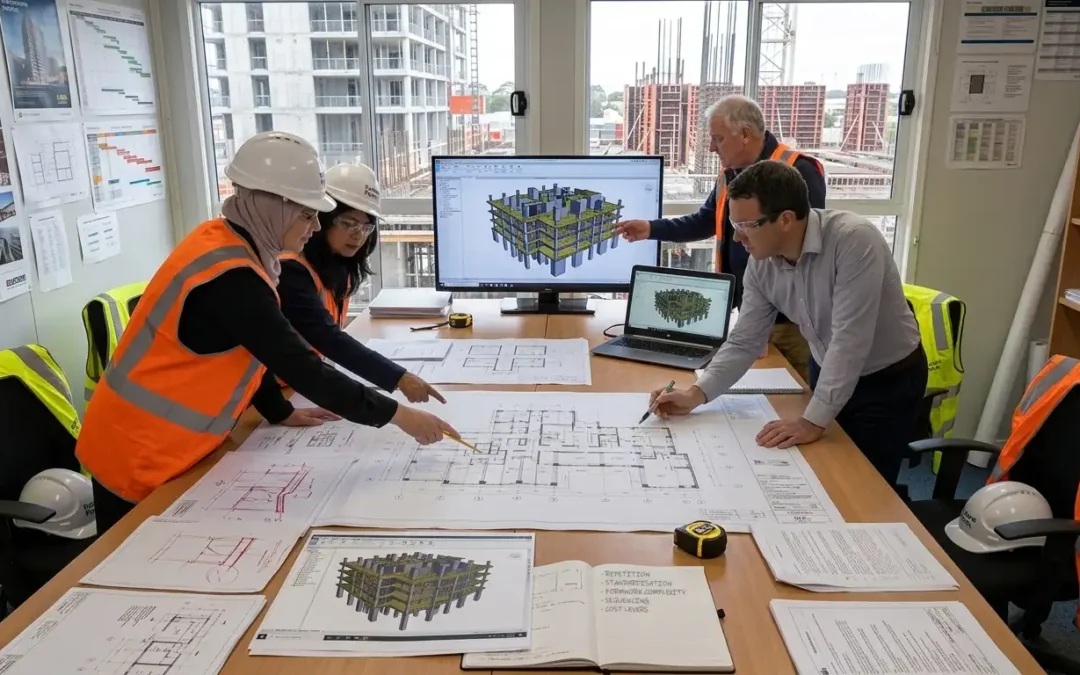
Early FRP planning gives builders, developers, FRP contractors and site teams the chance to identify risks before crews, materials and plant arrive on site. It helps teams think through formwork systems, steel fixing access, concrete placement, labour movement, sequencing, material deliveries and site coordination before pressure builds.
This is where Future Form’s experience in structural delivery becomes valuable. Through its formwork and FRP services, Future Form supports builders and developers with integrated planning across form, reo and pour activities. Backed by an expert team, Future Form focuses on practical site methods, clear sequencing and coordinated delivery that help reduce avoidable risks before they reach the workface.
This matters because construction remains one of the higher risk industries in most countries. National WHS data shows that construction accounted for 23 percent of worker fatalities in 2023, making it one of the leading industries for fatal workplace incidents. Safe Work guidance also reinforces that construction risks should be identified, assessed and controlled before work begins, with duty holders expected to apply risk control measures using the hierarchy of control.
For large scale projects, FRP is not just a trade package. It is a structural package that affects programme, access, crane use, loading, temporary works, concrete quality, labour coordination and the way multiple trades interact. When it is planned late, teams are often forced into rushed decisions. When it is planned early, site safety becomes part of the delivery method, not a reaction to problems.
Why early FRP planning matters
Early FRP planning is about looking ahead before physical work begins. It considers how formwork will be installed, how steel fixing will be completed, how concrete will be poured, how crews will move through the work zone and how each stage connects to the next.
This planning is especially important because FRP work often takes place in busy, changing and high pressure environments. There may be workers operating at height, suspended loads, congested decks, mobile plant, penetrations, temporary edge protection, reinforcement congestion and wet concrete placement happening within a tight programme.
When planning is left too late, site teams may still deliver the work, but the margin for error becomes smaller. Access may not be ideal. Materials may be stored in the wrong location. Labour may overlap in confined areas. Sequencing may clash with other trades. Formwork changes may happen under pressure. These are the conditions where avoidable risks increase.
Early planning allows the project team to ask practical safety questions before site pressure takes over. Where will formwork material be unloaded? How will reinforcement be moved safely? What access is required for steel fixing? Where will workers stand during the pour? What areas need to be isolated? How will the concrete pump, boom or delivery route affect movement on site?
The answers to these questions shape a safer site long before pour day.
Safety does not start on pour day
One of the biggest misconceptions in FRP is that safety peaks around the concrete pour. Pour day is important, but it is only one part of the process.
By the time concrete arrives, many safety outcomes have already been influenced by earlier decisions. The formwork has been selected, installed and checked. The reo has been placed. Access routes have been created. Temporary works have been coordinated. Labour has been allocated. Inspection points have been scheduled. The pour sequence has been agreed.
If these decisions were rushed, unclear or disconnected, pour day becomes harder to manage. Workers may be reacting to issues rather than following a clear method. Supervisors may be dealing with last minute changes. Crews may be working around incomplete access, congested zones or unresolved design details.
The SafeWork formwork guidance notes that its code applies to those who design, construct, erect, alter, maintain, dismantle or remove formwork, which shows that safety responsibilities extend across the full lifecycle of formwork activity, not only the final concrete placement.
This is why early FRP planning is so valuable. It gives the project team time to make safer choices before work becomes urgent.
Reducing rushed decisions and unsafe changes
Rushed decisions are one of the biggest threats to site safety. In FRP work, rushed decisions may happen when drawings are unclear, materials arrive late, site access changes, programme pressure increases or coordination between trades breaks down.
Early FRP planning reduces the need for last minute problem solving. It allows teams to review drawings, understand structural requirements, plan craneage, confirm material quantities, coordinate labour and identify potential clashes before work starts.
This does not mean every risk disappears. Construction sites are dynamic and conditions can change quickly. However, when the main FRP sequence has already been planned, teams are better prepared to respond safely.
For example, if a pour sequence has been reviewed early, the site team can plan where workers will be positioned, how concrete will be placed, where exclusion zones are needed and how communication will work between supervisors, pump operators and labour. If reinforcement congestion is identified early, steel fixing teams can adjust their approach before workers are forced to manage awkward installation issues under pressure.
This is where precision in formwork becomes more than a quality issue. It becomes a safety issue. When formwork is planned, set out and checked properly, it supports safer installation, safer access and more predictable concrete placement.
Managing overcrowded work zones
Large construction sites often involve multiple trades working close together. Without clear sequencing, overcrowding can become a serious safety concern.
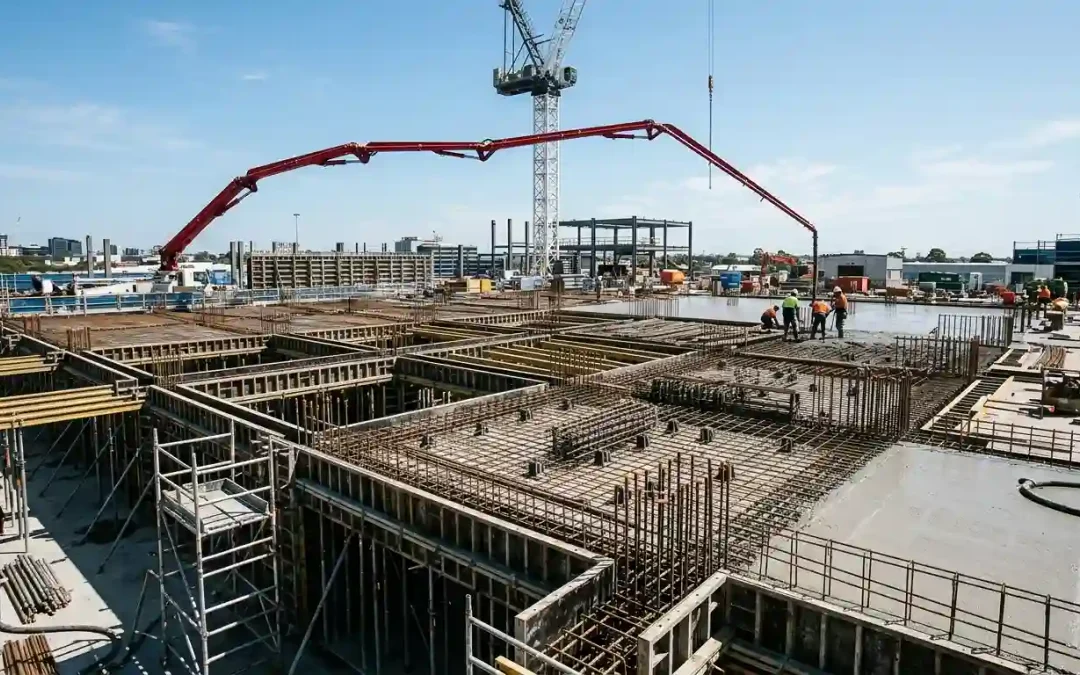
FRP work requires space. Formwork crews need room to move, lift, position and secure materials. Steel fixing crews need access to place and tie reinforcement. Concrete crews need safe areas to manage hoses, pumps, finishing works and inspections. Supervisors need visibility. Plant and materials need controlled movement.
When too many tasks happen in the same space at the same time, the risk of incidents increases. Workers may step over materials, work near suspended loads, move through restricted areas or complete tasks in awkward positions.
Early FRP planning helps reduce this by creating a clearer sequence. Instead of every crew fighting for space, the work can be staged in a way that supports safer movement. Materials can be delivered closer to when they are needed. Access ways can remain clearer. Exclusion zones can be planned instead of created in a rush.
For developers and builders, this also supports productivity. A safer, less congested work zone is usually a more efficient one. Crews spend less time waiting, reworking or navigating around avoidable obstacles.
Improving coordination between form, reo and pour
The strength of integrated FRP solutions is that form, reo and pour are not treated as isolated tasks. They are connected stages of the same structural package.
If formwork is not planned with steel fixing in mind, access can become difficult. If steel fixing is not coordinated with the pour method, congestion or placement challenges can appear late. If concrete placement is not considered during formwork planning, the team may face preventable issues during the pour.
Early FRP planning brings these activities together. It allows the team to consider how each decision affects the next stage.
This joined up approach is particularly valuable on complex structural works, where small coordination errors can have large consequences. A change in formwork arrangement may affect reo placement. A congested reinforcement zone may affect concrete flow. A revised pour sequence may affect labour allocation, access and temporary works checks.
By planning FRP as one connected process, project teams can reduce handover gaps and improve site safety.
Supporting safer material and labour movement
Material movement is a major part of FRP delivery. Formwork components, reinforcement, tools, plant, concrete equipment and temporary works materials all need to move through the site safely.
Poor planning can lead to materials being stored in walkways, lifted at the wrong time, moved through active work zones or handled manually when better options were available. It can also cause workers to travel longer distances with tools and materials, increasing fatigue and exposure to hazards.
Early FRP planning helps teams map the movement of materials and labour before site activity becomes crowded. It allows teams to think about loading zones, crane timing, storage areas, access paths, hoist availability and workface readiness.
This is also where experienced supervision makes a difference. A supervisor who understands FRP can see practical risks that may not be obvious on a programme alone. They can identify whether the planned workface is realistic, whether labour numbers suit the available space and whether the sequence supports safe movement.
Reducing rework and its safety impact
Rework is often discussed as a cost and programme issue, but it is also a safety issue.
When FRP work needs to be corrected, workers may be required to return to areas that should already be complete. They may need to cut, remove, adjust, lift, patch or reinstall elements under tighter time pressure. Rework can also create clashes with other trades, increasing congestion and confusion on site.
Early planning reduces the likelihood of rework by improving coordination before work begins. Clearer sequencing, better drawing review, practical formwork planning, coordinated steel fixing and planned concrete activities all help reduce errors.
The result is not only better delivery. It is a safer environment where workers are less likely to be exposed to avoidable corrective work.
The role of experienced FRP contractors
FRP contractors play a critical role in site safety because they understand how structural work is actually delivered on site. Drawings and programmes are important, but practical construction knowledge is what turns planning into safe execution.
Experienced FRP contractors can help builders and developers identify risks early. They can advise on formwork systems, access requirements, labour staging, pour methods, steel fixing constraints and realistic sequencing.
They can also support safer decision making by identifying where design intent, site conditions and programme expectations may not align. This early input is especially valuable on large scale projects, where small planning oversights can create major site impacts later.
For Future Form, early involvement means helping project teams plan FRP with safety, buildability and coordination in mind. This supports a smoother structural package and reduces avoidable risks before they reach the workface.
How Future Form supports safer structural package delivery
Bringing safety into the earliest stages of FRP planning requires experience, clear coordination and a practical understanding of how structural work unfolds on site. Future Form understands that safe FRP delivery relies on more than completing formwork, steel fixing and concrete placement. It relies on planning the full process properly.
Through integrated FRP solutions, Future Form supports builders and developers with clearer sequencing, practical site methods, experienced supervision and coordinated delivery across form, reo and pour activities.
This approach helps reduce rushed decisions, overcrowded zones, unclear handovers and unsafe last minute changes. It also supports better communication between site teams, subcontractors and project stakeholders.
By focusing on precision in formwork, planned steel fixing and controlled concrete placement, Future Form helps create safer conditions for workers while supporting programme and quality outcomes.
For clients, this means the structural package is not treated as a set of disconnected tasks. It is managed as one coordinated process, with safety built into the planning from the beginning.
Building safer outcomes from the planning stage
Early FRP planning is one of the strongest ways to improve site safety in construction. It helps teams identify risks before work begins, coordinate labour and materials, improve sequencing, reduce rework and create safer work zones.
For large scale projects, this planning is not just a safety exercise. It is a delivery advantage. When formwork, steel fixing and concrete activities are properly planned, the project becomes more predictable, more coordinated and safer for the people building it.
Safety in FRP does not start on pour day. It starts when the project team first asks how the work will be built, who will be involved, what risks may appear and how each stage can be delivered safely.
Future Form’s approach to early FRP planning reflects this mindset. By combining practical experience, integrated FRP solutions and strong structural package coordination, Future Form helps deliver safer, smarter, precision and more reliable construction outcomes.
As more project teams look for safer, more coordinated ways to deliver complex structural packages, early FRP planning will continue to play an important role in reducing avoidable risks before they reach site. Future Form offers a simple next step for those exploring how better form, reo and pour coordination can support safer structural delivery.
References
Safe Work Australia. (2024). Key work health and safety statistics 2024. Retrieved May 5, 2026, from https://www.safeworkaustralia.gov.au/media-centre/news/key-work-health-and-safety-statistics-2024
Safe Work Australia. (2024). Key work health and safety statistics Australia 2024. Retrieved May 5, 2026, from https://data.safeworkaustralia.gov.au/insights/key-whs-statistics-australia/2024
Safe Work Australia. (2024). Model code of practice: Construction work. Retrieved May 5, 2026, from https://www.safeworkaustralia.gov.au/sites/default/files/2024-11/model_code_of_practice-construction_work-nov24.pdf
Safe Work Australia. (n.d.). Construction: Managing risks. Retrieved May 5, 2026, from https://www.safeworkaustralia.gov.au/safety-topic/industry-and-business/construction/managing-risks
SafeWork NSW. (2021). Code of practice: Formwork. Retrieved May 5, 2026, from https://www.safework.nsw.gov.au/resource-library/list-of-all-codes-of-practice/codes-of-practice/formwork