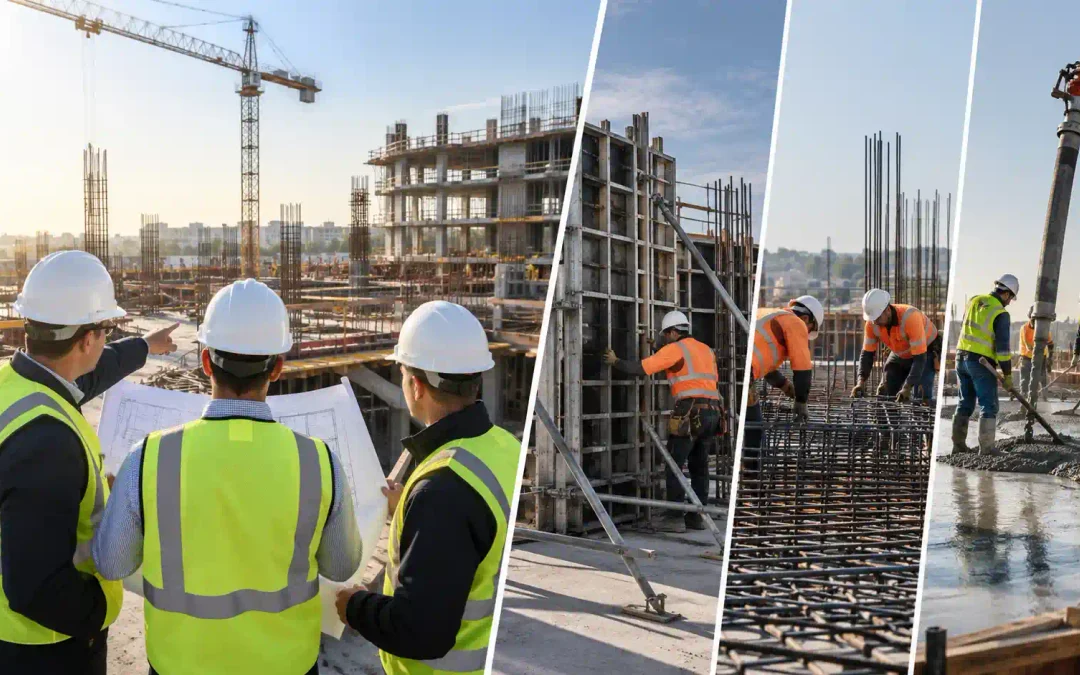
In the world of construction, outcomes are often measured in timelines, budgets, and structural integrity. Yet, behind every successful structure lies something less visible but equally critical, the condition of the people building it.
At Future Form, this understanding shapes every project from the ground up. As a specialist in delivering integrated FRP solutions across form, reo, and pour, Future Form brings together expertise, systems, and people into a single, streamlined structural package. This approach not only improves efficiency and coordination but also creates the conditions for healthier, more productive sites where teams can consistently perform at their best.
Backed by a team that understands the real pressures of large-scale construction, Future Form focuses on structured workflows, safer systems of work, and efficient sequencing to reduce strain across every stage of delivery. The result is simple but powerful: healthy sites lead to stronger structures.
For developers, contractors, and project stakeholders, the conversation is shifting. It is no longer just about materials and methodologies. It is about team wellbeing, and how it directly impacts performance, safety, and long-term project success.
The connection between healthy sites and stronger structures
Construction sites are dynamic, high-pressure environments. The physical demands of formwork installation, steel fixing, and concrete pouring require precision, endurance, and coordination. When site conditions are poor or teams are fatigued, even the most well-designed project can face setbacks.
A healthy site is not limited to compliance or basic safety measures. It extends to how teams move, work, and recover throughout the day. It includes access to safe systems, logical sequencing, and workflows that reduce unnecessary strain.
When these elements are in place, the benefits are immediate and measurable:
- Improved accuracy across form, reo, and pour activities
- Reduced rework and material waste
- Higher productivity and consistency
- Stronger collaboration between crews
Ultimately, a stronger structure is not just the result of quality concrete or engineering. It is the outcome of a workforce operating at its best.
Understanding fatigue in FRP environments
Fatigue is one of the most underestimated risks on site. In FRP operations, where tasks are repetitive and physically demanding, fatigue builds gradually and can significantly impact overall performance.
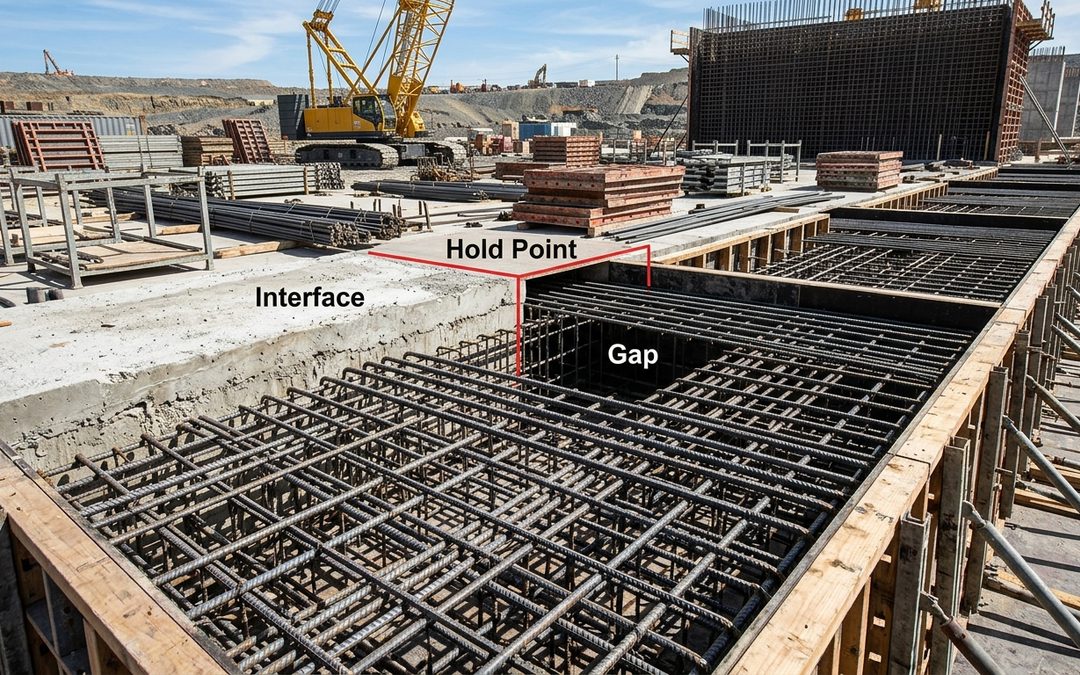
In formwork, workers are required to handle heavy panels, align systems, and maintain precision across large surfaces. In steel fixing, repetitive bending, tying, and positioning place continuous strain on the body over time. During the pour stage, long hours combined with constant monitoring demand sustained focus and attention.
As fatigue increases, attention to detail begins to decline, reaction times slow down, and the likelihood of errors rises. This also increases the risk of injuries, particularly in high-pressure environments where timing and coordination are critical.
Even small inaccuracies in the early stages of FRP can escalate into much larger structural issues. A slightly misaligned form or incorrectly placed reinforcement may seem minor at first, but it can affect the integrity and outcome of the entire structure.
This is why addressing fatigue is not just a workforce concern, but a structural one that directly influences the success of the project.
Physical strain and its impact on productivity
The physical nature of steel fixing and formwork cannot be ignored. Lifting, bending, and repetitive movement place continuous stress on the body. Without proper systems in place, this strain accumulates and begins to affect productivity.
When workers are physically strained:
- Tasks take longer to complete
- Quality becomes inconsistent
- Coordination between teams suffers
- Injury risks increase
Over time, this creates a ripple effect across the project. Delays in one stage impact the next, disrupting the entire FRP sequence.
Forward-thinking projects are now prioritising methods that reduce manual strain. This includes:
- Prefabricated components where possible
- Efficient material handling systems
- Clear workflows that minimise unnecessary movement
These approaches are not just about efficiency. They are about maintaining team wellbeing so that performance remains consistent from start to finish.
Site conditions and their role in performance
Site conditions play a major role in shaping how effectively teams can operate. Poor access, cluttered workspaces, and unclear sequencing can quickly turn even simple tasks into complex challenges.
A well-organised site, on the other hand, supports:
- Safe movement across work zones
- Clear communication between teams
- Efficient transitions between form, reo, and pour stages
Environmental factors such as heat, noise, and exposure also influence performance. Without proper management, these conditions can contribute to fatigue and reduce overall productivity.
Healthy sites prioritise:
- Clean and structured work areas
- Logical sequencing of tasks
- Adequate rest and recovery opportunities
- Clear visibility of workflows and responsibilities
These factors create an environment where teams can focus on delivering quality work, rather than navigating unnecessary obstacles.
The hidden cost of neglecting team wellbeing
When team wellbeing is overlooked, the consequences extend beyond individual workers. The entire project feels the impact.
Common outcomes include:
- Increased rework due to errors in formwork or steel fixing
- Delays in concreting and pouring schedules
- Higher safety incidents and associated costs
- Reduced morale and team cohesion
These challenges often lead to budget overruns and strained project timelines. In contrast, investing in healthy sites can significantly reduce these risks.
Developers and contractors are beginning to recognise that wellbeing is not an added cost. It is a strategic investment that protects both people and projects.
Why integrated FRP solutions make a difference
One of the most effective ways to support healthy sites and stronger structures is through integrated FRP solutions.
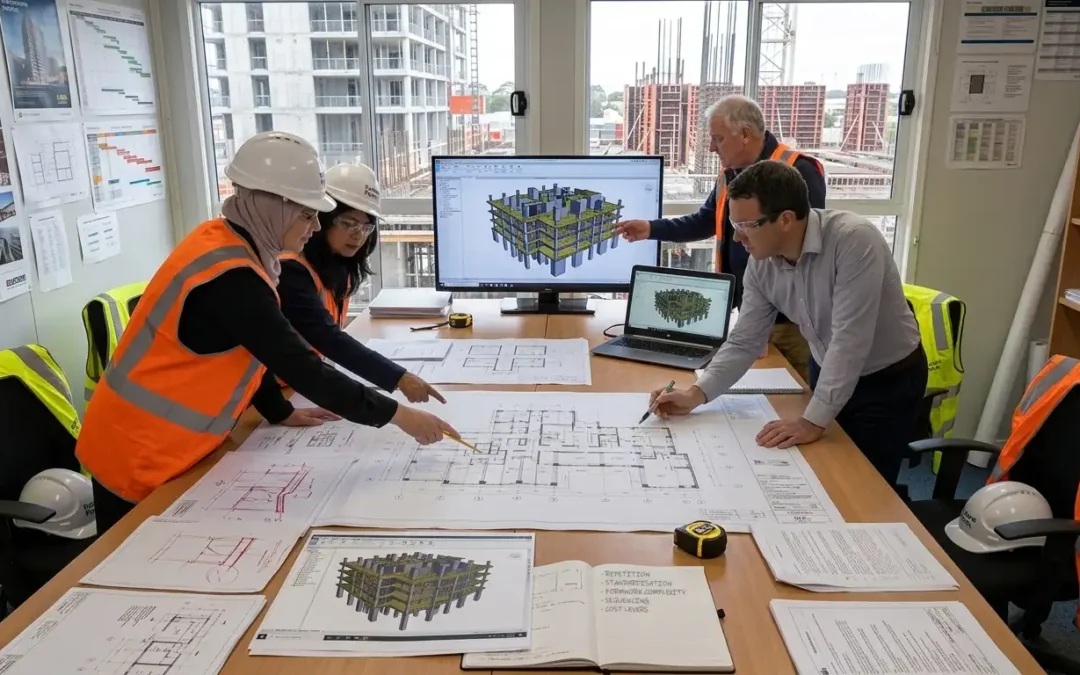
When form, reo, and pour are delivered as a unified structural package, coordination between trades improves significantly. This approach reduces downtime between stages, creates consistent workflows that minimise confusion, and allows for better planning and sequencing across the entire project.
By integrating these stages, the fragmentation often seen when multiple contractors operate independently is removed. Each phase is aligned with the next, which reduces pressure on teams and improves overall efficiency on site.
For workers, this means expectations and responsibilities are clearly defined, duplication of effort is minimised, and both physical and mental strain are reduced. As a result, teams are able to maintain a more consistent level of performance throughout the project.
For project stakeholders, this approach leads to greater predictability in timelines, higher quality outcomes, and a lower risk of costly delays.
Future Form’s approach to team wellbeing in FRP
Applying these ideas in practice requires more than intent; it relies on how work is structured and delivered on site. At Future Form, the focus on team wellbeing is embedded in how projects are planned and delivered. It is not treated as an afterthought, but as a core component of successful FRP execution.
Carefully designed workflows ensure that tasks are completed in a logical sequence, reducing unnecessary movement and allowing teams to work efficiently without excessive strain. Safety is prioritised at every stage of formwork, steel fixing, and concrete pouring, which helps minimise risks and enables teams to focus on delivering high-quality outcomes.
Coordinated scheduling supports smooth transitions between form, reo, and pour stages, reducing downtime and maintaining momentum across the site. Where possible, systems and processes are also implemented to minimise heavy lifting and repetitive tasks, supporting long-term team health.
By creating an environment that supports both physical and mental wellbeing, teams are able to maintain consistent performance throughout the project lifecycle. This holistic approach aligns with the broader goal of delivering stronger structures through healthier sites.
Building a culture of wellbeing on construction sites
Creating healthy sites is not just about systems and processes, but about establishing a strong and supportive culture.
A culture that values team wellbeing encourages open communication about safety and workload, promotes collaboration between teams and supervisors, and supports continuous improvement in site practices.
When workers feel supported, they are more engaged, motivated, and confident in their roles. This leads to improved performance and higher-quality work across all stages of the project.
Leadership plays a critical role in shaping this culture. By prioritising wellbeing at every level, from planning through to execution, projects are better positioned to achieve outcomes that go beyond expectations.
The future of FRP: Performance driven by people
As construction continues to evolve, the role of people in delivering successful projects is becoming increasingly recognised. While technology, materials, and methods remain essential, they are only as effective as the teams using them.
The future of FRP, including formwork, steel fixing, and concrete pouring, will be shaped by smarter workflows, more integrated delivery models, and a stronger focus on team wellbeing.
Projects that embrace these principles are more likely to achieve consistent, high-quality outcomes, while also setting new standards for performance across the industry.
Where stronger structures truly begin
Before the first form is set or the first pour begins, the foundation of any project is already in place. It lies in the condition of the team, the clarity of the workflow, and the environment in which work is carried out.
Healthy sites are not a luxury. They are a necessity for delivering reliable, high-quality outcomes in modern construction.
At Future Form, this thinking sits behind how projects are approached, with a focus on keeping teams supported, workflows clear, and performance consistent across every stage of FRP.
For those planning upcoming projects, taking a closer look at how site conditions, sequencing, and team wellbeing influence outcomes can make a meaningful difference. If you are considering how this applies to your own project, you can reach out to the team for practical insight and support where it counts.
The opportunity is not just to build better structures, but to create site conditions that allow those structures to be delivered properly from the start. Because in the end, stronger structures always begin with healthier sites.
References
Lingard, H., & Turner, M. (2017). Improving the health of male, blue collar construction workers: A social ecological perspective. Construction Management and Economics, 35(5), 239–253. Retrieved from https://www.tandfonline.com
Safe Work Australia. (2023). Work-related injuries and fatalities in construction. Retrieved from https://www.safeworkaustralia.gov.au
World Health Organization. (2022). Mental health at work: Policy brief. Retrieved from https://www.who.int
Gibb, A., Haslam, R., Hide, S., & Gyi, D. (2005). What causes accidents? Proceedings of the ICE – Civil Engineering, 158(1), 46–50. Retrieved from https://www.icevirtuallibrary.com
International Labour Organization. (2021). Safety and health in construction. Retrieved from https://www.ilo.org