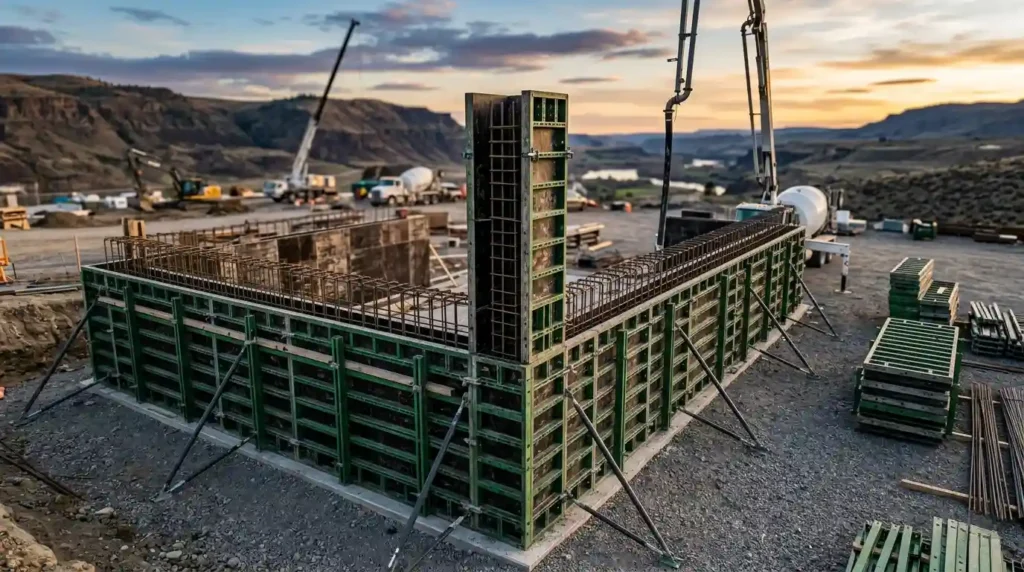
Concrete is the backbone of modern construction. From high-rise residential towers to complex commercial developments, it forms the structural core of most large projects. Yet the environmental cost of concrete construction continues to attract growing attention across the industry. One of the biggest contributors to unnecessary material use is concrete waste, often created during inefficient or poorly coordinated construction processes.
This is where sustainability in FRP becomes an important discussion. When the form, reo, pour (FRP) process is approached as a single coordinated system rather than fragmented trades, projects can dramatically reduce over-pouring, minimise waste and improve structural efficiency. At the centre of this shift is smarter formwork and better planning of the structural package.
Modern developers and contractors are increasingly recognising that sustainability does not start once construction begins. It begins during planning, engineering and coordination of the entire FRP system, where decisions around formwork design, steel fixing, and concrete sequencing influence both structural performance and material efficiency.
This is the approach taken by Future Form, a specialist contractor delivering integrated form, reo and pour (FRP) solutions for large-scale developments. Through engineered formwork systems, coordinated reinforcement installation and carefully sequenced pours, the team works to reduce concrete waste, improve build efficiency and deliver high-quality structural outcomes across complex projects.
With a strong focus on collaboration and planning, Future Form’s structural services support developers and builders in managing the entire structural package more effectively. This approach is backed by the expertise of experienced FRP professionals, whose combined knowledge of formwork, steel fixing and concrete construction ensures that each stage of the FRP process is delivered with precision and efficiency.
Why concrete waste remains a major issue in construction
Despite advances in building technology, concrete waste remains a persistent issue across construction projects worldwide. Waste typically occurs in several stages of the structural package, particularly when the form, reo, pour sequence is not properly aligned.
Common causes of waste include:
• Over-pouring due to poorly designed formwork systems
• Inaccurate reinforcement placement requiring rework
• Misalignment between steel fixing, formwork and concrete placement teams
• Structural corrections caused by inconsistent pouring methods
• Lack of coordination between trades responsible for FRP delivery
When these issues occur, the result is often excess concrete use, additional pumping time, structural corrections and unnecessary material disposal.
Concrete production itself is already resource intensive. Cement manufacturing is widely recognised as one of the largest industrial sources of carbon emissions globally. Therefore, reducing concrete waste on construction sites can play a meaningful role in improving sustainability across the industry.
This is why sustainability in FRP is not simply about materials. It is about how the FRP contractors coordinate the structural package from the earliest stages of the project.
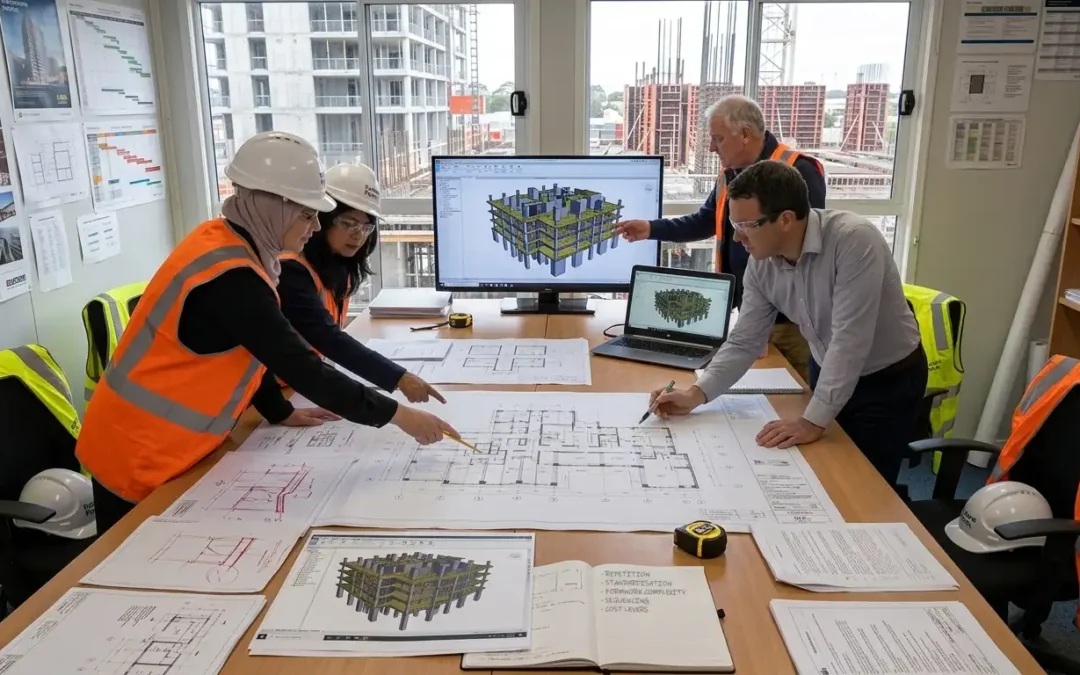
Sustainability in FRP begins with coordinated structural planning
In many traditional construction models, the formwork, steel fixing, and concrete pouring processes are handled by separate subcontractors. While each trade performs its role independently, the lack of integration often leads to inefficiencies.
A coordinated FRP approach changes this dynamic.
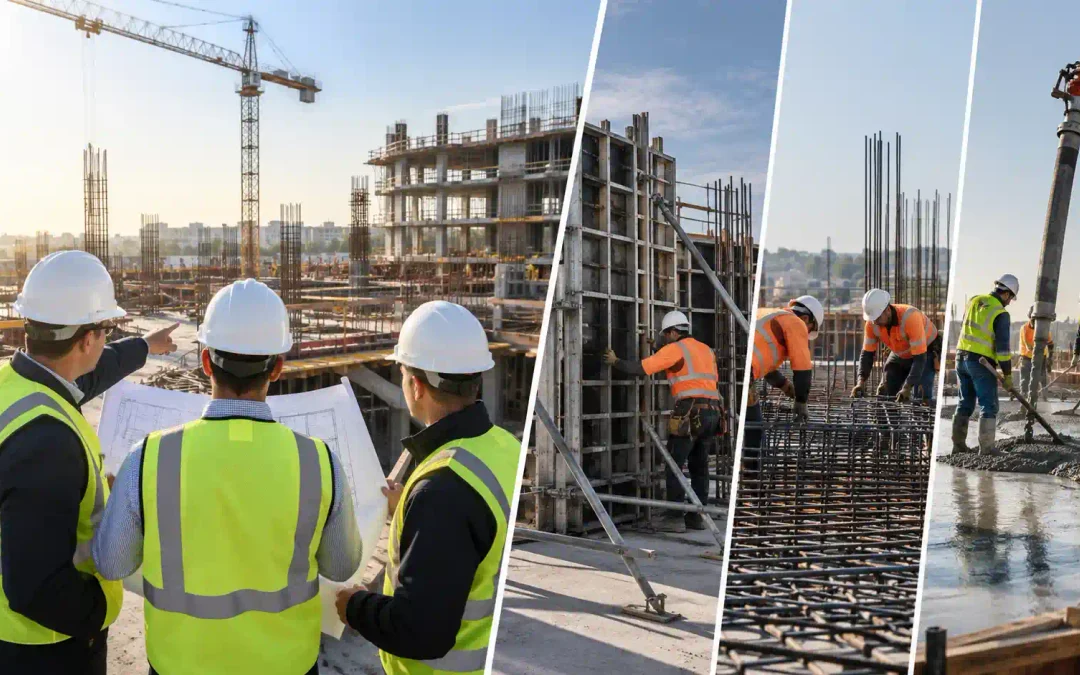
When form, reo, pour activities are engineered and planned as a single structural workflow, several sustainability benefits emerge:
• Reduced risk of over-pouring
• More accurate reinforcement placement
• Improved sequencing of structural elements
• Fewer structural corrections
• Lower material waste across the build
Instead of reacting to issues once construction begins, integrated planning allows the entire structural package to be optimised before work starts on site.
This approach is particularly valuable for complex developments such as high-rise towers, podium structures and large commercial buildings where small inefficiencies can quickly scale into significant material waste.
Through integrated FRP solutions, contractors are able to align formwork design, reinforcement layout and pour sequencing to ensure that each structural element is delivered with maximum precision.
The role of smarter formwork in reducing concrete waste
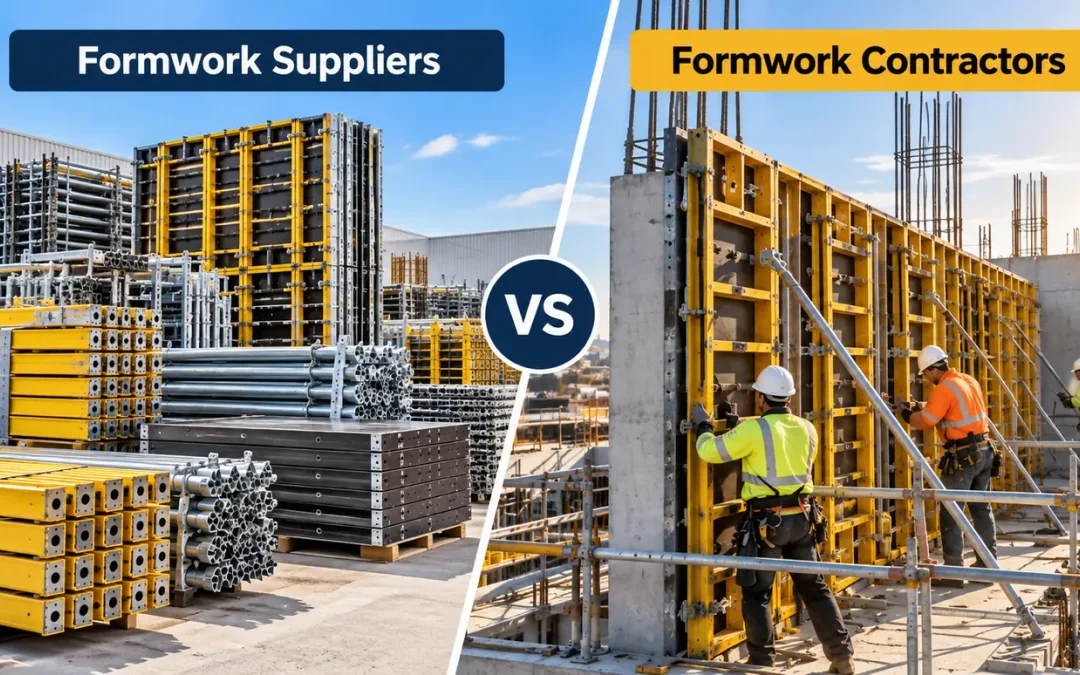
One of the most effective ways to reduce concrete waste is through smarter formwork design.
Formwork determines the exact shape, volume and structural alignment of every concrete element in a building. When formwork systems are poorly engineered or inconsistently installed, several problems can arise:
• Concrete leakage during pouring
• Over-pouring to compensate for inaccurate formwork geometry
• Surface defects requiring additional finishing
• Structural deviations that require corrective pours
Modern formwork systems, however, are designed with precision and repeatability in mind. Engineered formwork solutions allow contractors to:
• Maintain consistent structural dimensions
• Control concrete volumes accurately
• Reduce material loss during pouring
• Increase efficiency of the form, reo, pour cycle
By using smarter formwork, construction teams can ensure that concrete is used exactly where it is needed and not wasted due to misalignment or inefficiencies.
This is a critical step towards improving sustainability in FRP, particularly on large projects where repeated floor cycles amplify the impact of every design decision.
How integrated FRP solutions improve environmental performance
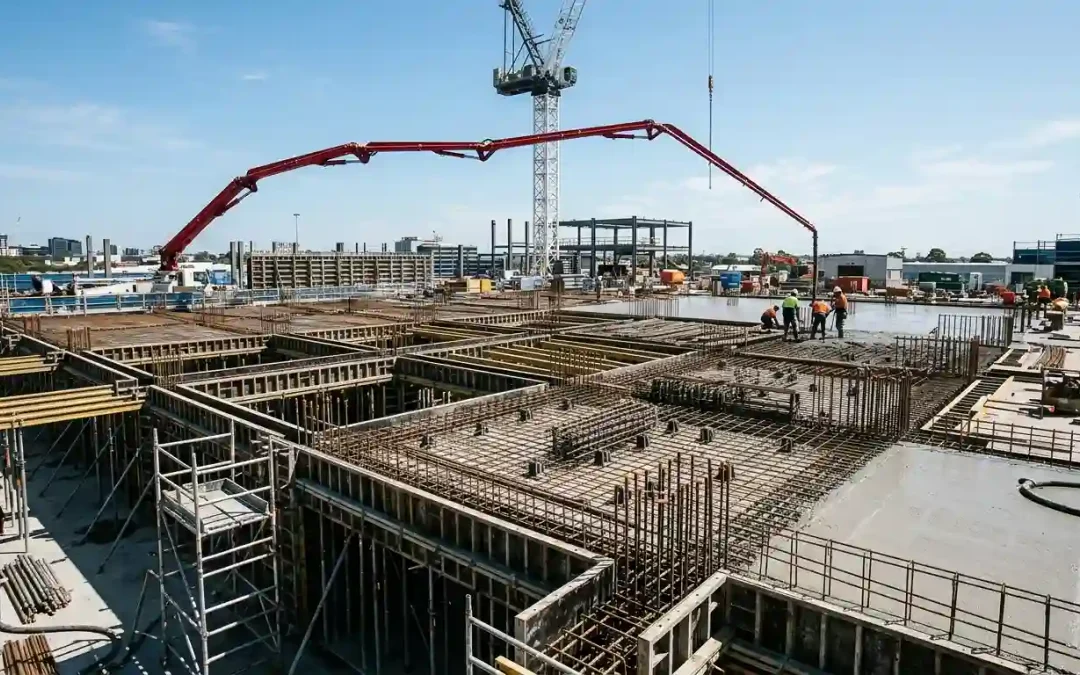
The real advantage of integrated FRP solutions lies in how they combine multiple structural processes into one coordinated system.
Rather than treating formwork, steel fixing, and concrete pouring as separate responsibilities, integrated FRP contractors manage the entire structural package through unified planning and execution.
This approach improves sustainability in several ways.
Reduced material waste
When the form, reo, pour sequence is tightly coordinated, concrete volumes are accurately calculated and controlled. This reduces excess material use and limits the amount of waste generated during pours.
Fewer structural corrections
Misaligned reinforcement or poorly installed formwork can result in structural defects that require additional concrete or rework. Integrated FRP teams reduce these risks through consistent coordination between trades.
Optimised construction cycles
By managing the full FRP process, contractors can streamline floor cycles and minimise delays between structural stages. Faster cycles reduce equipment idle time and improve overall site efficiency.
Improved quality control
When one team oversees the entire structural package, quality control becomes more consistent. This reduces the likelihood of defects that lead to wasted materials.
Ultimately, sustainability in FRP is closely tied to how effectively these structural processes are aligned.
Steel fixing and reinforcement efficiency in sustainable construction
While formwork often receives the most attention, steel fixing also plays an important role in reducing concrete waste and improving sustainability.
Reinforcement placement directly affects structural integrity and concrete performance. If reinforcement is incorrectly positioned or poorly coordinated with formwork systems, the consequences can include:
• Structural weakness requiring additional concrete
• Delays in pouring schedules
• Increased rework across the structural package
Efficient steel fixing ensures that reinforcement cages align precisely with the intended formwork geometry and structural design.
When reinforcement and formwork systems are designed together as part of an FRP strategy, contractors can ensure that:
• Concrete placement occurs smoothly
• Structural loads are distributed correctly
• Material usage remains efficient
This reinforces the importance of treating form, reo, pour as a single integrated workflow rather than separate construction tasks.
The growing industry focus on sustainable concrete construction
Sustainability is rapidly becoming a priority across the construction industry. Governments, developers and investors are increasingly placing greater emphasis on reducing the environmental footprint of new developments.
Several factors are driving this shift:
• Growing awareness of the carbon impact of cement production
• Increased adoption of green building certifications
• Greater demand for resource-efficient construction methods
• Stricter sustainability expectations across infrastructure and development projects
Within this broader movement, reducing concrete waste has become a key objective.
While innovations such as alternative cement blends and recycled aggregates contribute to sustainability, construction practices themselves also play a major role.
Optimising formwork, improving steel fixing coordination, and delivering projects through integrated FRP solutions all help ensure that concrete is used efficiently throughout the structural package.
This makes sustainability in FRP not just an environmental initiative, but also a practical construction strategy.
How Future Form supports sustainable FRP delivery
Achieving sustainability in the form, reo, pour process requires more than just good intentions. It requires careful planning, engineering expertise and experienced FRP contractors who understand how each structural element interacts.
This is where companies such as Future Form play a critical role.
By focusing on the integration of formwork systems, steel fixing, and concrete pouring, Future Form helps project teams deliver structural packages that prioritise both efficiency and sustainability.
Through engineered formwork design, coordinated reinforcement installation and precise pour sequencing, Future Form works to reduce:
• Excess concrete use
• Structural rework
• Delays in the FRP cycle
• Environmental impact across the project
This integrated approach allows developers and contractors to deliver structures that meet modern performance expectations while minimising waste.
For projects aiming to balance structural performance with environmental responsibility, smarter formwork and coordinated FRP planning provide a clear path forward.
Building a more sustainable future through smarter formwork
As construction projects become larger and more complex, the need for efficient and sustainable building methods continues to grow.
Concrete will remain a critical material in modern construction for the foreseeable future. However, the industry now has an opportunity to reduce its environmental footprint by improving how concrete is used during construction.
Sustainability in FRP represents one of the most practical ways to achieve this goal.
By approaching the form, reo, pour process as a coordinated structural system and investing in smarter formwork, contractors can significantly reduce concrete waste, improve material efficiency and enhance overall project outcomes.
Integrated FRP solutions demonstrate that sustainability and construction efficiency are not competing priorities. In many cases, they go hand in hand.
For developers, consultants and contractors seeking to improve environmental performance while maintaining structural quality, the answer often begins with the same principle:
Better planning. Better coordination. Smarter formwork.
And ultimately, a more sustainable approach to delivering the structural package.
For project teams exploring ways to improve sustainability across the form, reo and pour process, working with experienced FRP contractors can make a measurable difference. Future Form collaborates with developers, builders and consultants to deliver engineered formwork systems, coordinated steel fixing, and efficient concrete pours that support both structural performance and environmental responsibility. If you would like to explore how smarter FRP planning can support your next structural package, you can connect with the team to start the conversation.
References
Flower, D., & Sanjayan, J. (2007). Greenhouse gas emissions due to concrete manufacture. The International Journal of Life Cycle Assessment, 12(5), 282–288.
Retrieved from: https://doi.org/10.1065/lca2007.05.327
Gursel, A. P., Masanet, E., Horvath, A., & Stadel, A. (2014). Life-cycle inventory analysis of concrete production: A critical review. Cement and Concrete Composites, 51, 38–48.
Retrieved from: https://doi.org/10.1016/j.cemconcomp.2014.03.005
International Energy Agency. (2022). Cement technology roadmap: Low-carbon transition in the cement industry.
Retrieved from: https://www.iea.org/reports/cement
McKinsey & Company. (2017). Reinventing construction: A route to higher productivity. Retrieved from: https://www.mckinsey.com/industries/capital-projects-and-infrastructure/our-insights/reinventing-construction-through-a-productivity-revolution
Mehta, P. K., & Monteiro, P. J. M. (2014). Concrete: Microstructure, properties, and materials (4th ed.). New York: McGraw-Hill Education.
Retrieved from: https://www.accessengineeringlibrary.com/content/book/9780071797870
United Nations Environment Programme. (2020). 2020 global status report for buildings and construction: Towards a zero-emission, efficient and resilient buildings sector. Retrieved from: https://www.unep.org/resources/report/2020-global-status-report-buildings-and-construction
Waste and Resources Action Programme. (2018). Reducing construction waste and improving resource efficiency in construction projects. Retrieved from: https://wrap.org.uk/resources/guide/construction-waste
World Green Building Council. (2019). Bringing embodied carbon upfront: Coordinated action for the building and construction sector.
Retrieved from: https://www.worldgbc.org/embodied-carbon