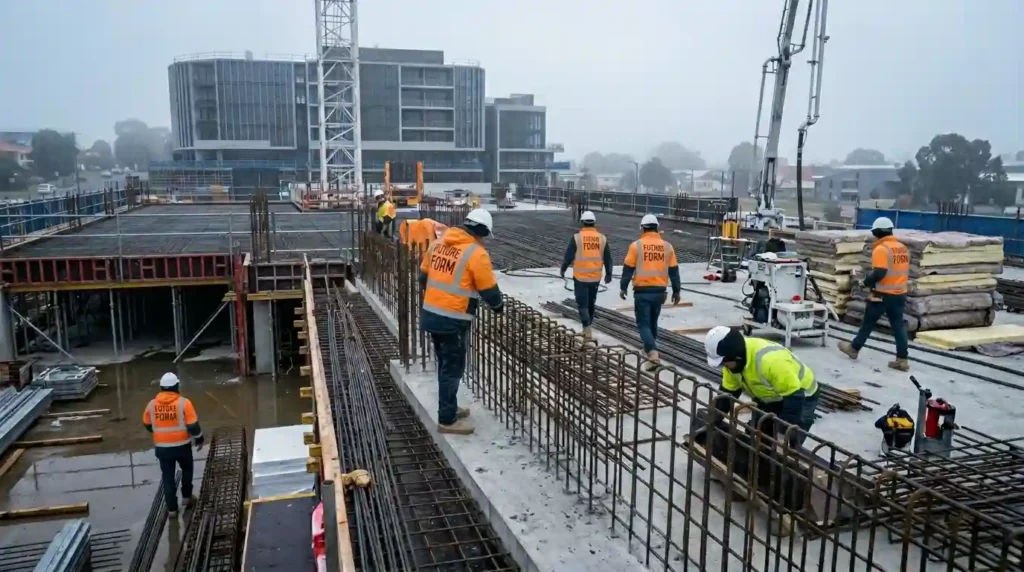
Winter can change the rhythm of a construction site very quickly. One week, the program is moving smoothly. The next, the site is dealing with wet access paths, slower concrete curing, slippery decks, delayed inspections and tighter pour windows. For FRP contractors, builders and project teams, this is where planning matters.
At Future Form, our expert teams work closely with developers, builders and construction teams to deliver coordinated form, reo and pour solutions across large-scale projects. Our approach combines experienced project teams, integrated service delivery and practical site knowledge to help keep structural packages moving efficiently from planning through to completion.
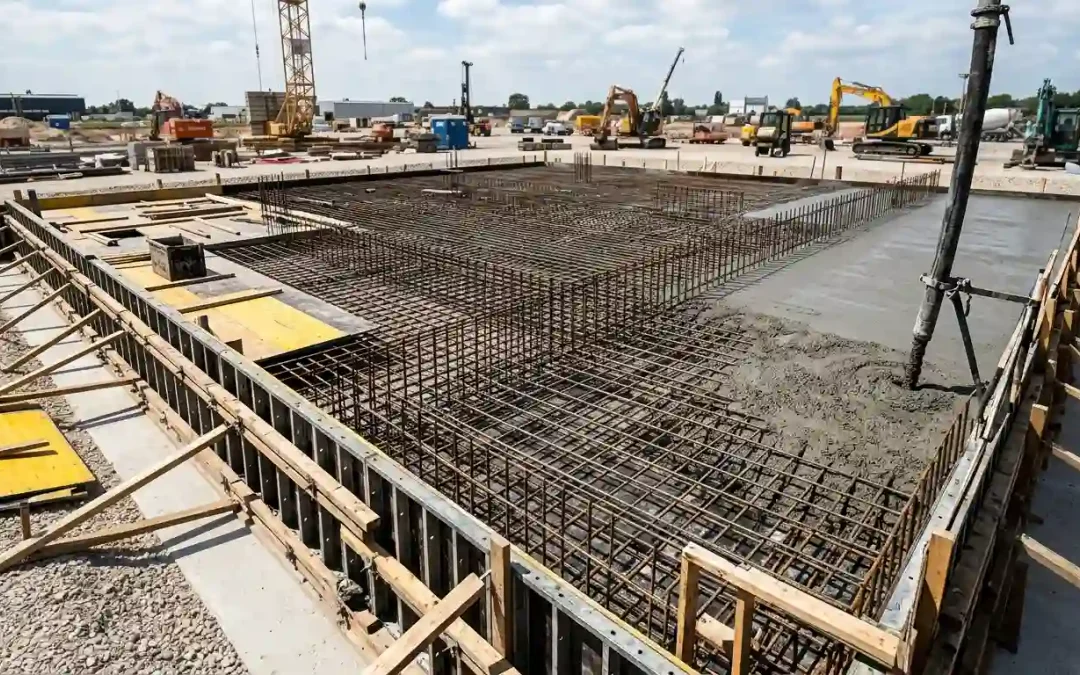
In FRP, every stage relies on the one before it. Formwork needs to be installed, checked and ready. Steel fixing needs to be completed accurately and inspected on time. Concrete needs to be poured under suitable conditions, protected properly and allowed to cure before follow-on works continue. When winter weather interrupts one part of the sequence, the entire structural package can feel the effect.
That is why an FRP winter checklist is more than a seasonal reminder. It is a practical planning tool for keeping site productivity, safety and quality under control when temperatures drop and conditions become less predictable.
For developers, builders, construction professionals, industry partners and suppliers, winter is the time to take a closer look at how FRP is being planned, coordinated and delivered. With the right integrated FRP solutions in place, site teams can prepare earlier, reduce avoidable delays and keep large-scale projects moving with greater confidence.
Why winter changes the way FRP work should be planned
Winter affects construction in ways that are easy to underestimate. It is not only about colder mornings. It is also about reduced daylight, wet surfaces, wind exposure, muddy access, slower drying times and tighter weather windows for concrete placement.
For FRP contractors, this creates pressure across the full form, reo and pour cycle. Formwork may take longer to dry after rain. Access routes may need extra controls. Reo areas can become harder to keep clean and inspection-ready. Concrete may require closer monitoring to support curing and early strength development.
Did you know? Concrete strength gain is closely linked to temperature and curing conditions. When the weather is cooler, concrete can take longer to gain the strength needed for stripping, loading or continuing the next stage of work.
This does not mean winter construction needs to stop. In most countries, construction continues through the colder months. However, it does mean the structural package needs to be managed with more care. The best FRP teams do not wait for delays to happen. They look ahead, identify the risks and adjust sequencing before the weather slows the job down.
Check the concrete pour window before the day arrives
A successful concrete pour starts before the pump arrives. During winter, pour timing becomes one of the most important items on the FRP winter checklist.
Cold mornings, wet weather and reduced daylight can affect how easily concrete is placed, finished and protected. If a pour starts too late in the day, crews may be working against fading light, falling temperatures and limited finishing time. If site access is wet or congested, concrete trucks, pumps and workers may also face delays before the pour even begins.
FRP contractors should work with the builder, concrete supplier and site team to confirm the best pour window. This includes reviewing weather forecasts, access routes, pump locations, labour availability, traffic conditions and the expected finishing time.
A good winter pour plan should answer a few simple questions. Is the formwork ready and signed off? Has the reo been inspected? Is access safe and clear? Is there a backup plan if rain delays the pour? Are curing and protection measures available on site?
Did you know? A pour delay of only a few hours can create knock-on effects across following trades, especially when stripping, back-propping, loading or vertical works depend on early strength gain.
Allow for longer formwork stripping times
Formwork stripping is one of the areas where winter can quietly affect the program. When concrete cures more slowly, the time required before stripping may need to be reviewed carefully. Removing formwork too early can place quality, safety and structural performance at risk.
This is why communication between the FRP contractor, engineer, builder and concrete supplier is so important. Stripping should not be based on habit alone. It should be based on the project requirements, concrete strength, environmental conditions and approved methodology.
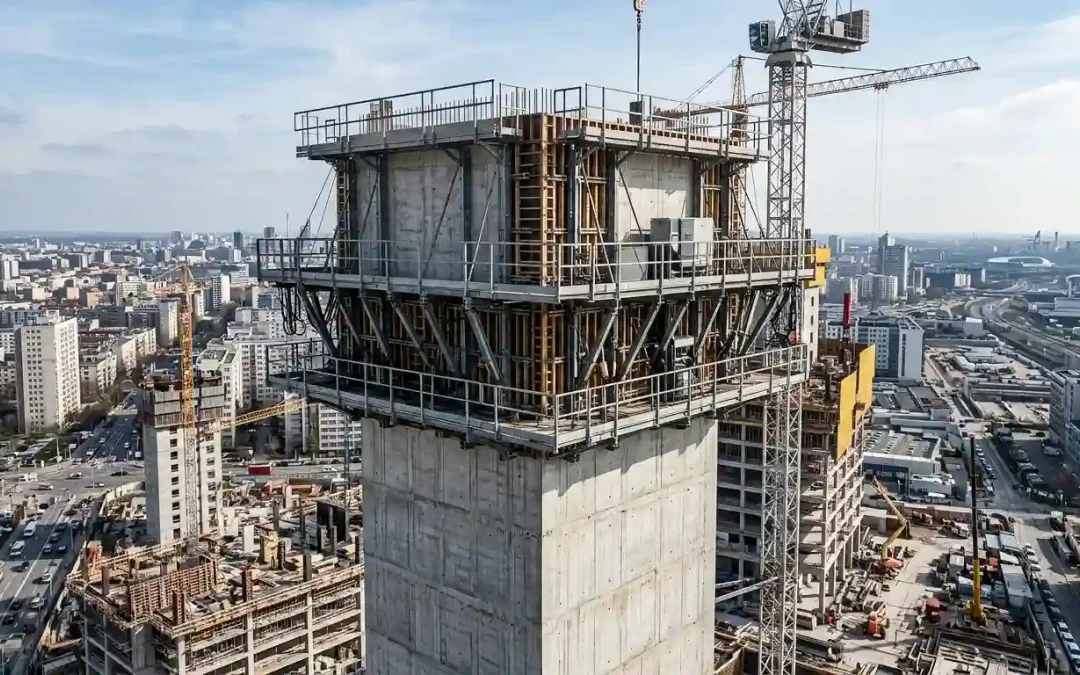
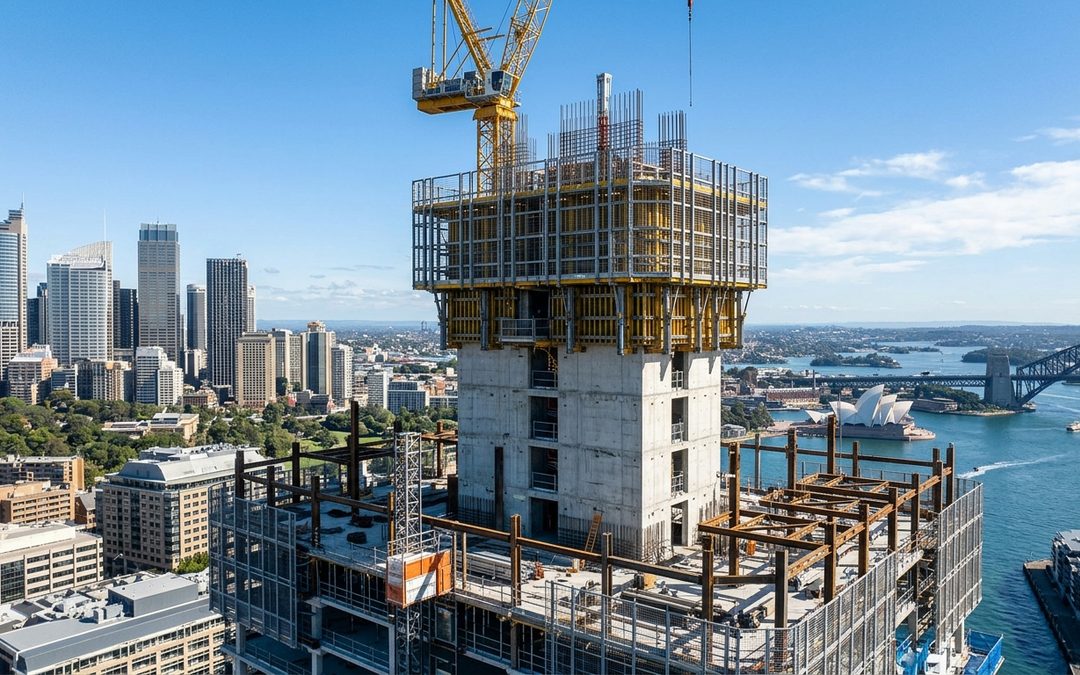
In colder conditions, teams may need to allow extra time before stripping certain elements. This can affect crane allocation, labour planning, jump cycles, follow-on formwork and the broader structural package timeline.
A practical winter checklist should include a review of stripping procedures, curing records, engineer requirements and temporary works planning. The aim is not to slow the project unnecessarily. The aim is to strip safely, protect the structure and avoid rework that costs more time later.
Keep reo clean, safe and inspection-ready
Steel fixing is a critical part of the FRP sequence. In winter, reo areas can become more difficult to manage due to mud, water, debris and reduced visibility. This can affect productivity, safety and inspection readiness.
Before the concrete pour, reo needs to be fixed correctly, supported properly and ready for inspection. Wet or muddy conditions can make it harder for workers to move safely around the area. It can also make it harder to keep the workface organised.
FRP contractors should ensure reo zones are kept as clear as possible, with safe access points, stable walkways and good housekeeping. Bar chairs, spacers, starter bars, penetrations, cast-ins and lap lengths should be checked early enough to allow corrections before inspection.
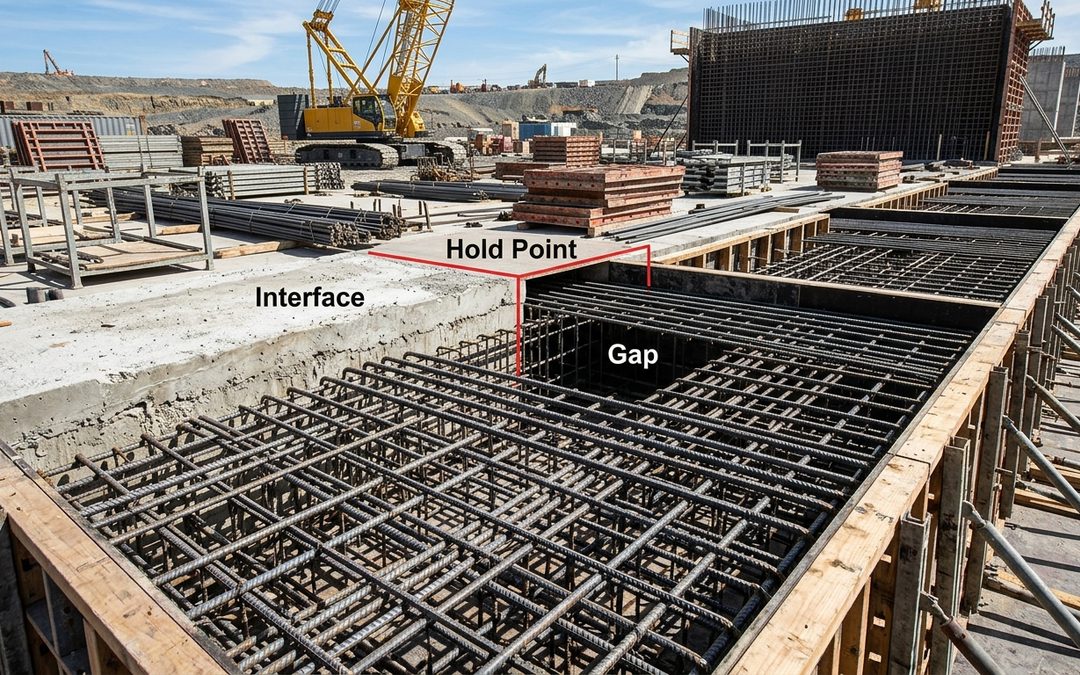
Did you know? Small reo issues found late can delay a pour even when the formwork and concrete supplier are ready. A missing starter bar, incorrect cover or unresolved inspection item can hold up the entire sequence.
This is where integrated FRP solutions can provide real value. When form, reo and pour are planned together, the steel fixing team is not working in isolation. The full sequence is coordinated around inspection timing, pour readiness and the project program.
Prepare for wet and slippery site conditions
Winter often increases the risk of slips, trips and falls. Wet decks, muddy access points, pooled water, exposed edges, ramps, stairs and temporary work platforms all need extra attention.
For FRP contractors, this matters because formwork and steel fixing often involve work across changing levels, temporary surfaces and congested areas. When the site is wet, every movement can become slower and riskier.
A winter-ready site should include clear access routes, drainage where possible, regular housekeeping, suitable footwear, clean walkways and appropriate edge protection. Materials should be stored in a way that does not block paths or create trip hazards. Tools, reo offcuts, formwork components and loose materials should be managed throughout the shift, not just at the end of the day.
Did you know? Many winter safety issues are not caused by one major hazard. They often come from small things combining at the wrong time, such as water on a deck, poor lighting, loose materials and workers rushing to meet a pour deadline.
Safety and productivity are connected. A clean, well-organised workface allows crews to move more efficiently and reduces the chance of incidents that interrupt the program.
Review formwork stability and weather exposure
Formwork needs to be installed, braced, checked and maintained according to the project requirements. During winter, weather exposure can create additional challenges.
Wind, rain and wet ground conditions can affect access, storage, temporary works and site movement. Formwork materials may become slippery. Timber elements may absorb moisture. Ground conditions around temporary works may change after rain. These issues need to be checked as part of routine site planning.
FRP contractors should review formwork areas before work begins each day, especially after rain or strong weather. This includes checking access, bracing, platforms, penetrations, edge protection and the condition of the workface.
A winter checklist should also consider how formwork components are stored. Poor storage can lead to damage, water exposure, handling issues and unnecessary delays. Protecting materials and planning laydown areas properly can help crews work more efficiently during colder months.
Plan labour and sequencing around shorter working windows
Winter can reduce the practical working window on site. Mornings may start slower due to wet or cold conditions, and afternoons may become less productive as daylight fades. This can affect labour planning across the full FRP package.
Rather than simply adding more workers, the smarter approach is to improve sequencing. The site team should identify which tasks can be completed in advance, which areas are weather-sensitive and which activities must happen in a strict order.
For example, formwork preparation, reo prefabrication, material sorting, access planning and inspection coordination can often be planned earlier to reduce pressure on pour day. This helps avoid the common winter problem of crews trying to complete too many critical tasks at the last minute.
Did you know? Winter productivity is often won or lost in the planning stage, not on the day of the pour. A well-sequenced FRP plan can reduce downtime even when the weather is not ideal.
Coordinate inspections before they become bottlenecks
Inspections are essential for quality control, but in winter they can become a bottleneck if they are not scheduled properly. Wet weather, late reo completion, access issues or unclear communication can all push inspections back.
FRP contractors should coordinate inspection timing early and confirm what needs to be ready before sign-off. This includes formwork checks, reo inspections, penetrations, cast-ins, services coordination and any engineer or builder requirements.
The key is to avoid treating inspection as the final step before the pour. Inspection readiness should be built into the entire FRP sequence. When the form and reo teams understand the inspection requirements early, they can reduce the chance of last-minute issues.
For large-scale projects, this level of coordination is especially important. A delayed inspection can affect concrete supply, pump bookings, labour allocation and follow-on structural works.
Protect concrete after the pour
The work does not end once concrete is placed. In winter, curing and protection are vital parts of the process. Concrete needs suitable conditions to develop strength and durability. If it is exposed to cold, wind or drying conditions too early, the final result can be affected.
Project teams should ensure curing methods are suitable for the conditions and the concrete element being poured. This may include covering, moisture retention, wind protection or other approved curing measures. The correct approach will depend on the specification, weather, concrete mix and project requirements.
Did you know? Good curing is not just about strength. It also supports durability, surface quality and long-term performance.
FRP contractors should make sure curing responsibilities are clearly assigned. When everyone assumes someone else is looking after curing, mistakes can happen. A clear handover after the pour helps protect the work that has already been completed.
How Future Form supports winter-ready FRP delivery
Winter construction does not need to become a constant battle against the weather. With the right planning, coordination and site controls, FRP contractors and project teams can reduce avoidable delays and keep the structural package moving.
Future Form supports project teams by helping plan the full form, reo and pour sequence before winter conditions create pressure on site. Through structured integrated FRP solutions, Future Form can help improve sequencing, access planning, pour preparation, steel fixing coordination and overall FRP productivity.
This approach is especially valuable for large-scale projects where one delayed pour or missed inspection can affect multiple stages of the program. By looking at the structural package as a connected system, rather than separate tasks, Future Form helps builders and developers manage winter risks with more confidence.
A practical FRP winter checklist for site teams
Before winter conditions slow down the site, FRP contractors and builders should review the following:
- Check the weather forecast before planning pours.
- Confirm formwork is safe, stable and inspection-ready.
- Keep reo areas clean, accessible and ready for sign-off.
- Allow for possible changes to concrete curing and stripping times.
- Plan pour timing around daylight, access and finishing requirements.
- Review wet-weather access routes and slip hazards.
- Keep materials stored safely and protected from weather exposure.
- Coordinate inspections early to avoid last-minute delays.
- Confirm curing methods and responsibilities after the pour.
- Review labour sequencing so critical tasks are not left too late.
This checklist may look simple, but it can make a major difference. Winter often exposes weaknesses in planning, communication and coordination. A clear FRP winter checklist helps teams identify those weaknesses before they become delays.
Building stronger structural packages through better winter planning
Winter is a useful reminder that FRP work is never just about one task. Formwork, steel fixing and concrete pours are all connected. When one part slows down, the rest of the structural package can be affected.
For FRP contractors, the goal is not only to keep working through winter. The goal is to work safely, maintain quality and protect the program. That means planning the form, reo and pour sequence with the season in mind.
With stronger preparation, better communication and integrated FRP solutions, project teams can manage cold weather conditions more effectively. The result is safer access, smoother pours, better inspection readiness and a more reliable structural package.
Winter may bring challenges, but it also rewards the teams that plan ahead. For developers, builders and construction partners delivering large-scale projects, a well-prepared FRP strategy can make the colder months far more manageable.
If you are planning upcoming structural works and want to strengthen your approach to form, reo and pour delivery during the colder months, it can be valuable to discuss your project requirements early. Future Form works with builders, developers and construction teams to support efficient FRP planning, coordination and delivery across large-scale projects. To learn more about integrated FRP solutions or discuss your next project, get in touch with our team. A proactive conversation today can help keep your project on track throughout the winter season.
References
Cement Concrete & Aggregates Australia. (2020). Curing. Cement Concrete & Aggregates Australia. Retrieved from https://www.ccaa.com.au
Cement Concrete & Aggregates Australia. (2020). Hot- and cold-weather concreting. Cement Concrete & Aggregates Australia. Retrieved from https://www.ccaa.com.au
Holcim. (n.d.). Concreting practice in cold weather. Holcim. Retrieved from https://www.holcim.com.au
Holcim. (n.d.). Curing of concrete techniques. Holcim. Retrieved from https://www.holcim.com.au
Safe Work Australia. (n.d.). Slips, trips and falls. Safe Work Australia. Retrieved from https://www.safeworkaustralia.gov.au
Safe Work Australia. (n.d.). Slips, trips and falls: Construction hazards information. Safe Work Australia. Retrieved from https://www.safeworkaustralia.gov.au
Standards Australia. (2018). AS 3600:2018 Concrete structures. Standards Australia. Retrieved from https://www.standards.org.au
WorkSafe Victoria. (n.d.). Concreting. WorkSafe Victoria. Retrieved from https://www.worksafe.vic.gov.au
WorkSafe Victoria. (n.d.). Preventing slips, trips and falls under 2 metres. WorkSafe Victoria. Retrieved from https://www.worksafe.vic.gov.au