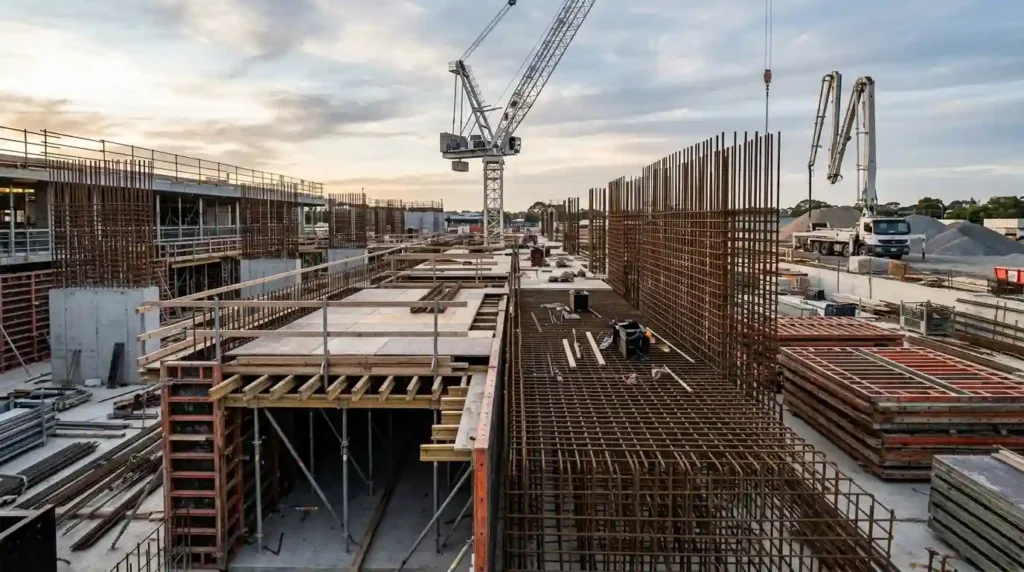
In construction, some delays are obvious. A major design change, severe weather, material shortage or site shutdown can clearly affect the program. But not every delay starts loudly. Sometimes, the issue begins with one small formwork delay that appears manageable at first.
Future Form works with builders and project teams to deliver coordinated FRP solutions across large-scale construction projects. Through its integrated approach, experienced team and focus on practical site delivery, Future Form helps keep structural packages moving efficiently from planning through to concrete placement. This article explores why FRP coordination matters and how even a small formwork delay can create a ripple effect across the entire construction program.
A set-out may need adjustment. A form may not be ready for inspection. A deck may require additional propping. A small section of formwork may be held up because access, labour or materials are not aligned. On its own, the delay may look minor. However, in FRP, one small interruption can create a much larger domino effect across the whole structural package.
That is because FRP is not a collection of separate tasks. Formwork, steel fixing and concrete placement rely on each other in a very specific sequence. When one stage is delayed, the next stage often cannot simply continue as planned. Reo may be pushed back. Inspections may need to be rescheduled. Concrete pour bookings may move. Crane access may be affected. Labour may need to be reallocated. Following trades may also lose their planned window.
For builders, developers, construction professionals, industry partners, suppliers and clients, understanding this chain reaction is essential. A small delay in formwork can affect more than the immediate workface. It can shift the rhythm of the entire project.
Why FRP coordination matters on large-scale projects
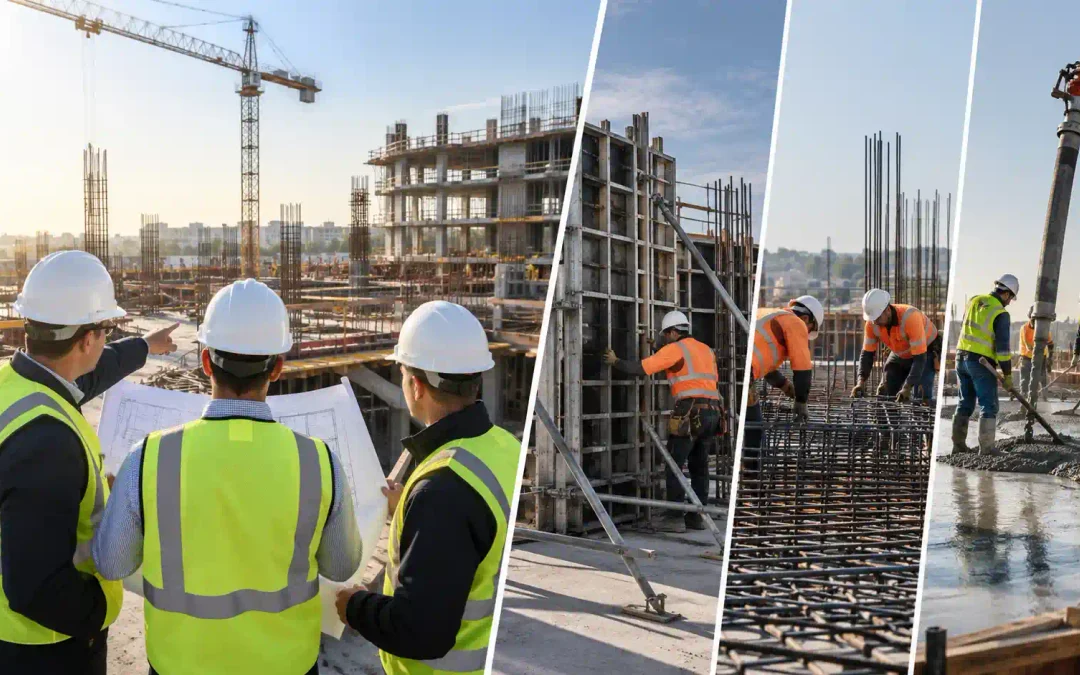
FRP stands for form, reo and pour. It covers three critical parts of concrete structure delivery: the formwork that shapes and supports the concrete, the reo or steel fixing that strengthens it, and the pour that completes the structural element.
On a large-scale project, FRP sits at the centre of the construction program. It affects slabs, columns, beams, walls, cores, stairs, podiums and suspended structures. When the structural package moves well, the project has a stronger chance of maintaining momentum. When FRP slows down, the effects can quickly move through the site.
This is why coordination between form, reo and pour matters so much. Each stage needs the right information, materials, labour, access, supervision and timing. It also needs clear communication between site teams, engineers, suppliers, inspectors and FRP contractors.
When the sequence is planned properly, the site can move from formwork to steel fixing to concrete with fewer surprises. When planning is fragmented, teams may only discover problems when they are already standing in front of them. By that point, the delay has already started.
How one small formwork delay can start the domino effect
A small formwork delay can begin in many ways. It may be caused by late drawings, unclear details, incomplete set-out, missing materials, access restrictions, changes in crane availability or a shortage of skilled labour. It may also happen when previous works are not ready for the next stage.
At first, the delay may only affect one area. For example, a section of formwork may not be completed by the planned time. However, the next team is often already scheduled to begin steel fixing. If the form is not ready, the reo team cannot start efficiently. They may be forced to wait, move to another area or work out of sequence.
This creates the first shift in the program.
From there, the impact can continue. If steel fixing starts later, inspection may also be delayed. If inspection is delayed, the concrete pour booking may need to move. If the pour is pushed back, the curing period, stripping sequence and follow-on works can also shift.
This is the domino effect. One delay triggers the next. What began as a small formwork issue can become a wider structural package problem.
The impact on reo and steel fixing
Steel fixing is highly dependent on formwork readiness. Reo cannot be installed properly unless the form is prepared, safe, accessible and aligned with the drawings. If formwork is incomplete or changed late, the steel fixing team may lose productivity.
A delay can also create congestion. If steel fixers need to catch up, more workers may be placed in the same area. This can make access harder, increase supervision pressure and create safety concerns. It can also affect the quality of installation, especially where reinforcement details are complex.
In many projects, the reo stage includes more than simply placing bars. It can involve checking cover, lap lengths, penetrations, starter bars, cast-in items, embeds and coordination with other services. If the team is rushed because formwork was delayed, small details may be missed.
These details matter. A missed reo requirement can lead to rework, inspection issues or delays before the pour. In some cases, work may need to be opened up, adjusted or rebuilt. That can cost more time than the original delay.
This is why integrated FRP solutions are valuable. When form and reo are planned together, the team can identify possible clashes earlier and reduce the risk of downstream disruption.
The impact on inspections and approvals
Inspections are another area where a small formwork delay can create a wider program issue. Before concrete is poured, work often needs to be checked by relevant project representatives, engineers or inspectors. This may include formwork condition, reinforcement placement, structural details and readiness for concrete.
If formwork is late, the inspection window may be missed. Inspectors and engineers may already have other commitments. Site teams may need to rebook, wait for availability or adjust the pour schedule.
This can be frustrating because the physical delay may only be a few hours, but the inspection delay may become a day or more. On a tight construction program, that can have a significant effect.
Clear FRP coordination helps reduce this risk. When the contractor, builder and site team understand the sequence, inspection readiness can be planned earlier. Instead of waiting until the last moment, teams can review upcoming stages, confirm hold points and identify any concerns before they become urgent.
The impact on concrete pour bookings
Concrete is time-sensitive. Pour bookings need to align with plant availability, traffic conditions, pump access, labour, supervision and site readiness. If formwork or reo delays push back the pour, the site may lose its allocated window.
This can be one of the most visible parts of the domino effect. A pour that moves by a few hours may affect delivery schedules, pump bookings and finishing crews. If the pour needs to shift to another day, the program impact can be even greater.
Concrete placement also relies on more than just the form and reo being ready. The site needs safe access, clear communication, suitable weather planning, enough workers and the right equipment. A delay in one part of the FRP sequence can place pressure on all of these moving parts.
When FRP contractors coordinate form, reo and pour as one connected package, the pour is less likely to be treated as an isolated event. It becomes the result of a planned sequence. This helps the project team make better decisions before the pour date arrives.
The impact on crane access, labour and site flow
On large-scale projects, crane access is often shared between multiple trades. If formwork is delayed, crane time may need to be reallocated. Materials that were supposed to be lifted into position may miss their window. Other trades may also be waiting for the same crane.
This creates a site flow issue. A delay in one area can lead to congestion in another. Materials may be stored in the wrong place for longer than expected. Workers may be redirected. Supervisors may need to spend more time reorganising the day instead of managing progress.
Labour scheduling is also affected. FRP work relies on skilled teams being available at the right time. If a formwork delay pushes reo or pour activities back, workers may not be used efficiently. Some may be waiting, while others may need to be brought in later to recover lost time.
This stop-start pattern can reduce productivity. It can also increase pressure on communication between contractors, subcontractors and site management.
The more connected the FRP approach, the easier it is to manage these changes. A coordinated contractor can see how one delay affects the next activity and respond with a practical recovery plan.
The impact on following trades
The structural package does not exist in isolation. Following trades often rely on completed concrete works before they can begin. This may include services, façade, blockwork, framing, waterproofing, fit-out or external works.
When an FRP delay shifts the structural program, these trades may also be affected. A delayed slab or wall can push back access for the next team. If multiple areas are delayed, the entire project sequence may need to be reviewed.
This can create commercial pressure. Subcontractors may have booked labour, materials and equipment based on the original program. If access is not available, costs and coordination issues can increase.
For clients and developers, this is where a small formwork delay becomes much more than a site inconvenience. It can influence milestones, handover dates, cash flow and stakeholder expectations.
Why delays are not always caused by the delay itself
One important point is that delays are not always caused by the original issue alone. The larger problem often comes from how the delay is managed.
A small formwork delay can be contained if the team communicates early, reviews the sequence and adjusts the plan quickly. However, if the delay is not raised until the next trade is already waiting, the impact becomes harder to manage.
Good FRP coordination is about visibility. Site teams need to understand what is happening now, what is coming next and what risks may affect the next stage. That means formwork, steel fixing and concrete planning should not happen in separate conversations.
When each stage is planned separately, the project becomes reactive. When FRP is planned as one integrated system, the team has a better chance of identifying risks before they affect the wider program.
How integrated FRP solutions can reduce the domino effect
Integrated FRP solutions help reduce delays by connecting form, reo and pour under a more coordinated delivery approach. Instead of treating each stage as a separate handover, the full sequence is considered from the start.
This can improve communication between site teams. It can also help identify practical issues earlier, such as access constraints, material timing, crane requirements, pour sequencing, labour needs and inspection readiness.
For example, if formwork progress is being monitored closely, the reo team can be updated before their scheduled start. If reo installation is more complex than expected, the pour plan can be reviewed before the booking becomes a problem. If a design detail needs clarification, the team can raise it before it affects the next stage.
This does not remove every risk. Construction will always involve change. However, it can reduce the chance of one small delay becoming a larger program issue.
Future Form’s approach to keeping the structural package moving
For this reason, choosing an FRP contractor with a strong focus on planning and coordination can make a significant difference to overall project outcomes.
Future Form understands that FRP is one of the most important parts of keeping a construction program on track. Formwork, reo and pour need to work together, not compete for attention as separate tasks.
Future Form’s approach focuses on coordination, communication and practical site delivery. By planning form, reo and pour together, Future Form can help builders reduce rework, manage sequencing more effectively and keep the structural package moving with greater confidence.
This is especially important for large-scale projects where even a small delay can affect multiple teams. A more coordinated FRP contractor approach helps site teams understand what needs to happen next, what risks need attention and how each stage supports the wider program.
When FRP is managed well, the benefits can be felt across the project. There is clearer communication. There is less confusion between trades. There is better readiness for inspections and pour bookings. There is also a stronger chance of maintaining momentum through each structural stage.
Turning small delays into manageable issues
Not every delay can be avoided. Weather changes, design updates, supply issues and unexpected site conditions can still affect construction programs. The goal is not to pretend delays will never happen. The goal is to stop small delays from becoming larger problems.
That starts with early planning. It continues with strong communication and a clear understanding of how formwork, steel fixing and concrete placement connect. It also requires FRP contractors who can see the whole sequence, not just one part of the task.
The domino effect is real. A small formwork delay can shift reo, inspections, concrete pour bookings, crane access, labour scheduling and following trades. But with the right planning and integrated FRP solutions, that chain reaction can be reduced.
For builders, developers and project teams, FRP coordination is not just a construction detail. It is a program management tool. When the structural package is planned and delivered with care, the entire project has a stronger foundation to move forward.
If you are planning a large-scale project and want to improve FRP coordination, reduce program risk and maintain momentum across form, reo and pour activities, it can be valuable to engage with experienced specialists early in the process. Future Form works closely with builders, developers and project teams to support efficient structural delivery through a coordinated FRP approach.
To learn more about how integrated FRP solutions can support your next project, start a conversation with the Future Form team about your project requirements and construction objectives.
References
Australian Constructors Association. (2024). 2024 construction market sentiment survey. Australian Constructors Association. https://www.constructors.com.au/advocacy/reports/2024-construction-market-sentiment-survey/
Australian Constructors Association. (2026). Publications. Australian Constructors Association. https://www.constructors.com.au/publications/
Safe Work Australia. (2014). Formwork and falsework general guide. Safe Work Australia. https://www.safeworkaustralia.gov.au/system/files/documents/1702/formwork-falsework-general-guide.pdf
SafeWork NSW. (2021). Code of practice: Formwork. SafeWork NSW. https://www.safework.nsw.gov.au/__data/assets/pdf_file/0004/845887/Formwork-code-of-practice.pdf
Standards Australia. (2018). AS 3600:2018 Concrete structures. Standards Australia. https://store.standards.org.au/product/as-3600-2018