June can feel like a finishing line for many project teams. Budgets are being checked, forecasts are being updated, contracts are being reviewed, and everyone is trying to make sense of what has been completed, what is still open, and what needs attention before the new financial year begins.
For developers, builders, construction professionals, industry partners and suppliers, this is also the right time to look closely at the structural package. In FRP construction, where FRP means form, reo and pour, small issues can carry into the next stage if they are not reviewed early. A missed reo detail, a formwork change, a delayed concrete pour or an unclear labour plan can affect more than one part of the programme.
That is why EOFY in FRP should not only be seen as a financial task. It should be treated as a practical project checkpoint.
A strong EOFY review gives project teams a clearer picture of their form, reo and pour performance. It helps identify unfinished works, cost pressure, sequencing gaps, safety considerations, labour requirements and upcoming stage risks. More importantly, it allows the project team to reset before the next phase begins.
At Future Form, this type of review is closely connected to how a structural package is delivered. By looking at form, reo and pour as one connected process, Future Form supports better planning, clearer sequencing and more reliable integrated FRP solutions for large-scale projects.
Why June is a smart time to review FRP construction
In most countries, the close of the financial year is a natural point for review. Project teams are already looking at costs, reporting, budgets, procurement, labour and forecasted works. This makes June a practical time to review FRP construction before old issues become new financial-year problems.
For many projects, the structural package carries a significant amount of programme pressure. Formwork needs to be ready. Steel fixing needs to be accurate. Concrete needs to be poured at the right time, under the right conditions, with the right preparation completed beforehand. When these areas are reviewed together, project teams can see whether the current workflow is supporting progress or quietly slowing it down.
An EOFY review can help answer important questions. Are formwork cycles performing as expected? Are reo inspections creating repeated delays? Are pour dates being pushed because earlier steps are not lining up? Are labour resources being used efficiently? Are upcoming stages properly planned, or are teams relying too heavily on last-minute coordination?
These questions matter because FRP is not a single activity. It is a connected process. When one part moves, the rest of the structural package often moves with it.
The role of FRP in the structural package
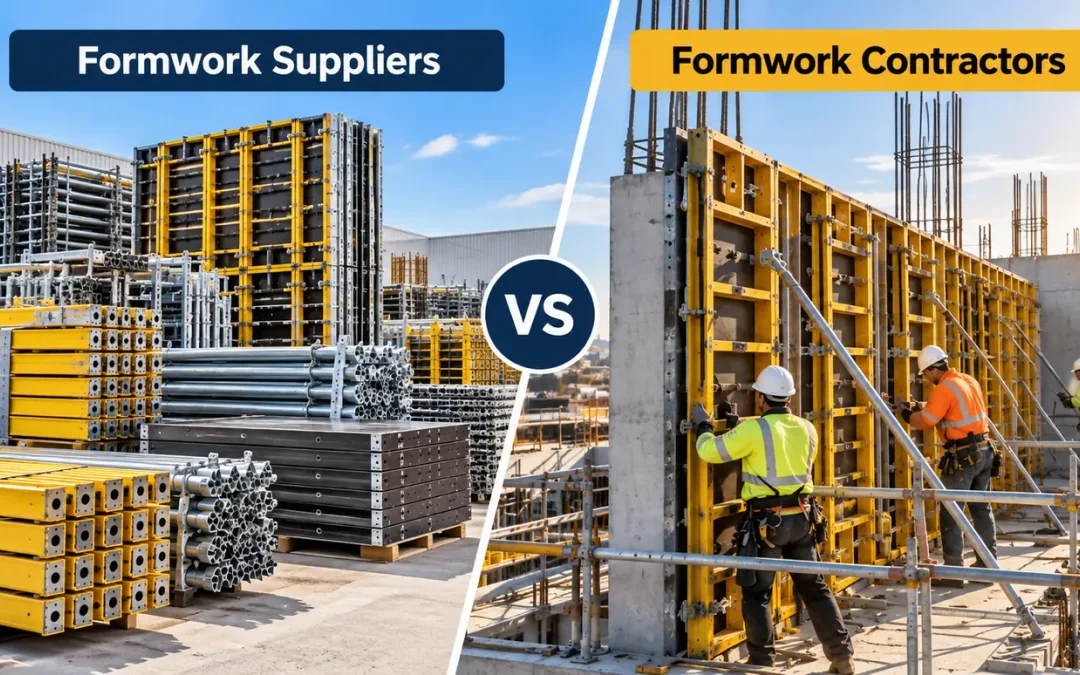
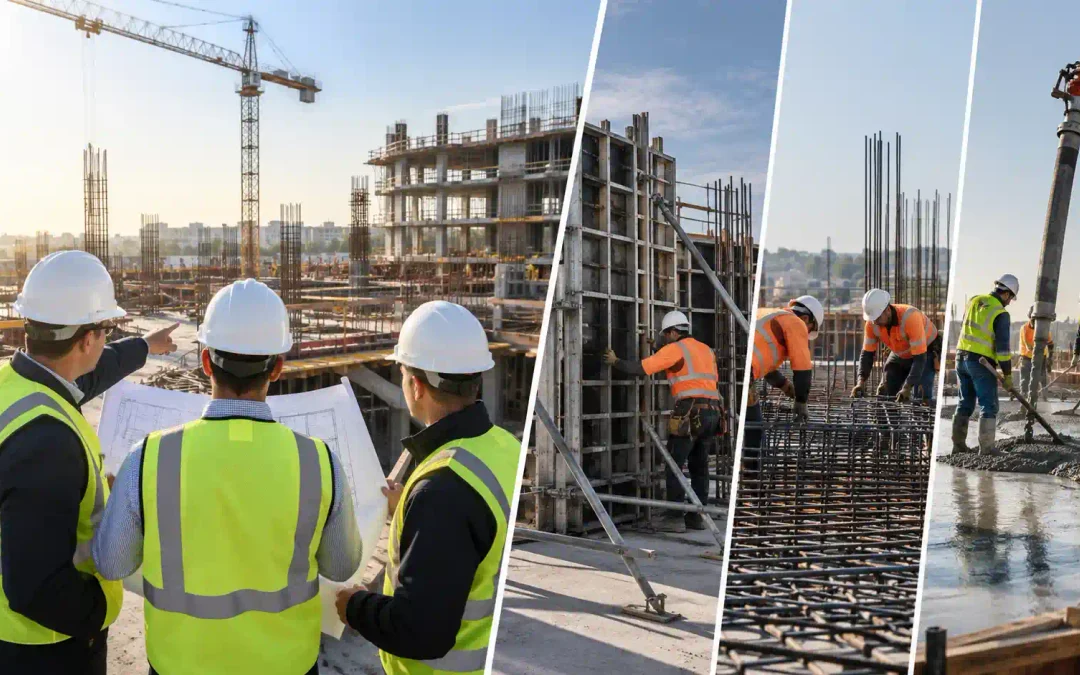
FRP stands for form, reo and pour. In simple terms, it brings together formwork, steel fixing and concrete placement. These three areas form the foundation of many structural works, especially in multi-level, commercial and large-scale developments.
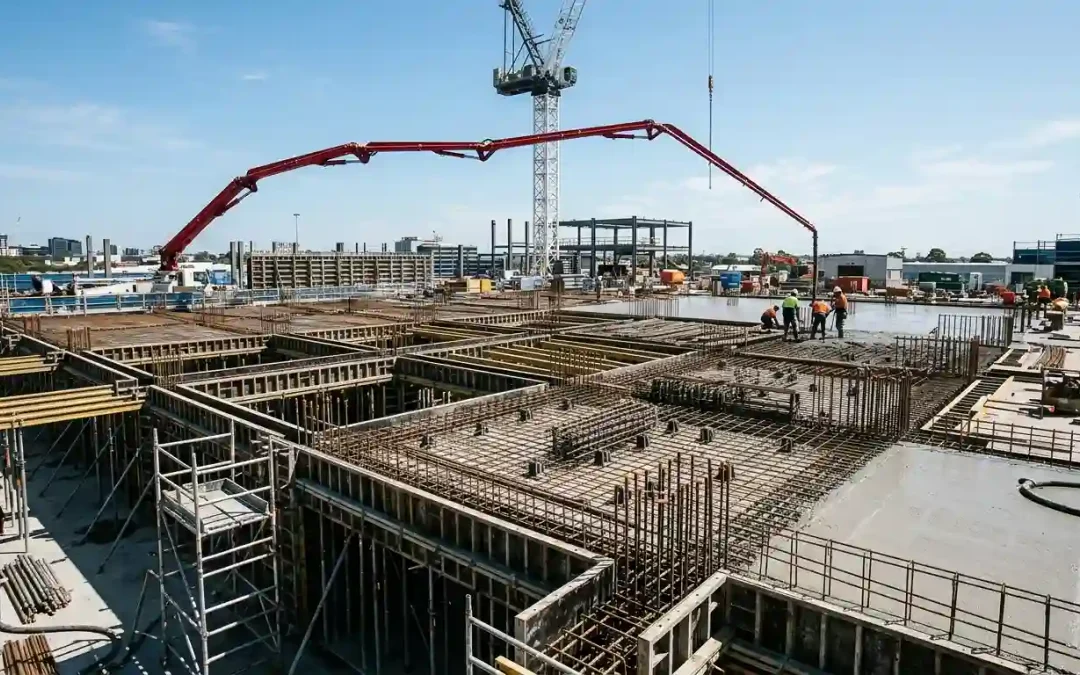
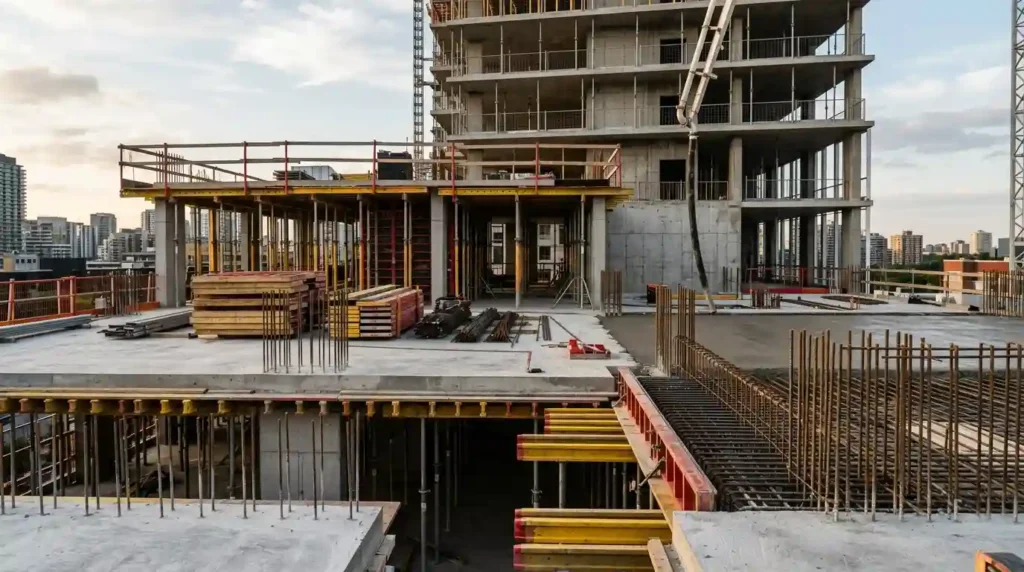
The form stage creates the mould and support system for the concrete. The reo stage involves placing and fixing reinforcement so the structure performs as designed. The pour stage brings the concrete into place and depends heavily on the readiness of both the formwork and reinforcement.
When these three elements are managed separately, communication gaps can appear. A formwork adjustment may affect reo placement. A reo delay may push back a concrete pour. A pour reschedule may disrupt labour planning, access, plant use and follow-on trades.
This is why integrated FRP solutions are so valuable. They create a more connected way of working, where form, reo and pour are considered together rather than treated as separate tasks. For developers and builders, this can support stronger programme control, fewer avoidable delays and more reliable structural delivery.
Reviewing project costs before they become bigger problems
One of the biggest reasons to review the structural package before EOFY is cost visibility.
Construction costs do not always rise because of one major issue. Often, they build up through small inefficiencies. A crew waiting for access. A delayed pour. A rework item that could have been picked up earlier. A change that affects formwork and steel fixing at the same time. A sequence that looked workable on paper but is creating pressure on site.
By the time these issues appear in reporting, they may have already affected the programme.
An EOFY review gives project teams the chance to check whether the FRP package is performing as expected. It can help identify whether costs are being affected by labour inefficiency, material waste, sequencing delays, rework, unclear documentation or repeated coordination issues.
This does not mean every issue can be removed. Large-scale construction will always involve moving parts. However, reviewing the structural package before the financial year closes can help teams understand what is happening before the next stage adds more complexity.
For FRP contractors, this is also an opportunity to demonstrate value beyond simply completing tasks. A practical review can show where better coordination, clearer sequencing and earlier planning can support cost control.
Unfinished works need more than a quick handover
EOFY can sometimes create pressure to close off tasks quickly. However, unfinished FRP works should be reviewed carefully, especially when they affect upcoming structural stages.
Unfinished works may include incomplete formwork, pending reo inspections, delayed concrete pours, unresolved design clarifications, access restrictions, temporary works considerations or labour gaps. If these items are not properly captured, they can create confusion when the next financial year begins.
A clear review helps the project team understand what is genuinely complete, what is partially complete and what still needs action. This is important because “almost done” can be risky in FRP construction. A formwork area may look ready, but still require final checks. Reo may be placed, but not fully inspected. A pour may be scheduled, but dependent on weather, access, pump availability or sign-off.
When unfinished works are reviewed properly, project teams can reduce the risk of assumptions. Everyone has a clearer understanding of what needs to happen next, who is responsible and how it affects the wider structural package.
Labour planning for the next stage
Labour planning is another major reason to review FRP before EOFY. The availability, timing and coordination of crews can strongly influence how efficiently form, reo and pour activities are delivered.
If the next stage requires more complex formwork, tighter steel fixing timeframes or larger concrete pours, labour planning should not be left until the last minute. An EOFY review gives teams a chance to look ahead and ask whether the current labour plan matches the next phase of the project.
This includes reviewing crew sizes, skill requirements, supervision, sequencing, access points, work fronts and the interaction between FRP teams and other trades.
Labour planning is not only about having enough people on site. It is about having the right people in the right place at the right time. Too few workers can delay the programme. Too many workers in a poorly sequenced area can create congestion, safety issues and inefficiency.
For FRP contractors, the review process can help create a more realistic view of what the next stage requires. For builders and developers, it can provide confidence that the structural package is being planned with practical site conditions in mind.
Sequencing can make or break the structural package
Good sequencing is one of the most important parts of successful FRP delivery.
A structural package may have strong design documentation, capable teams and quality materials, but if the sequence is unclear, delays can still occur. Formwork needs to be ready before reo can progress properly. Reo needs to be fixed and inspected before concrete can be poured. Concrete works need to be planned around access, curing, weather, plant, deliveries and follow-on activities.
EOFY is a useful time to review whether the project sequence is working in practice.
Are work fronts opening up as planned? Are trades clashing? Are inspections happening at the right time? Are concrete pours being delayed by preventable readiness issues? Are upcoming levels or zones likely to repeat the same problems?
A sequencing review helps turn lessons from the current stage into improvements for the next stage. This is where integrated FRP solutions can make a real difference. When form, reo and pour are planned as a connected process, the team can better understand the flow-on effect of every decision.
Why small FRP issues can become larger programme risks
In FRP construction, small issues rarely stay small for long.
A late formwork change may seem minor, but it can affect reo placement. A missed steel fixing detail can delay an inspection. A delayed inspection can push out a concrete pour. A postponed pour can affect curing time, crane use, labour scheduling and the next trade waiting to access the area.
This is the domino effect of FRP.
An EOFY review can help identify repeated patterns before they become larger programme risks. For example, if the same type of reo issue is appearing across multiple zones, it may point to a documentation, communication or coordination problem. If concrete pours are repeatedly moved, it may suggest that readiness checks need to happen earlier. If labour is regularly being moved around to solve urgent problems, the original sequence may need to be reviewed.
These patterns are easier to fix when they are identified early. Waiting until the next stage is already under pressure can make them more difficult and more expensive to manage.
Safety and compliance should stay part of the review
Safety should always be part of any FRP review. Formwork, steel fixing and concrete works all involve risks that need to be managed carefully. This includes temporary works, working at heights, manual handling, access, lifting, plant movement, reinforcement hazards, concrete placement and site coordination.
EOFY is a good time to check whether safety processes are keeping pace with the project. As projects move into new stages, site conditions can change. Access routes may shift. Work fronts may become tighter. Structural elements may become more complex. Weather conditions may also affect concrete pours and site planning.
A review can help ensure that safety planning, documentation, supervision and communication remain aligned with the next phase of work.
This is especially important for FRP contractors working across busy sites, where the pace of delivery can sometimes create pressure to move quickly. A strong review does not slow the project down. It helps prevent avoidable disruption by making sure risks are understood before work continues.
How Future Form supports EOFY structural package reviews
A successful EOFY review is most effective when it combines financial visibility with practical construction planning. Future Form approaches FRP as an integrated structural process. Rather than looking at form, reo and pour as disconnected tasks, Future Form focuses on how each stage affects the next.
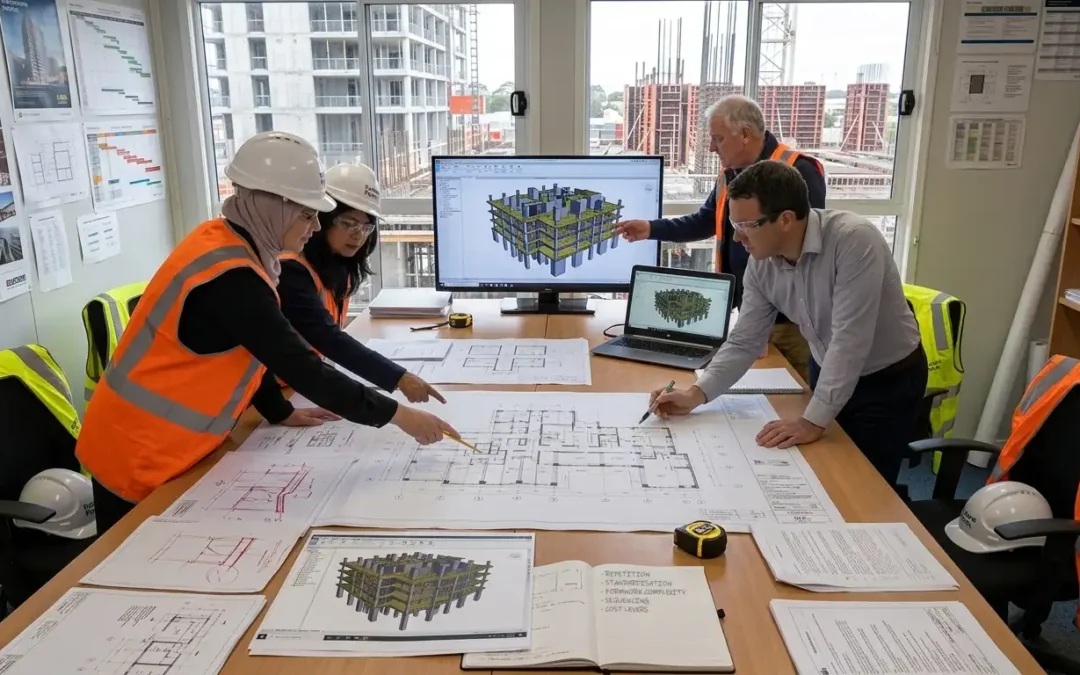
This project-focused approach can help clients review their structural package before the financial year closes. It allows teams to look at current progress, upcoming stages, sequencing, labour planning, unfinished works and practical site requirements with a clearer view of the whole package.
For developers and builders, this can support better decision-making. For project teams, it can create more confidence around what needs to happen next. For suppliers and industry partners, it can improve coordination and reduce last-minute pressure.
Future Form’s role is not only to deliver FRP works, but to support reliable planning and execution across the structural package. That includes understanding how formwork, steel fixing and concrete activities interact on site, and how practical coordination can reduce risk.
What should be included in an EOFY FRP review
A useful EOFY FRP review should be practical, not complicated. It should help project teams see what is working, what needs attention and what should be improved before the next stage begins.
Key areas to review include current structural package progress, incomplete FRP works, formwork performance, steel fixing quality, concrete pour readiness, labour requirements, access planning, material availability, safety considerations, inspection timing, upcoming programme stages and known coordination risks.
The review should also consider whether previous issues are likely to repeat. If a problem occurred once, it may be a one-off. If it happened several times, it may be a system issue that needs to be addressed.
Most importantly, the review should bring the right people into the conversation. FRP contractors, builders, supervisors, engineers, suppliers and project managers all see different parts of the process. When these views are brought together, the structural package can be reviewed more accurately.
Preparing the next financial year with more confidence
The end of the financial year is not only about closing numbers. It is also about preparing for what comes next.
For large-scale projects, the next stage may involve more complex structures, tighter timeframes, different work fronts or new coordination challenges. A clear FRP review can help teams enter the new financial year with better visibility and fewer unanswered questions.
This is where eofy in FRP becomes valuable. It gives project teams the chance to pause, assess and adjust before the next stage begins. It supports better planning, stronger coordination and a more realistic understanding of risk.
In construction, progress is not only measured by how quickly work moves. It is also measured by how well each stage supports the next. A structural package that is reviewed properly before EOFY is better positioned to move forward with clarity.
Making EOFY in FRP count
FRP construction depends on connection. Formwork, steel fixing and concrete pours all rely on each other. When one part of the process is unclear, delayed or poorly coordinated, the impact can move through the entire structural package.
That is why EOFY is such an important time to review FRP performance. It gives builders, developers, construction professionals, industry partners and suppliers the chance to look beyond financial reporting and focus on practical project delivery.
A strong EOFY review can help uncover cost pressures, unfinished works, labour gaps, sequencing issues and upcoming risks before they affect the next phase. It can also help project teams make better decisions, improve coordination and strengthen delivery confidence.
For projects moving into a new financial year, this is the right time to ask whether the structural package is truly ready for what comes next.
Future Form supports clients with a practical, project-focused approach to integrated FRP solutions. By reviewing form, reo and pour as one connected process, Future Form helps create clearer sequencing, better planning and more reliable structural outcomes across large-scale projects.
If you are reviewing your structural package before EOFY and would like a practical perspective on upcoming FRP works, sequencing or delivery planning, the Future Form team is available to help. Whether you are preparing for the next project stage or looking to improve coordination across form, reo and pour activities, a conversation with experienced FRP specialists can provide valuable insight for the months ahead.
References
Australian Bureau of Statistics. (2026). Building and construction statistics. Australian Bureau of Statistics. Retrieved from https://www.abs.gov.au/statistics/industry/building-and-construction
Australian Constructors Association. (2025). 2025 Construction market sentiment survey. Australian Constructors Association and Arcadis. Retrieved from https://www.constructors.com.au
Productivity Commission. (2025). Housing construction productivity: Can we fix it? Productivity Commission. Retrieved from https://www.pc.gov.au
Safe Work Australia. (2022). Model code of practice: Construction work. Safe Work Australia. Retrieved from https://www.safeworkaustralia.gov.au
SafeWork NSW. (2020). Code of practice: Formwork. SafeWork NSW. Retrieved from https://www.safework.nsw.gov.au
Standards Australia. (2018). AS 3600:2018 Concrete structures. Standards Australia. Retrieved from https://www.standards.org.au