Before the first concrete pour is scheduled or the first reinforcement bar is placed, the structure of a project is already being shaped by how well its teams are aligned. In large-scale construction, the coordination between trades is not just operational, it is foundational.
At Future Form, this principle sits at the core of how projects are delivered, with a strong focus on alignment, efficiency, and accountability across every stage of FRP. As a specialist in delivering complete structural packages, Future Form brings together formwork, steel fixing, and concrete pouring into one cohesive system, ensuring projects move forward with clarity and control from day one.
One of the most overlooked risks in modern construction lies in the fragmentation of FRP. When form, reo, and pour are handled by separate contractors, projects often suffer from inefficiencies that ripple across timelines, budgets, and structural outcomes. While this approach may appear flexible on paper, the hidden costs of disconnected FRP trades quickly become evident on site.
Understanding FRP in modern construction
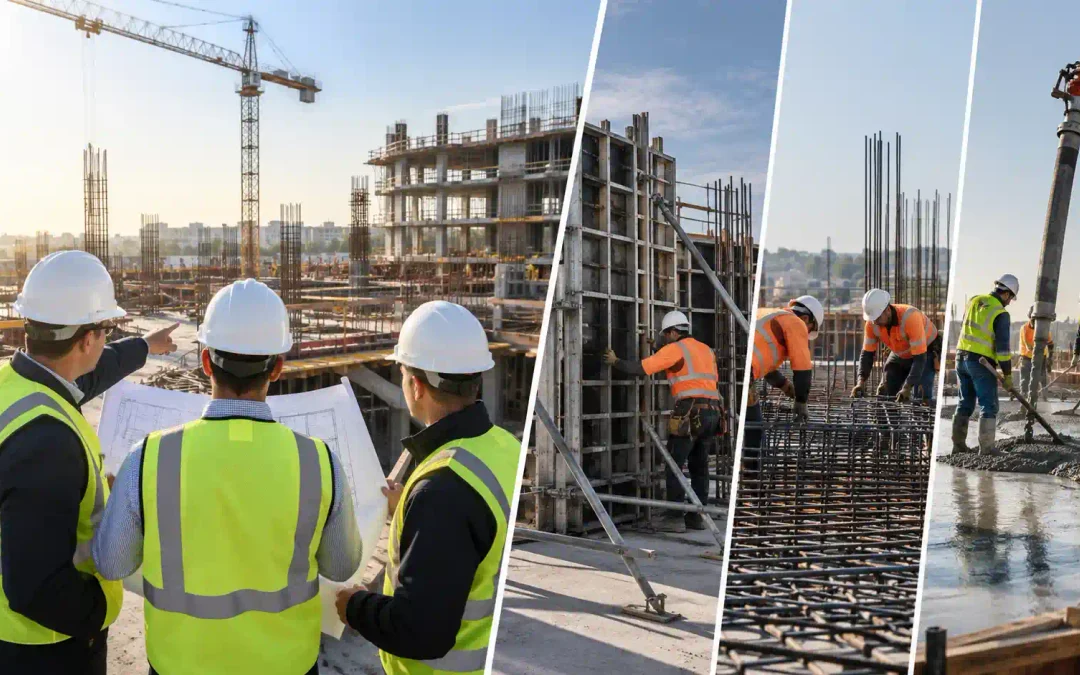
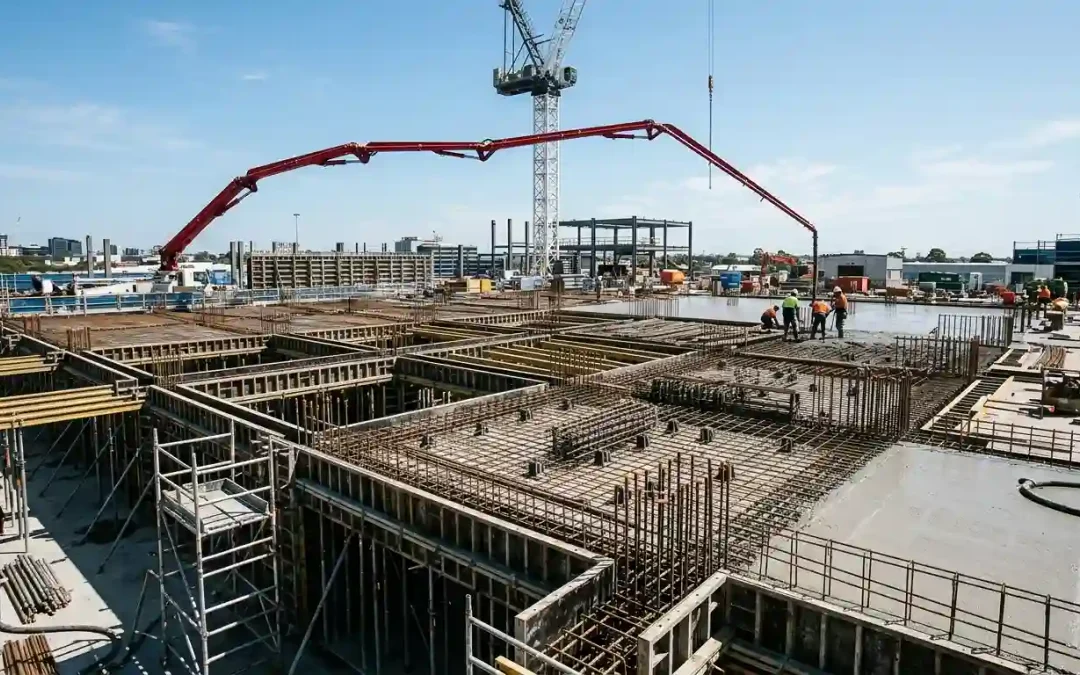
FRP refers to the integrated delivery of formwork, steel fixing, and concrete pouring. These three elements are deeply interconnected, each one directly influencing the accuracy, safety, and performance of the others.
Formwork establishes the shape and structural boundaries. Steel fixing reinforces the integrity of the build. The concrete pour brings everything together into a permanent structure. When executed as a unified process, FRP enables consistency, precision, and efficiency across all stages of construction.
However, when these components are separated across multiple FRP contractors, the natural flow between them is disrupted. What should be a seamless transition becomes a series of handovers, each introducing potential for misalignment.
Where disconnected FRP trades begin to fail
On many projects, formwork, steel fixing, and concreting are procured independently. While this may offer short-term cost advantages or contractual flexibility, it often leads to long-term complications.
Each contractor operates with their own priorities, schedules, and interpretations of the design. Without a unified approach, even minor discrepancies can escalate into significant issues.
For example, a slight variation in form alignment can impact steel placement. In turn, this affects how the concrete settles and cures. When these issues are identified late, rework becomes inevitable.
Disconnected FRP trades create gaps in accountability. When problems arise, responsibility is often shared or disputed rather than resolved efficiently. This lack of clarity slows down decision-making and increases project risk.
The impact on project timelines
Time is one of the most sensitive variables in construction. Delays in one stage of FRP can quickly cascade into others.
When formwork is not delivered or adjusted in sync with steel fixing schedules, crews are left waiting. When steel fixing is incomplete or incorrectly placed, concrete pours must be postponed. These disruptions may seem minor in isolation, but across large-scale developments, they compound rapidly.
The coordination required between separate FRP contractors often results in scheduling overlaps or gaps. Instead of a continuous workflow, projects experience stop-start progress, reducing productivity and extending timelines.
In high-rise or large infrastructure projects, where sequencing is critical, these inefficiencies can translate into weeks or even months of delay.
Quality risks across form, reo, and pour
Quality in construction is not determined at a single stage. It is the result of consistency across all stages.
Disconnected FRP trades introduce variability at each step. Formwork inaccuracies can lead to uneven surfaces or dimensional inconsistencies. Steel fixing errors may compromise structural strength. Poorly coordinated pours can result in defects such as honeycombing or weak bonding.
When trades are disconnected, there is limited opportunity for real-time collaboration. Issues are often identified after the fact, when correction is more complex and costly.
This fragmented approach also increases reliance on inspections rather than prevention. Instead of building quality into the process, projects are forced to detect and fix problems later.
Financial implications beyond the surface
The financial impact of disconnected FRP trades extends far beyond initial contract values.
Rework is one of the most significant hidden costs. Correcting misaligned formwork or improperly placed reinforcement requires additional labour, materials, and time. These costs are rarely anticipated at the outset.
There are also indirect costs associated with delays. Extended project timelines can lead to increased overheads, penalties, and lost opportunities for developers and stakeholders.
Procurement complexity adds another layer of expense. Managing multiple contractors requires more resources for coordination, communication, and contract administration.
Over time, these factors erode the perceived savings of splitting FRP trades. What initially appears cost-effective often becomes more expensive in practice.
Safety challenges on fragmented sites
Safety is closely tied to coordination. On sites where multiple FRP contractors operate independently, the risk of miscommunication increases.
Different teams may follow varying safety protocols or sequencing approaches. This inconsistency can create hazards, particularly in areas where activities overlap.
For instance, incomplete formwork combined with ongoing steel fixing can expose workers to unstable conditions. Similarly, poorly coordinated pours may lead to rushed work, increasing the likelihood of accidents.
A fragmented site environment makes it more difficult to maintain clear safety standards. Without a unified system, enforcing consistent practices becomes a challenge.
Communication breakdowns and accountability gaps
Effective communication is essential for successful project delivery. Disconnected FRP trades complicate this process.
Each contractor brings their own communication channels, reporting structures, and workflows. Aligning these systems requires constant effort, and even then, gaps can remain.
When issues arise, identifying the root cause becomes more complex. Responsibility may be unclear, leading to delays in resolution.
These accountability gaps can strain relationships between stakeholders, including developers, consultants, and contractors. Over time, this affects trust and collaboration across the project.
The case for integrated FRP solutions
As projects become more complex, the need for integrated FRP solutions becomes increasingly clear.
Bringing form, reo, and pour under a single contractor creates a unified workflow. Instead of multiple handovers, there is continuous coordination from start to finish.
Integrated FRP solutions enable better planning and sequencing. Each stage is aligned with the next, reducing delays and improving efficiency.
This approach also enhances quality control. With one team responsible for the entire structural package, there is greater consistency in execution.
Communication becomes more streamlined, with a single point of contact managing all aspects of FRP. This simplifies decision-making and improves responsiveness.
A more efficient structural package delivery
Delivering a complete structural package through a single FRP contractor transforms how projects are managed.
Planning begins with a holistic view of the project. Formwork design, steel fixing requirements, and pour sequencing are all considered together.
This integrated approach allows for optimisation at every stage. Materials can be used more efficiently. Labour can be allocated more effectively. Risks can be identified and mitigated early.
The result is a smoother construction process, with fewer disruptions and greater predictability.
For developers and project managers, this translates into improved confidence in project outcomes.
How Future Form approaches FRP differently
This is where a coordinated approach begins to shift outcomes.
Future Form operates as a single FRP contractor, delivering fully integrated FRP solutions across formwork, steel fixing, and concrete pouring. By managing the entire process as one cohesive system, projects benefit from alignment, accountability, and efficiency from day one.
Rather than treating form, reo, and pour as separate trades, Future Form approaches them as interconnected components of a single structural strategy. This ensures that each stage supports the next, reducing the risk of misalignment and rework.
Structured workflows are at the core of this approach. Clear sequencing and planning minimise delays and keep teams working in sync. Safety systems are standardised across all activities, creating a more controlled site environment.
With one team responsible for the full structural package, communication becomes simpler and more effective. Issues can be identified and resolved quickly, without the need for cross-contractor coordination.
This level of integration not only improves efficiency but also enhances the overall quality of the build.
Reducing risk in large-scale developments
Large-scale projects demand precision and reliability. Even small inefficiencies can have significant consequences when multiplied across multiple levels or phases.
Integrated FRP solutions reduce these risks by creating a consistent and controlled process. From initial formwork setup to final concrete pours, every stage is aligned.
This reduces variability and improves predictability. Developers can plan with greater certainty, knowing that the structural package is being delivered as a unified system.
In an industry where margins are tight and timelines are critical, this level of control is invaluable.
The future of FRP delivery
The construction industry continues to evolve, with increasing emphasis on efficiency, safety, and quality. As projects become more complex, traditional approaches to trade separation are being reconsidered.
Integrated FRP solutions represent a shift towards more collaborative and streamlined delivery models. By reducing fragmentation, projects can achieve better outcomes across all key metrics.
This approach is not just about improving processes. It is about redefining how structural work is delivered, with a focus on alignment, accountability, and performance.
Building with alignment, not assumptions
The hidden cost of disconnected FRP trades is not always visible at the start of a project. It tends to reveal itself over time, through delays, rework, and small inefficiencies that gradually build into larger risks.
When form, reo, and pour operate as separate functions, projects often lose the continuity needed to maintain steady progress. What should be a coordinated sequence becomes a series of handovers, each adding pressure to timelines, budgets, and teams on site.
Taking a more connected approach allows projects to move with greater clarity. When FRP is delivered as one aligned process, coordination improves, decisions are made faster, and outcomes become more predictable across the structural package.
This shift is less about changing the way projects are built, and more about refining how they are delivered. Reducing fragmentation early can make a measurable difference in both performance and long-term value.
At Future Form, this approach is reflected in how formwork, steel fixing, and concrete are delivered as a single, coordinated system, helping projects maintain momentum and consistency from start to finish.
For teams planning upcoming developments or reviewing how their current projects are structured, it can be valuable to consider where alignment across FRP could reduce risk and improve efficiency. Starting that conversation early often leads to smoother delivery on site.
References
Gibb, A. (1999). Off-site fabrication: Prefabrication, pre-assembly and modularisation. Wiley-Blackwell.[Text Wrapping Break]Retrieved from: https://www.wiley.com/en-us/Off+site+fabrication%3A+Prefabrication%2C+pre+assembly+and+modularisation-p-9780470650910
Hwang, B. G., & Ng, W. J. (2013). Project management knowledge and skills for green construction: Overcoming challenges. International Journal of Project Management, 31(2), 272–284. Retrieved from: https://doi.org/10.1016/j.ijproman.2012.05.007
Love, P. E. D., Edwards, D. J., & Irani, Z. (2012). Moving beyond optimism bias and strategic misrepresentation: An explanation for social infrastructure project cost overruns. IEEE Transactions on Engineering Management, 59(4), 560–571. Retrieved from: https://doi.org/10.1109/TEM.2011.2163628
Tam, V. W. Y., Shen, L. Y., & Kong, J. S. Y. (2011). Impacts of multi-layer chain subcontracting on project management performance. International Journal of Project Management, 29(1), 108–116.Retrieved from: https://doi.org/10.1016/j.ijproman.2010.01.005
Zhai, X., Reed, R., & Mills, A. (2009). Factors impeding the off-site production of housing construction in China: An investigation of current practice. Construction Management and Economics, 27(6), 571–586. Retrieved from: https://doi.org/10.1080/01446190902829534