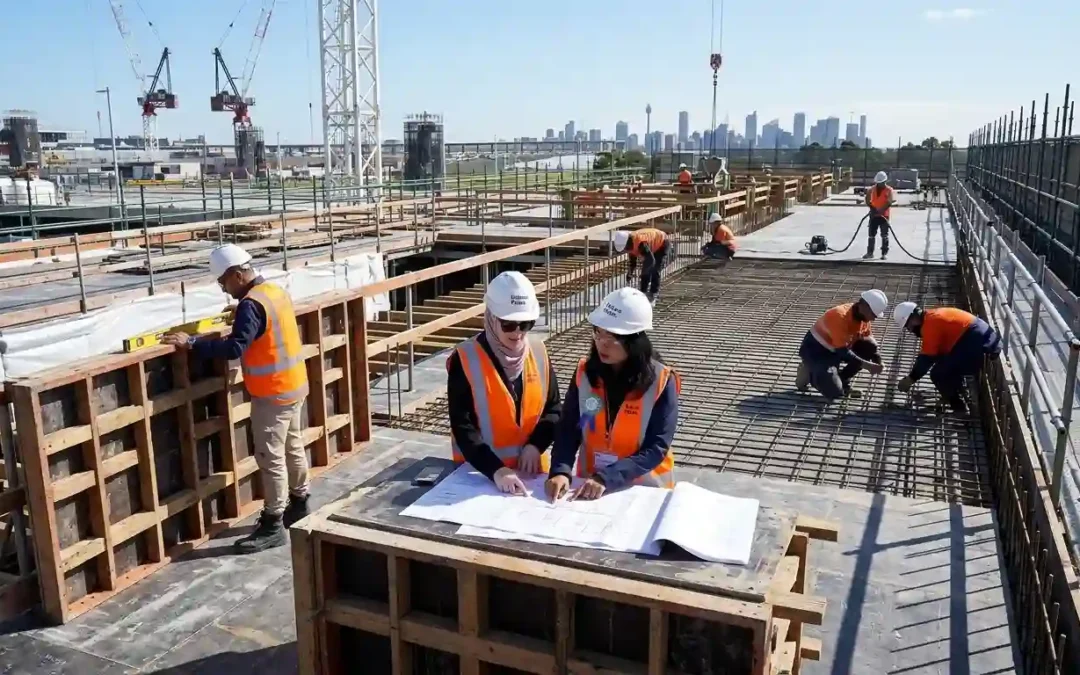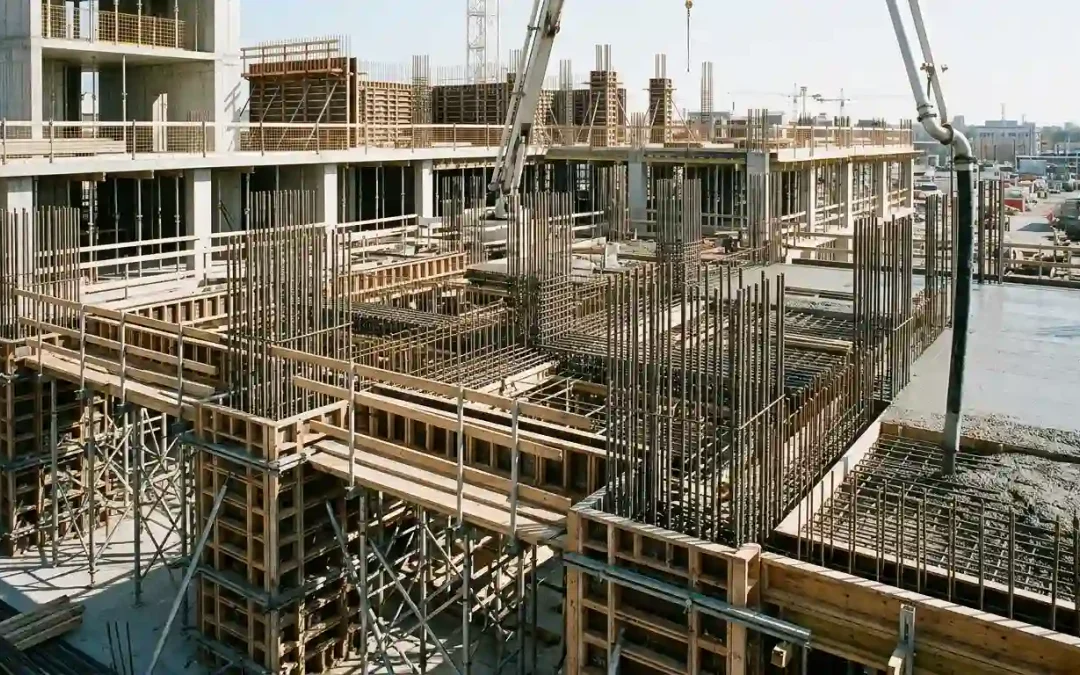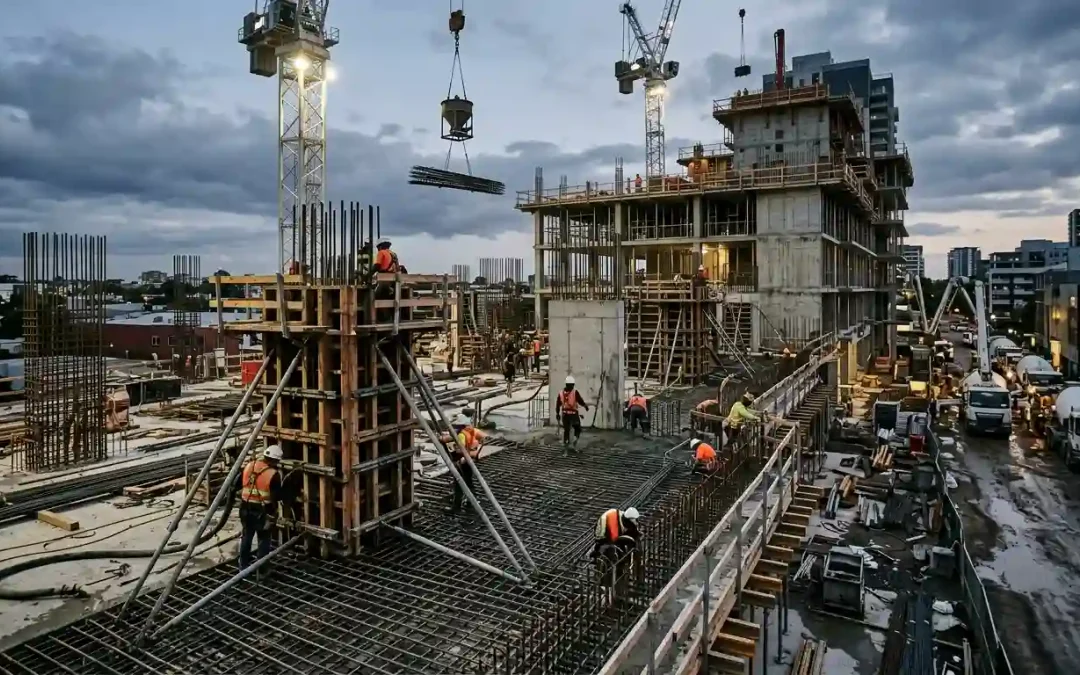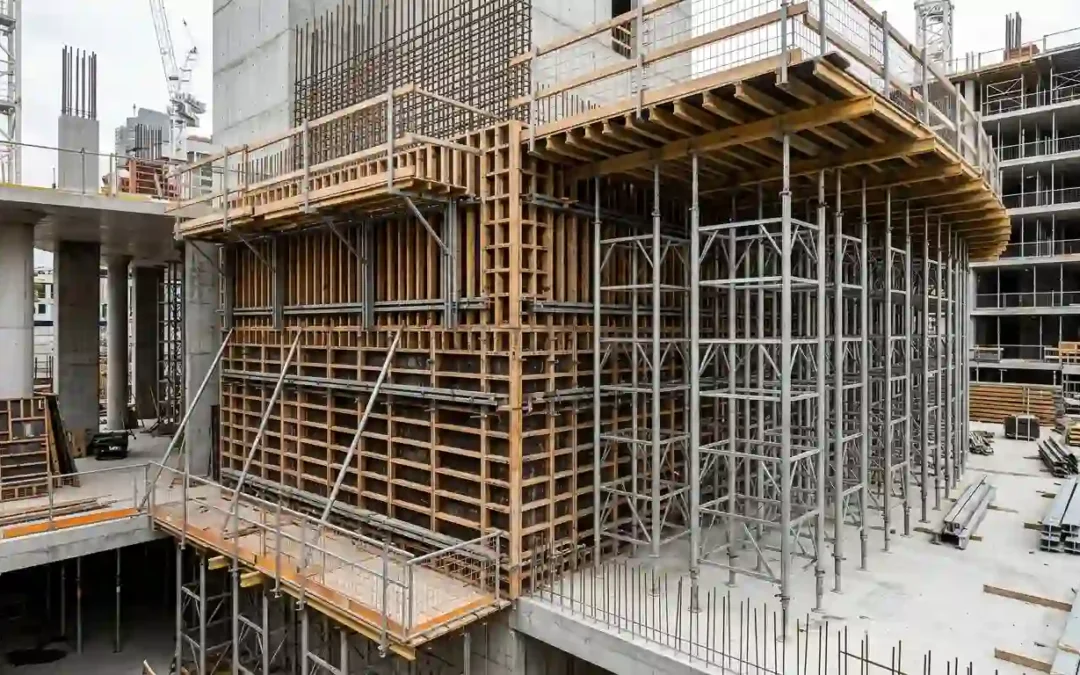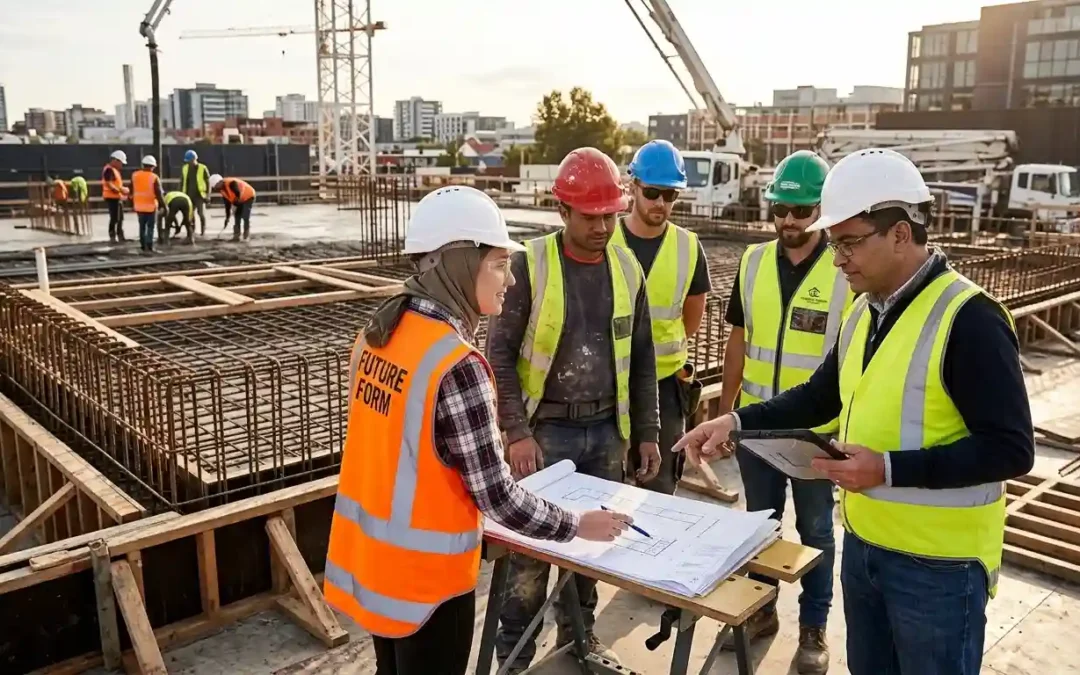
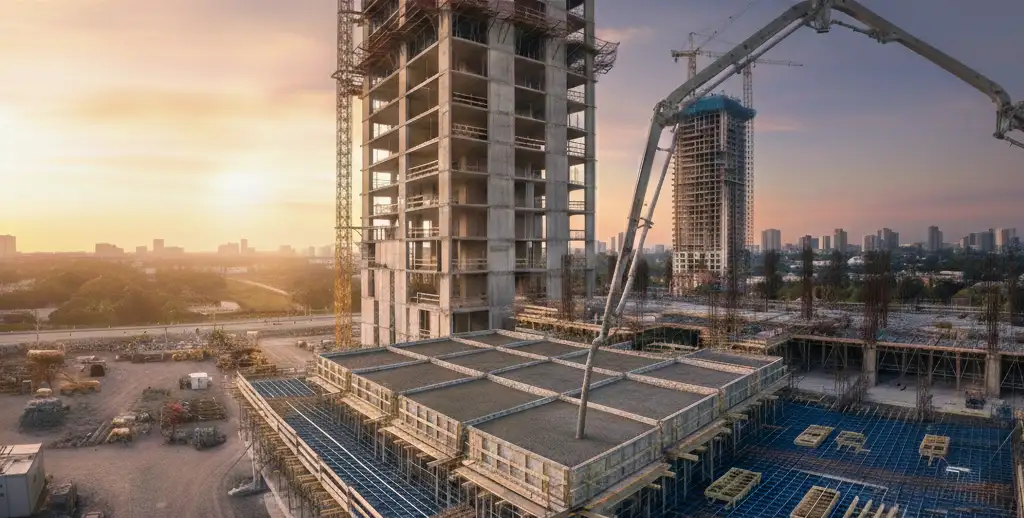
Large-scale concrete structures are not defined by how quickly teams can book a pump or how efficiently they can mobilise labour at short notice. They are defined by consistency. When each pour proceeds as planned, when inspections are complete, when access is clear and reinforcement is signed off, structural progress becomes steady and measurable rather than reactive and uncertain.
At Future Form, we work with the team who understand that predictable outcomes do not happen by accident. They are the result of disciplined planning, rigorous validation and integrated site coordination. Predictable concrete pours through structured FRP coordination are not just an operational preference — they are a commercial advantage.
In this article, we explore how strong form, reo and pour integration transforms structural packages from fragmented activities into reliable, repeatable workflows.
Why predictable concrete pours matter in modern structural delivery
Across high-rise residential, commercial and mixed-use developments, the structural frame often determines the overall programme tempo. Delays in concrete pours cascade into follow-on trades, façade installation, services rough-ins and internal works. One failed booking can trigger significant cost and reputational implications.
Predictable concrete pours provide:
- Stable programme forecasting
- Improved cost control
- Reduced standby charges and pump cancellations
- Higher quality outcomes
- Safer site environments
In most markets, ready-mix concrete supply operates on tight allocation windows. Booking a concrete pour is a commercial commitment. When the site is not genuinely ready — when the formwork is incomplete, the steel fixing is still being finalised, or inspections are pending — pressure builds. Teams rush. Shortcuts emerge. Risk increases.
Reliable structural progress depends on eliminating this cycle of pressure.
The common causes of unpredictable concrete pours
Despite detailed construction programmes, many projects continue to struggle with last-minute pour cancellations or compromised outcomes. The causes are rarely dramatic; they are procedural.
Fragmented FRP ownership
On some projects, form, reo, and pour responsibilities sit with separate contractors, each working to slightly different milestones. While contractual boundaries may be clear, operational integration is often not.
Without structured FRP coordination:
- Formwork completion is assumed rather than verified
- Reo inspections are scheduled before steel fixing is genuinely complete
- Concrete is booked based on optimistic projections
- Access, edge protection or services penetrations are overlooked
The result is misalignment between booking schedules and site readiness.
Programme pressure over preparation
When structural cycles are tight, pressure can override process. Teams may proceed with a pour because the pump is booked and labour is mobilised, even if minor issues remain unresolved.
However, in structural works, “minor” issues are rarely minor. Incomplete reinforcement tying, poorly secured embeds or unverified penetrations can compromise quality and durability. Rectification after a concrete pour is always more expensive than prevention before it.
Inadequate inspection sequencing
A predictable structural package relies on disciplined inspection gateways. If inspection requests are made before steel fixing is fully complete, engineers and certifiers may issue conditional approvals, or require return visits. This disrupts flow and undermines confidence.
Structured FRP coordination addresses these issues by aligning physical readiness with programme commitments.
What structured FRP coordination really means
Structured FRP coordination is not simply about holding coordination meetings. It is about managing form, reo and pour as a single, disciplined workflow with defined validation points before every booking.
In practical terms, structured FRP coordination includes:
- Clear sequencing of formwork completion
- Verified steel fixing sign-off prior to inspection
- Formal readiness checks before booking concrete
- Alignment between site supervisors, engineers and FRP contractors
- Real-time communication on structural readiness
Rather than treating formwork, reo, and concrete as separate activities, structured FRP coordination recognises that they are interdependent components of one structural system.
When integrated properly, the workflow becomes predictable and repeatable.
The relationship between steel fixing and structural certainty
Steel fixing is central to structural integrity. Reinforcement placement, lapping, tying and cover tolerances directly influence load performance and durability.
However, steel fixing also influences programme reliability. Incomplete or poorly sequenced reo works are one of the most common reasons for postponed pours. If reinforcement cages are not fully tied or embedded services conflict with bars, delays occur at inspection stage.
By integrating reo planning into the broader FRP sequence:
- Reinforcement deliveries align with formwork progress
- Fixing teams are scheduled based on validated readiness
- Engineers inspect complete zones rather than partial sections
- Concrete bookings reflect verified structural readiness
This creates confidence not only for the principal contractor, but also for consultants and developers tracking structural progress.
How predictable concrete pours support structural progress
Structural progress on large projects is often measured by floor cycle times. Whether the target is five, seven or ten days per level, consistency is more valuable than isolated speed.
Predictable concrete pours enable:
- Repeatable floor cycles
- Reliable crane utilisation
- Coordinated follow-on trades
- Improved supply chain planning
When FRP contractors operate within a structured framework, structural outputs become measurable. This improves forecasting accuracy, cash flow projections and stakeholder reporting.
Over time, consistent delivery builds credibility across the entire structural package.
Integrated FRP solutions versus traditional trade separation
Traditional models often appoint separate contractors for formwork, reinforcement and concrete placement. While this can work in certain contexts, it requires exceptional coordination to avoid friction points.
By contrast, integrated FRP solutions centralise accountability. When a single disciplined team manages the form, reo and pour sequence:
- Responsibility for readiness is clear
- Inspection preparation is streamlined
- Pour bookings reflect actual site status
- Disputes between trades are reduced
Integrated FRP solutions reduce the grey areas that often lead to last-minute decision-making. For developers and consultants, this means fewer surprises and stronger programme confidence.
The commercial impact of predictable concrete pours
The financial implications of unpredictable pours extend well beyond pump cancellation fees. When unreliable concrete ports — including pour points and confirmed delivery bookings — fail to align with genuine site readiness, the consequences ripple through the entire structural package. Labour crews may stand by without productive output, concrete allocations may need to be rebooked at additional cost, material wastage can occur, and plant sits idle while programme pressure intensifies. Over time, these disruptions can also trigger programme penalties, strained subcontractor relationships, and increased administrative overhead as teams work to recover lost ground.
Conversely, predictable concrete pours create measurable commercial stability. When form, reo and pour (FRP) readiness is validated before bookings are secured, contingency allowances are preserved rather than consumed by avoidable delays. Subcontractor morale improves because workflows are consistent and expectations are clear. Quality assurance becomes proactive rather than corrective, leading to fewer defect rectifications and reduced downstream risk. In high-density structural builds, even minor inconsistencies compound across multiple levels, so structured FRP coordination ultimately protects margin by protecting predictability.
Risk management through structured FRP coordination
Risk in structural construction typically falls into three primary categories: safety risk, quality risk and programme risk. On large-scale developments, these risks are closely interconnected, with pressure in one area often triggering consequences in another. Structured FRP coordination addresses all three by aligning form, reo and pour activities within a disciplined workflow that validates readiness before commitment. Clear sequencing ensures access platforms, edge protection systems and penetrations are properly managed before the pour, reducing last-minute working-at-height exposure and site congestion. By removing reactive decision-making, the site environment becomes safer and more controlled.
From a quality and programme perspective, structured FRP coordination introduces defined validation checkpoints before concrete is booked. Careful verification of formwork alignment, reinforcement placement, cover tolerances and embed installation ensures the concrete performs as designed, minimising the risk of costly post-pour rectification. At the same time, only securing concrete ports and delivery allocations once genuine readiness is confirmed reduces cancellations and protects the critical path. In this way, integrated FRP solutions transform the structural package into a risk-control mechanism rather than a risk amplifier, strengthening structural progress across every stage of delivery.
The role of disciplined FRP contractors in large-scale developments
Not all FRP contractors operate within the same framework. Predictability depends on discipline, communication and structured processes.
High-performing FRP contractors:
- Conduct formal pre-pour readiness reviews
- Coordinate closely with engineers and certifiers
- Validate reo completion before inspections
- Confirm site logistics prior to booking concrete
- Align workforce capacity with structural milestones
These practices transform FRP from a reactive trade package into a structured delivery engine.
For developers and industry partners, this translates into stronger structural certainty across the entire project lifecycle.
How Future Form delivers predictable concrete pours
Delivering predictable concrete pours requires more than coordination meetings — it demands structured ownership across the entire FRP workflow. Future Form approaches FRP as a single, integrated system rather than three independent trades. Our focus is on structured FRP coordination that validates readiness before commitment.
Our methodology includes:
- Managing form, reo and pour under one disciplined workflow
- Verifying formwork completion prior to steel fixing progression
- Validating reinforcement readiness before inspection booking
- Confirming engineer approvals before securing concrete allocations
- Aligning concreting schedules with on-site reality
By ensuring each stage is genuinely complete before moving to the next, we reduce disruption and improve structural certainty.
This structured approach supports:
- Consistent structural progress
- Fewer cancelled bookings
- Improved programme transparency
You can see how this disciplined approach translates into real structural outcomes across our recent projects. For clients delivering complex structural packages, this level of discipline provides clarity and confidence.
Structured FRP coordination as a foundation for long-term performance
Predictable concrete pours are not only about achieving short-term programme milestones; they play a critical role in the long-term performance of the building itself. When form, reo and pour activities are properly coordinated, reinforcement cover is maintained accurately, embeds are positioned correctly, and concrete placement occurs under controlled conditions. This alignment reduces the likelihood of voids, misalignment or tolerance issues that can compromise the integrity of the structural package over time.
Industry guidance consistently reinforces the importance of reinforcement accuracy, inspection sequencing and controlled placement in achieving structural durability. When structured FRP coordination is embedded into the workflow, quality assurance becomes proactive rather than reactive. Instead of relying on post-pour rectification, teams achieve uniform compaction, reduced cracking risk and stronger long-term durability — making structural certainty a planned outcome rather than a fortunate result.
Creating repeatable structural success across projects
For developers managing multi-stage or multi-site portfolios, repeatability is critical to protecting both programme and profit. While a single well-managed build demonstrates capability, a replicable delivery methodology across multiple projects creates genuine commercial advantage. Structured FRP coordination transforms form, reo and pour into a system that can be transferred, measured and refined from one structural package to the next.
With disciplined processes in place, teams benefit from consistent reporting metrics, predictable structural timelines and scalable workforce planning that supports steady structural progress. Over time, predictable concrete pours become embedded within the delivery culture, shifting projects away from reactive firefighting and towards proactive preparation — which is where true structural efficiency and long-term performance are achieved.
Building certainty through structured FRP coordination
Reliable structural delivery is not achieved through urgency. It is achieved through alignment.
Predictable concrete pours are the outcome of structured FRP coordination — where form, reo, and pour are managed as one disciplined process. When readiness is validated before bookings are made, structural progress becomes stable, measurable and commercially controlled.
For developers, consultants, contractors and suppliers seeking greater certainty across their structural package, integrated FRP solutions offer a practical path forward.
Future Form remains committed to delivering predictable concrete pours through disciplined coordination, rigorous validation and integrated FRP workflows — ensuring that every structural milestone reflects genuine readiness rather than programme pressure.
If you are planning your next structural package and would like to explore how structured FRP coordination can support more predictable concrete pours, you can connect with our team to continue the conversation.
References
American Concrete Institute. (2019). Building code requirements for structural concrete (ACI 318-19). American Concrete Institute. Retrieved from https://www.concrete.org
American Concrete Institute. (2014). Guide to formwork for concrete (ACI 347R-14). American Concrete Institute. Retrieved from https://www.concrete.org
Concrete Society. (2020). Practical guide to concrete construction and quality control. The Concrete Society. Retrieved from https://www.concrete.org.uk
fib – International Federation for Structural Concrete. (2020). fib Model Code for Concrete Structures 2020. Ernst & Sohn. Retrieved from https://www.fib-international.org
Institution of Civil Engineers. (2015). Inspection and quality control of reinforced concrete structures. ICE Publishing. Retrieved from https://www.ice.org.uk
Standards Australia. (2018). AS 3600: Concrete structures. Standards Australia. Retrieved from https://www.standards.org.au