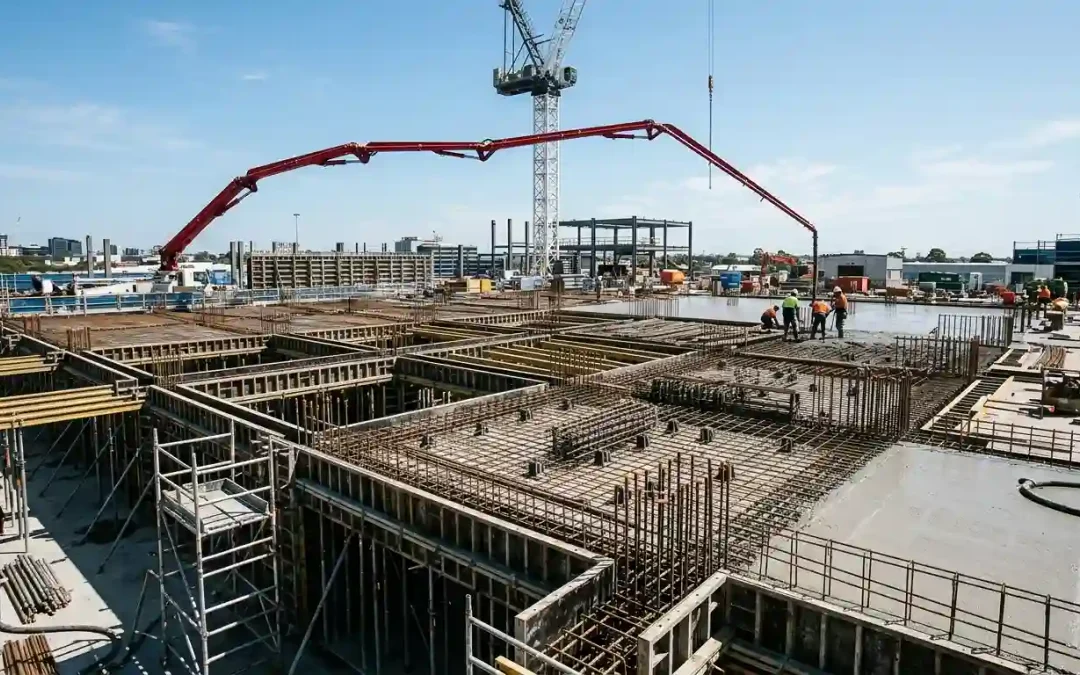
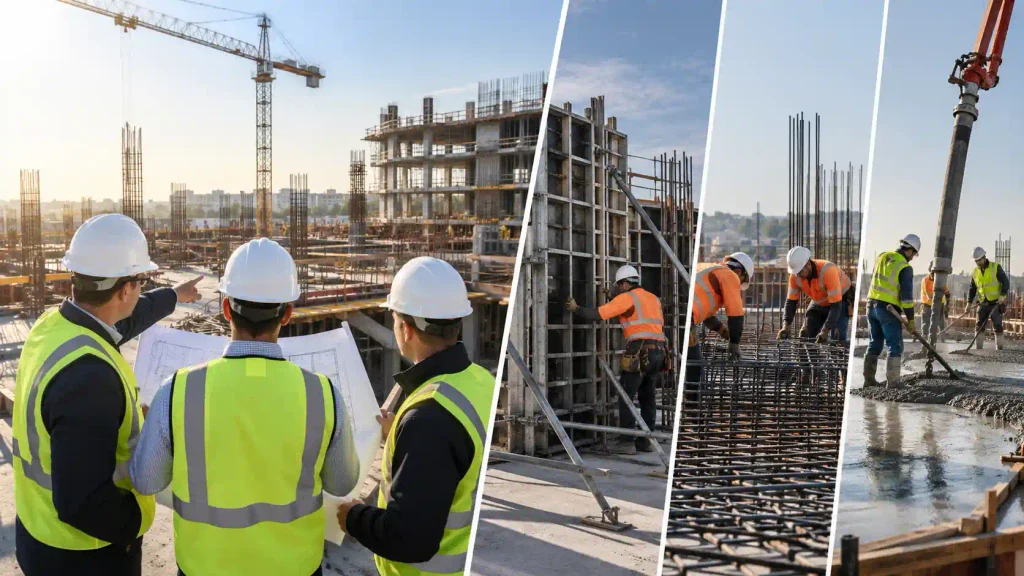
FRP means Form, Reo and Pour — formwork and its temporary works, reinforcement fixing, and concrete placement. The harder question is not what those are, but how to buy them: as one integrated FRP package, or as three separate trade packages.
There is no universally correct answer, only a correct answer for your project.
Key takeaways
- Neither model is automatically cheaper, faster or lower risk — it depends on the project, programme and the builder’s resources.
- One FRP subcontractor consolidates the interfaces; three separate trades keep them, and someone still manages them.
- Most structural variations begin at an interface, not inside a trade’s scope.
- The headline price is not the comparison — management time, exclusions and variation exposure all carry cost.
- Separate trades suit some projects: established relationships, specialist elements or strong internal resources.
- Compare like for like: one price and three prices are comparable only once exclusions are normalised.
What each procurement model actually means
An integrated FRP subcontractor
One subcontract covers form, reo and pour: formwork design and erection, reinforcement fixing, concrete placement, and the sequencing between them. The builder manages one relationship and one point of accountability.
Three separate trades
Formwork, steel fixing and concrete placement are let as three subcontracts, each accountable for its own scope. The interfaces — handovers, sequencing, hold points, access, craneage — sit with the builder, because no subcontractor holds the scope connecting them.
Why the procurement model shapes the structural programme
Packaging is a risk allocation decision. As the NSW Construction Leadership Group notes in its Procurement Methods Guidelines, the model decides who carries which risk.
In a structural package that risk is a cycle. Form, reo and pour repeat floor after floor, and the sequence between them sets the deck cycle more than any crew’s productivity does. Under one FRP subcontractor that sequence is internal, priced as a committed cycle time; under three trades it is a coordination task. Neither is inherently faster — what changes is who is answerable when the cycle slips.
Interface risk: where the commercial exposure sits
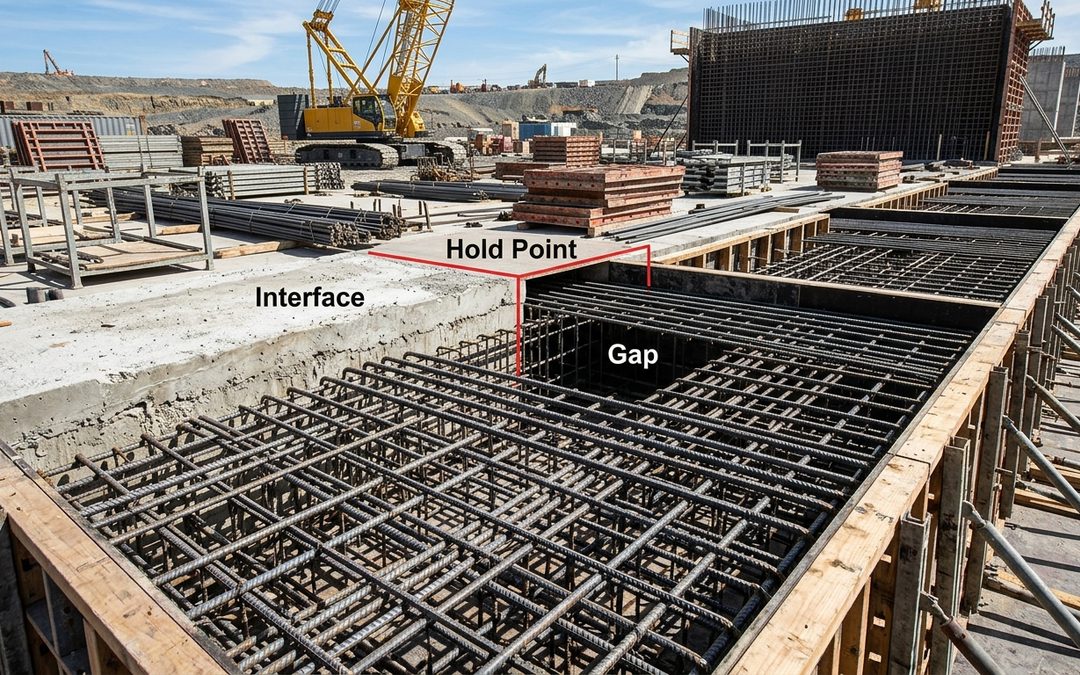
Structural disputes rarely start in the middle of a trade’s scope. They start at the edges — set-out handed over, reo trimmed around a late penetration, a deck released a day behind. Disconnected trade interfaces are where programme and cost quietly leak. With three subcontracts, formwork released late gives the steel fixer a claim and fixing that runs over gives the concreter one, so the builder absorbs the difference. Under one package those events sit inside a single scope.
Formwork is the interface most underestimated: a designed temporary structure carrying live loads, certified before loading under AS 3610 and Safe Work Australia’s formwork guidance. Change the reo detail and you may change the formwork design — so when three parties own those decisions, coordination relies on assumptions.
What happens when something fails at a hold point
A hold point is a point beyond which work must not proceed without release, as set out in NATSPEC’s guidance on hold points and witness points. The pre-pour inspection is the one that matters: concrete is booked, a boom is mobilised, and the inspection finds a formwork or reinforcement issue.
With three separate trades, rectification sits with a subcontractor who may have moved on — the formwork crew a level up, the steel fixers demobilised. Bringing either back is a negotiation, not a direction, while the abortive costs run: concrete cancellation, pump standby, placing crew. Each party holds a defensible position, and the builder absorbs the cost or spends weeks apportioning it.
With one FRP subcontractor, rectification usually happens with labour already on deck, and the cost falls inside one package. It does not disappear — a booked pour that isn’t ready is expensive either way — but attribution is one conversation instead of three. The counterpoint: consolidation also reduces visibility of which element failed, and some teams want that granularity.
One FRP subcontractor or three separate trades: a side-by-side view
| Consideration | One integrated FRP subcontractor | Three separate trades |
| Programme coordination | Sequencing held inside one package | Builder coordinates three programmes into one cycle |
| Interface risk | Fewer interfaces; residual risk sits in the package | More interfaces, each needing defined handovers |
| Hold points | Consolidated, if the subcontract says so | Established in advance across three scopes |
| Variation exposure | Fewer interface variations | Interface events can trigger claims from several parties |
| Management overhead | One relationship, one programme obligation | More builder input on sequencing, access, craneage |
| Cost transparency | Inclusions and exclusions must be stated in detail | Prices visible individually, but must be normalised |
| Trade control | Less control over crews and methods | Direct control over selection, method and continuity |
Cost transparency: the headline price does not settle it
Three trade prices will often total less than one package price on paper — until you test what each excludes. Crane time, set-out, backpropping, penetrations, make-good and pre-pour attendance all move between scopes.
Then add what appears in none of the four numbers: management time, a lost deck cycle, interface variations, and an abortive pour nobody’s scope covers. The commercial case for integration rests on those items, and a cheap price with thin coverage is a risk either way. Under AS 4000:2025 or AS 4903, the scope description is what a later variation claim gets measured against.
When each model is the better fit
When separate trades are the better decision
Splitting Form, Reo and Pour is a sound decision — sometimes the better one — where the builder:
- Has established relationships with formwork, reinforcement or concrete specialists who perform reliably.
- Wants direct control over each package, including selection, method and crew continuity.
- Has strong internal resources — a team genuinely resourced to manage interfaces, not just attend meetings about them.
- Requires specialist capability for particular elements, such as complex post-tensioning or heavily detailed reinforcement.
- Has procurement requirements favouring separate contracts: client-directed appointments, panel arrangements or probity rules.
- Has existing commercial arrangements — supply, plant, labour or concrete agreements — that make separate procurement practical.
Where several apply, the interfaces are manageable because someone competent is managing them.
When an integrated FRP package makes more sense
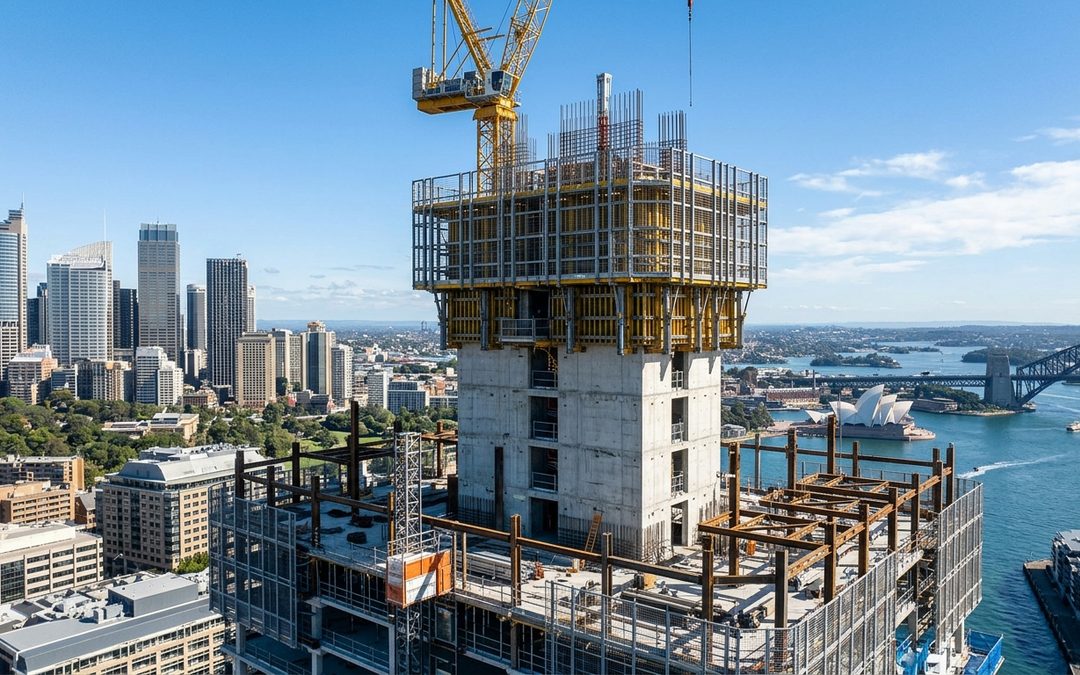
Integration suits repetitive structures where the deck cycle drives the programme, builders stretched across several sites, and structures where formwork design, reo detail and pour methodology are tightly interdependent — cores, transfer slabs, high strutting and jumpform among them. It suits teams who would rather buy a cycle time than assemble one: the argument behind integrated FRP delivery on large-scale projects.
How to compare the two models like for like
Before tender and before award, resolve the same questions under both models. The answers differ; the questions do not.
| Question to resolve | Under one FRP package | Under three separate trades |
| Who owns the deck cycle and its recovery? | The subcontract programme obligation | Allocate it, or it defaults to the builder |
| Who releases the deck, and to what tolerance? | Internal to the package | Define handover criteria in each scope |
| Who attends and clears pre-pour hold points? | One attendance obligation | Three, plus the builder’s coordination |
| Who pays for an abortive pour? | One package, one liability path | Establish before award, not after |
| Who provides crane time, set-out and access? | Stated once | Stated three times, consistently |
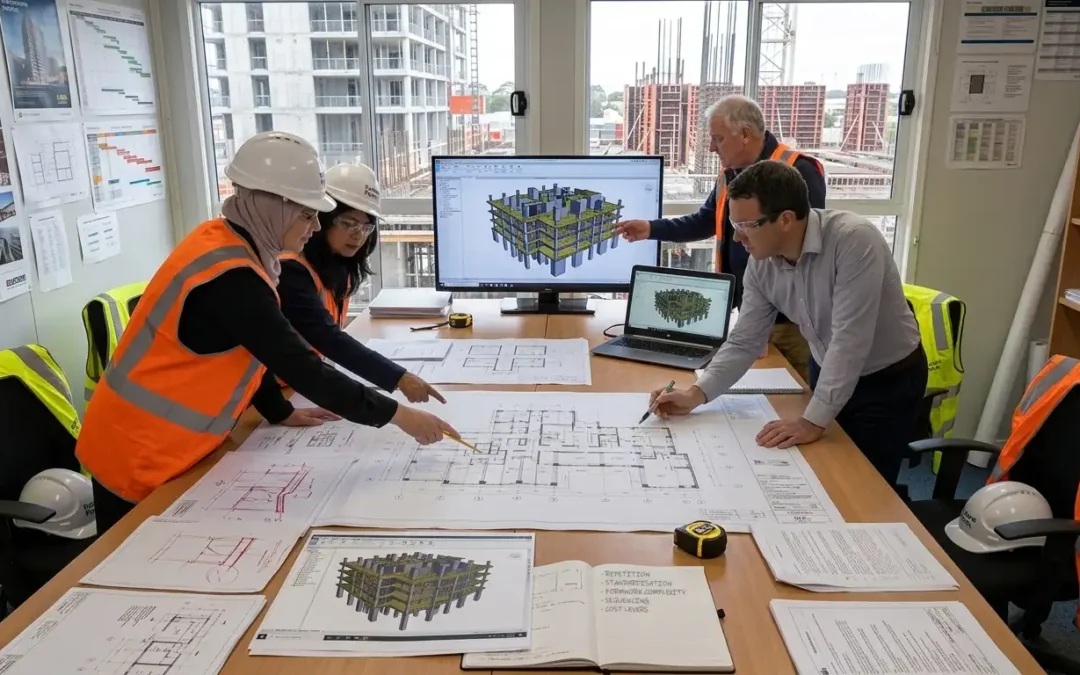
Normalise first, compare second: add back excluded items at a consistent allowance, strip out inclusions only one tenderer offered, then compare adjusted totals. Clear communication across the structural package surfaces those gaps before award. Both models carry the same site duty — the Construction Work Code of Practice requires businesses sharing an area to consult, cooperate and coordinate.
How Future Form can help
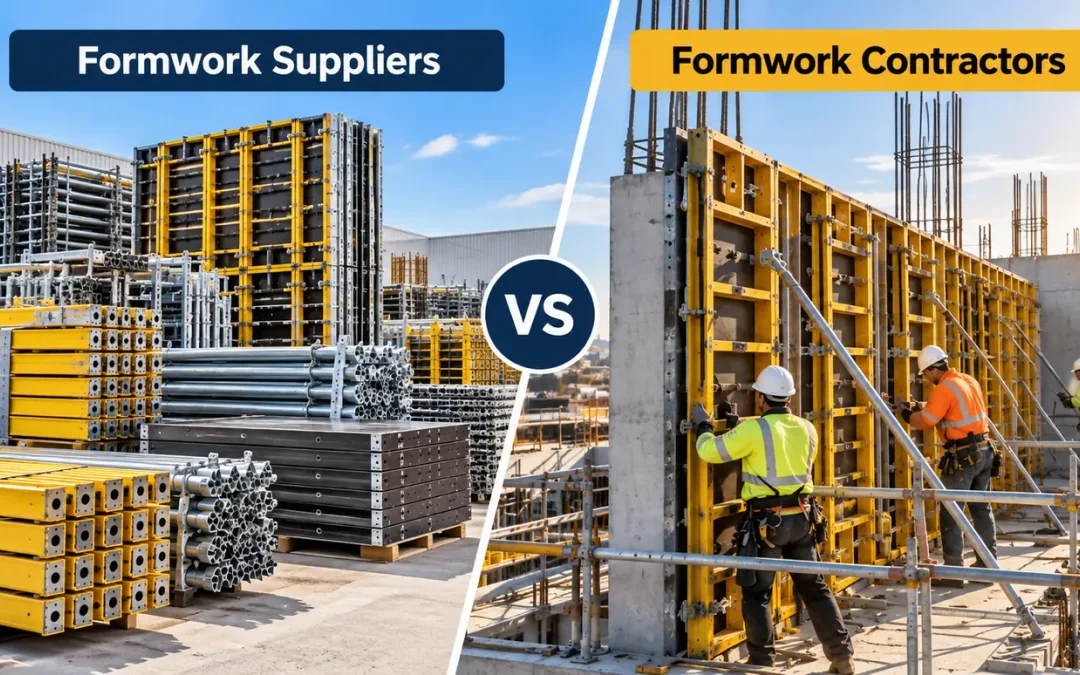
Future Form delivers form, reo and pour as an integrated structural package, self-performing formwork, jumpform, concrete works and high strutting. That is why we can talk usefully about both models: we can price a structure package as a single scope, or price one component where a builder has already split the trades.
The useful conversation is about consequences rather than rates. Which handovers need defined tolerances? Which hold points carry the most abortive cost? We can walk through the programme, sequencing and interface implications of each approach, and set out what our scope would and would not include.
Behind that sits over 20 years in the industry, an experienced structural team, ISO 9001, ISO 45001 and ISO 14001 certified systems, major projects across NSW and the ACT, and Future Form Civil for infrastructure. Our guides to choosing an FRP contractor and FRP let as separate trades are a useful starting point.
Frequently asked questions
1. Should formwork, reo and pour be one contract or three?
Either can be correct. One contract consolidates sequencing and accountability; three give control but leave the interfaces with the builder.
2. What are the risks of splitting a structure package?
Interface gaps, contested responsibility at hold points, and delay no single subcontractor must recover while the structure falls behind.
3. Is it cheaper to package formwork, reinforcement and pour together?
Not automatically. Three trade prices may total less on paper, but only once exclusions are normalised and management time is counted.
4. Who manages the interfaces when Form, Reo and Pour are separate?
The builder, unless the subcontracts say otherwise — no trade holds the scope connecting formwork release, reo fixing and pour readiness.
5. What happens if one trade causes a delay at a hold point?
Under separate trades it needs negotiation between three parties; under one FRP subcontractor it sits in one package.
6. Is an integrated FRP package suitable for every project?
No. Integration suits repetitive structures where cycle time drives the programme; separate trades can suit specialist relationships or client-directed appointments.
Compare the package, not just the prices
The procurement model decides who carries the interfaces — and the interfaces are where programme certainty, variation exposure and management overhead are won or lost. One integrated FRP subcontractor consolidates them. Three separate trades hand them to your project team.
Both are legitimate; neither is automatically right. What is never right is comparing one package price against three trade prices without first testing what each excludes, who releases the deck, and who pays when a pour is called off at the inspection.
To compare both approaches, or have a scope reviewed before it goes to market, speak with a Future Form expert.
The cheapest structural package is the one where everybody already knows who owns the gap between the trades.