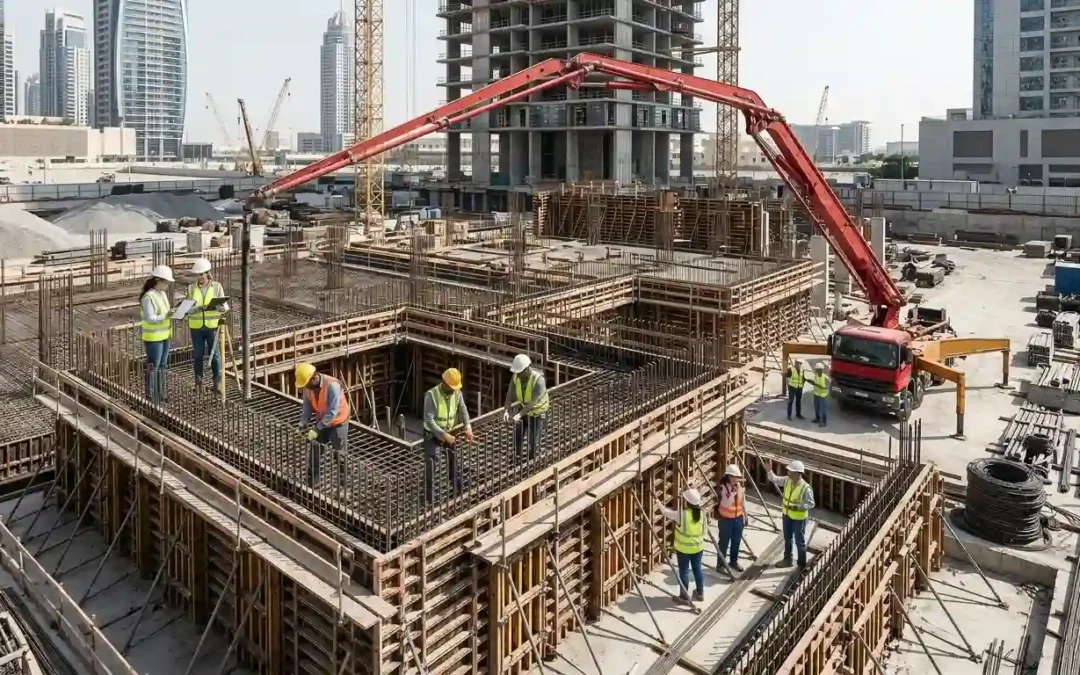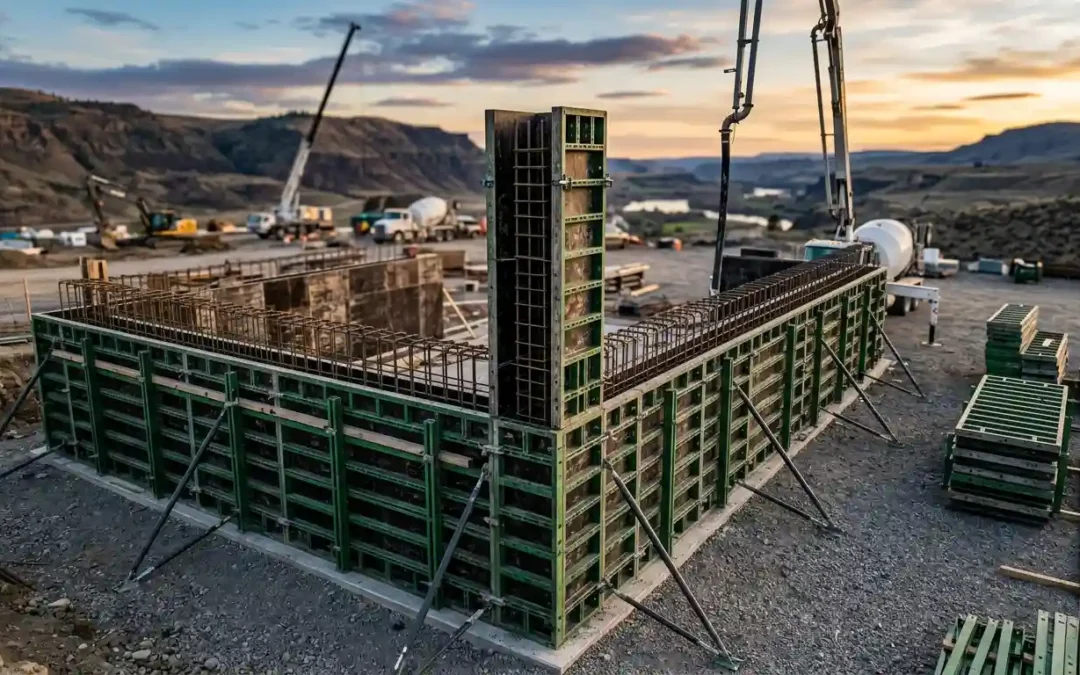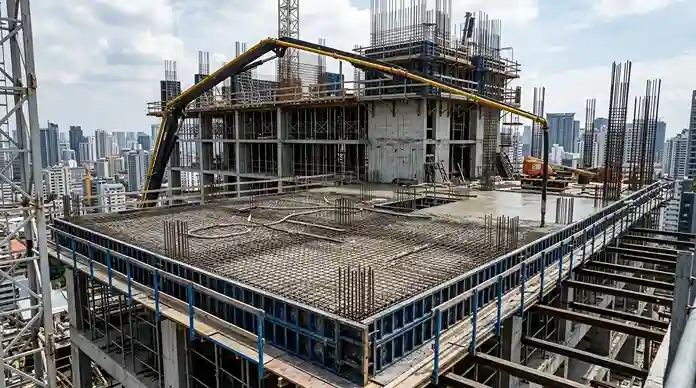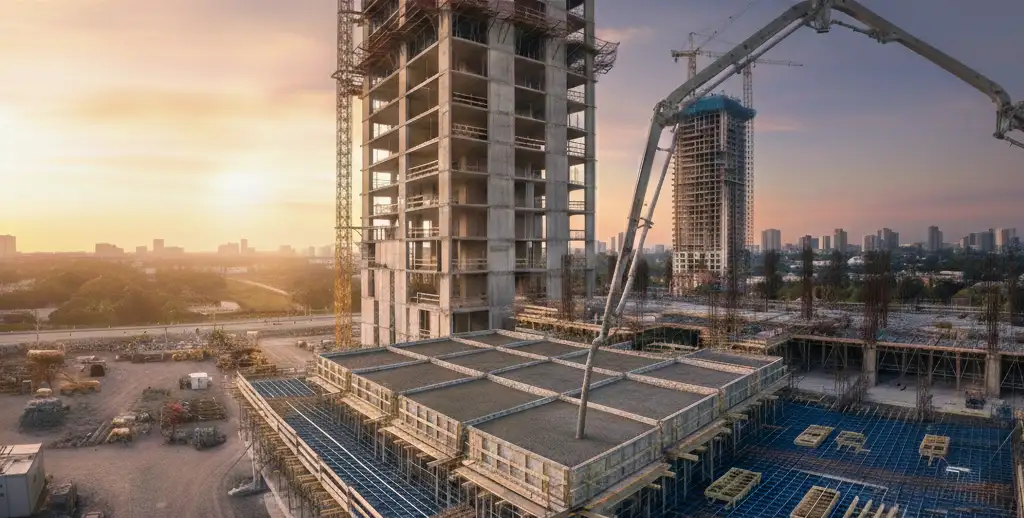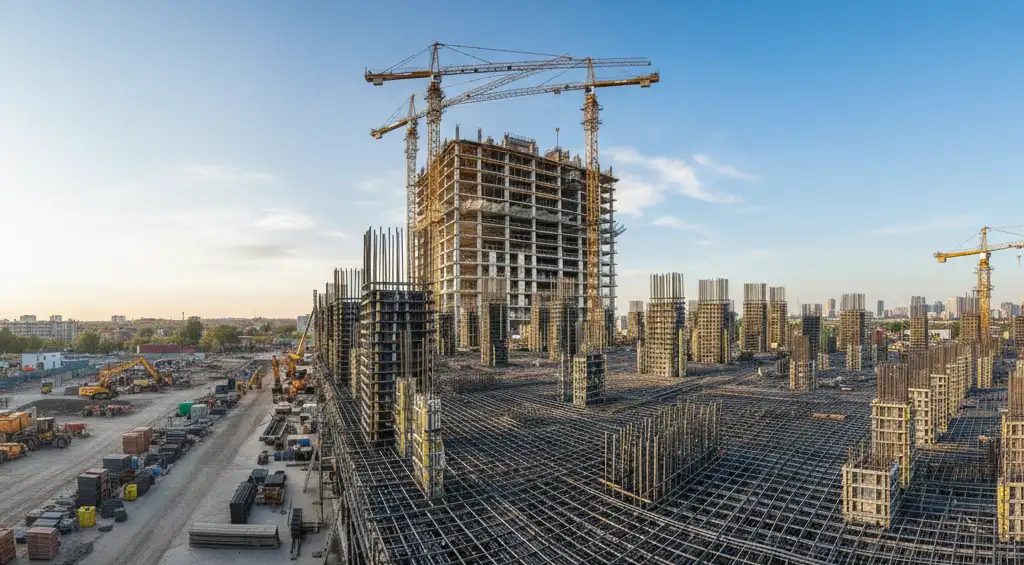
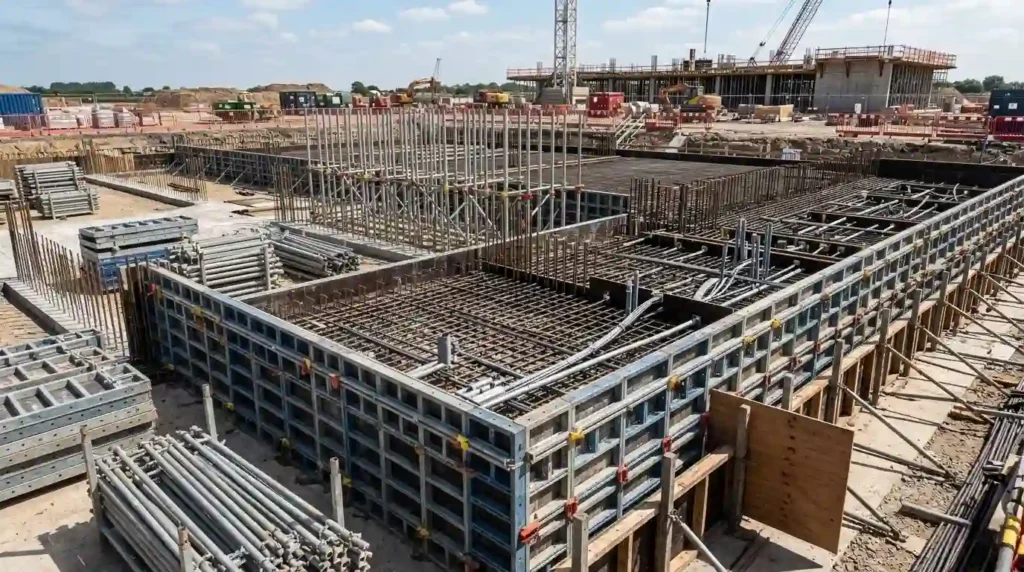
In the past, formwork was often viewed as a temporary construction element. It was something assembled, used to shape concrete, then dismantled once the structural component cured. But in 2026, the role of formwork engineering has evolved significantly. Across modern construction projects, especially complex multi-storey developments and infrastructure works, formwork is no longer treated as a short-term tool. Instead, it has become a strategic engineering discipline that shapes the entire structural package from the earliest design stages.
Developers, builders, and project teams have realised that the success of a concrete structure depends heavily on decisions made long before the first panel of formwork arrives on site. In today’s projects, planning the pour sequence, coordinating steel fixing, and ensuring the readiness of the FRP cycle (form, reo and pour) are essential elements of achieving reliable structural outcomes.
Rather than reacting to construction issues during the build, advanced teams now design the pour before the formwork is even installed. This shift toward engineered planning has reduced concrete defects, improved cycle times, and allowed structural programs to move forward with greater confidence.
At Future Form, this philosophy is embedded into the way structural packages are delivered. By bringing together experienced teams, specialised systems, and coordinated FRP planning, the company works alongside developers, builders, and consultants to ensure that formwork, steel fixing, and concrete placement are aligned from the earliest project stages.
Through a combination of technical capability, construction experience, and integrated planning, Future Form supports projects that require reliable formwork engineering and efficient structural progress. The focus is not simply on installing formwork, but on ensuring that every stage of the form, reo and pour process contributes to stronger concrete outcomes and smoother project delivery.
As the construction industry continues to push toward taller buildings, tighter schedules, and greater sustainability expectations, integrated FRP solutions have become the backbone of predictable structural progress.
The shift from temporary works to engineered planning
Historically, formwork was often categorised as temporary works. While this classification was technically correct, it underestimated the critical role that formwork plays in shaping structural accuracy and concrete performance.
Concrete structures are only as precise as the system that supports them during placement. Poorly engineered formwork can lead to misalignment, honeycombing, surface defects, and structural delays. When formwork systems are treated as an afterthought, the consequences often appear later in the build programme.
In contrast, modern formwork engineering takes a forward-looking approach. Instead of simply responding to architectural drawings, formwork engineers now collaborate closely with structural designers, project planners, and FRP contractors during the early stages of construction planning.
This early collaboration ensures that:
- Formwork systems align with structural loads and geometries
- Steel fixing layouts are compatible with the chosen form system
- Concrete pours are sequenced to maintain quality and productivity
- Structural progress is supported by efficient cycle times
By approaching the structural package as an interconnected system rather than isolated trades, construction teams can prevent many of the issues that traditionally slowed down projects.
In 2026, formwork engineering is less about temporary structures and more about designing the entire concrete workflow.
Designing the pour before construction begins
One of the most important shifts in modern construction is the concept of designing the pour sequence during preconstruction. Rather than waiting for site conditions to dictate how concrete will be placed, engineers now map out pour strategies long before work begins on site.
This approach ensures that every stage of the FRP process—from installing the form, to completing the reo installation, to executing the final pour—is aligned with structural and scheduling requirements.
Advanced digital modelling tools and structural simulations allow engineers to predict how formwork systems will behave under load and how concrete placement will influence curing and structural performance. These insights enable teams to optimise:
- Concrete pour sizes
- Lift heights for vertical elements
- Repetition cycles for formwork systems
- Access routes for reinforcement and placement equipment
By planning these elements early, construction teams reduce uncertainty during the build phase. The result is smoother coordination between formwork, steel fixing, and concrete placement teams.
More importantly, this pre-planned approach helps prevent defects that can occur when concrete is rushed into poorly prepared formwork systems.
Why integrated FRP solutions matter
A common challenge in large construction projects is the separation of trades responsible for form, reo, and pour activities. When these components are managed independently, coordination gaps often appear between teams.
For example, a formwork system might be installed quickly, but if the steel fixing crew cannot complete reinforcement installation in time, the scheduled concrete pour must be delayed. Alternatively, a pour might be booked before the formwork has been fully prepared to support the required loads.
These disconnects can create significant pressure on the construction programme.
This is why many modern projects rely on integrated FRP solutions, where the formwork, reinforcement, and concrete placement are planned and delivered as a coordinated structural package.
Integrated approaches allow teams to:
- Align formwork systems with reinforcement density
- Coordinate inspection stages across FRP activities
- Maintain consistent structural cycles across floors
- Improve communication between construction teams
When FRP contractors operate within an integrated model, the project benefits from clearer accountability and smoother structural progress.
Rather than treating formwork, steel fixing, and concrete as separate trades, the project team works toward a single outcome: delivering reliable and efficient structural construction.
Reducing concrete defects through engineered formwork
Concrete defects are among the most costly problems in structural construction. Issues such as honeycombing, cold joints, surface irregularities, and structural cracking can lead to rework, programme delays, and quality concerns.
Many of these defects originate from poorly coordinated FRP processes.
If reinforcement is overcrowded within formwork panels, concrete flow may be restricted. If formwork is not engineered for the pressure created during placement, panels can deflect or leak. If pours are rushed due to scheduling pressure, curing conditions may be compromised.
Advanced formwork engineering helps eliminate many of these risks before construction begins.
By analysing reinforcement density, concrete placement methods, and structural geometry, engineers can design formwork systems that support optimal concrete flow and curing conditions. This process ensures that every pour is supported by a formwork structure capable of maintaining shape, alignment, and stability.
In addition, engineered formwork systems improve inspection processes by creating predictable stages for reinforcement checks and pre-pour verification.
Ultimately, better formwork planning leads to higher-quality concrete structures and fewer disruptions to the construction schedule.
Supporting structural progress in complex projects
As buildings grow taller and designs become more ambitious, the demands placed on structural construction continue to increase.
Modern developments often feature:
- Complex architectural geometries
- High reinforcement densities
- Tight construction programmes
- Increased safety requirements
In these environments, structural progress depends heavily on the reliability of the FRP cycle.
Each floor or structural level must move through the sequence of form installation, reo placement, and concrete pouring without unnecessary delays. If one stage falls behind, the entire structural programme can quickly slip.
This is where advanced formwork engineering becomes essential.
Engineered formwork systems allow construction teams to standardise cycle times and maintain consistent structural progress across multiple levels. By designing formwork systems that can be efficiently repeated and repositioned, projects can achieve predictable construction rhythms.
When the FRP cycle is properly planned and coordinated, the structure rises smoothly, allowing other trades to follow without disruption.
How future form supports engineered structural delivery
Behind every successful structural project is a team that understands how to coordinate the form, reo, and pour process as a unified system.
Future Form approaches construction with this integrated perspective. Rather than treating formwork as a short-term installation, the team focuses on delivering engineered FRP solutions that support the entire structural package.
Through in-house planning and technical expertise, Future Form ensures that each pour sequence is carefully modelled before construction begins. This includes analysing reinforcement layouts, formwork pressures, and construction logistics to ensure that every stage of the structural cycle can proceed efficiently.
By combining expertise in formwork, steel fixing, and concrete coordination, Future Form provides project teams with greater clarity and reliability throughout the structural phase of construction.
This integrated approach allows developers, builders, and consultants to move forward with confidence, knowing that the FRP process has been carefully planned to support both structural integrity and programme efficiency.
The future of formwork engineering
The construction industry is entering a new era where engineering foresight is just as important as construction capability.
As projects continue to grow in scale and complexity, the importance of formwork engineering will only increase. Engineers, contractors, and developers are recognising that the structural success of a project begins long before the first panel of formwork is assembled.
The ability to design the pour strategy, coordinate steel fixing, and plan integrated FRP workflows during preconstruction is quickly becoming the standard for high-quality structural construction.
Projects that adopt this approach are better equipped to maintain structural accuracy, reduce defects, and deliver reliable construction programmes.
In many ways, the evolution of formwork engineering reflects a broader shift in construction thinking: moving from reactive problem solving to proactive design.
When the pour is engineered before the form is installed, the structure that follows is stronger, more predictable, and more efficient to build.
Why engineered FRP planning is shaping the future of structural construction
Modern construction demands more than just strong materials and skilled labour. It requires intelligent planning, precise coordination, and a deep understanding of how every component of the structural process interacts.
By embracing advanced formwork engineering, project teams can transform the way concrete structures are delivered. From early planning of the FRP cycle to the final pour, engineered coordination helps ensure that every stage of the structural package supports long-term performance.
As the industry moves forward, the projects that succeed will be those that recognise the value of designing structural solutions before construction begins. When formwork, steel fixing, and concrete placement are treated as an integrated process rather than separate trades, structural programs become more predictable and project teams gain greater control over quality and efficiency.
Because in today’s construction environment, the best structures are not simply built — they are engineered from the first pour onward.
For project teams exploring ways to strengthen their formwork engineering strategy or better coordinate the form, reo and pour cycle, working with experienced FRP contractors can provide valuable insights during early planning stages. Future Form’s team is always open to conversations about structural planning, integrated FRP solutions, and practical approaches to delivering efficient structural packages.
References
Chudley, R., & Greeno, R. (2020). Construction technology (12th ed.). Routledge. Retrieved from https://www.routledge.com
Concrete Centre. (2022). Formwork: A guide to good practice. The Concrete Centre. Retrieved from https://www.concretecentre.com
Gambhir, M. L. (2017). Concrete technology: Theory and practice (6th ed.). McGraw Hill Education. Retrieved from https://www.mheducation.com
Illston, J., & Domone, P. (2019). Construction materials: Their nature and behaviour (5th ed.). CRC Press. Retrieved from https://www.routledge.com
Kim, S., & Kim, K. (2021). Improving construction productivity through integrated concrete operations planning. Journal of Construction Engineering and Management, 147(4), 1–12. Retrieved from https://ascelibrary.org
Neville, A. M. (2012). Properties of concrete (5th ed.). Pearson Education. Retrieved from https://www.pearson.com
Oesterle, R. G., Russell, H. G., & Roller, J. J. (2018). Formwork for concrete (8th ed.). American Concrete Institute. Retrieved from https://www.concrete.org
Smith, R. (2016). Prefab architecture: A guide to modular design and construction. John Wiley & Sons. Retrieved from https://www.wiley.com