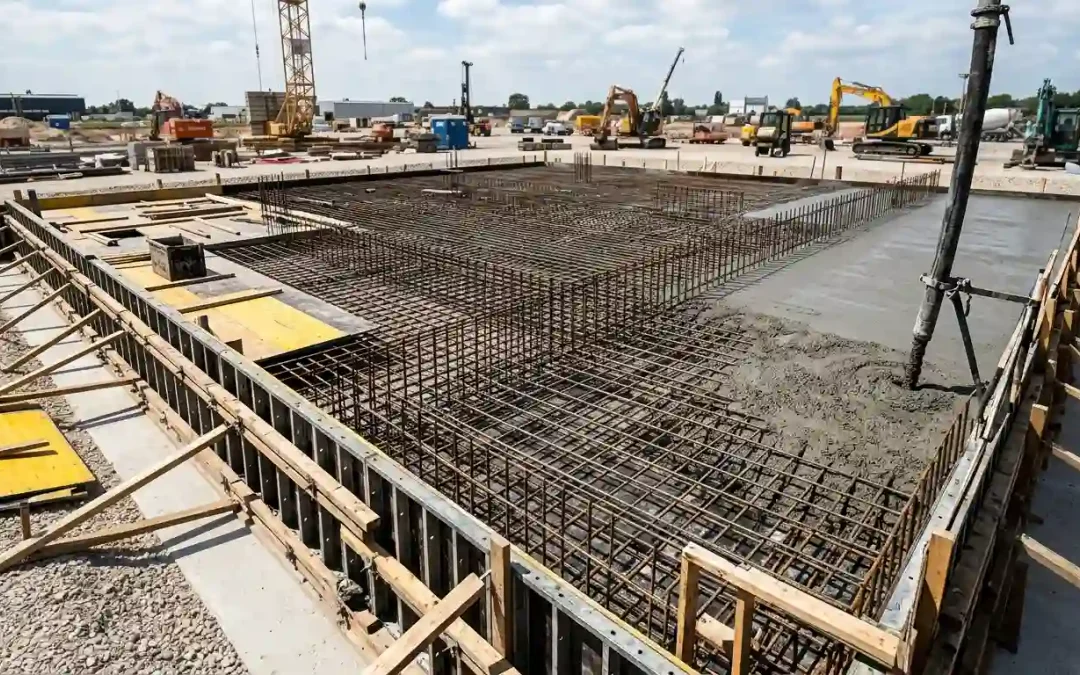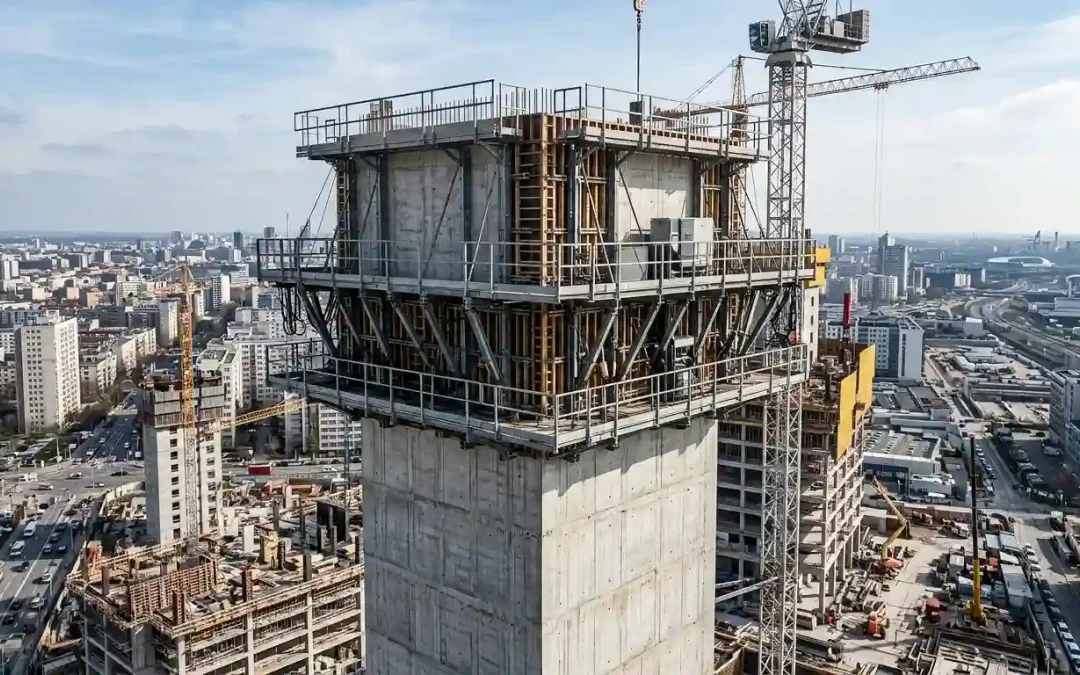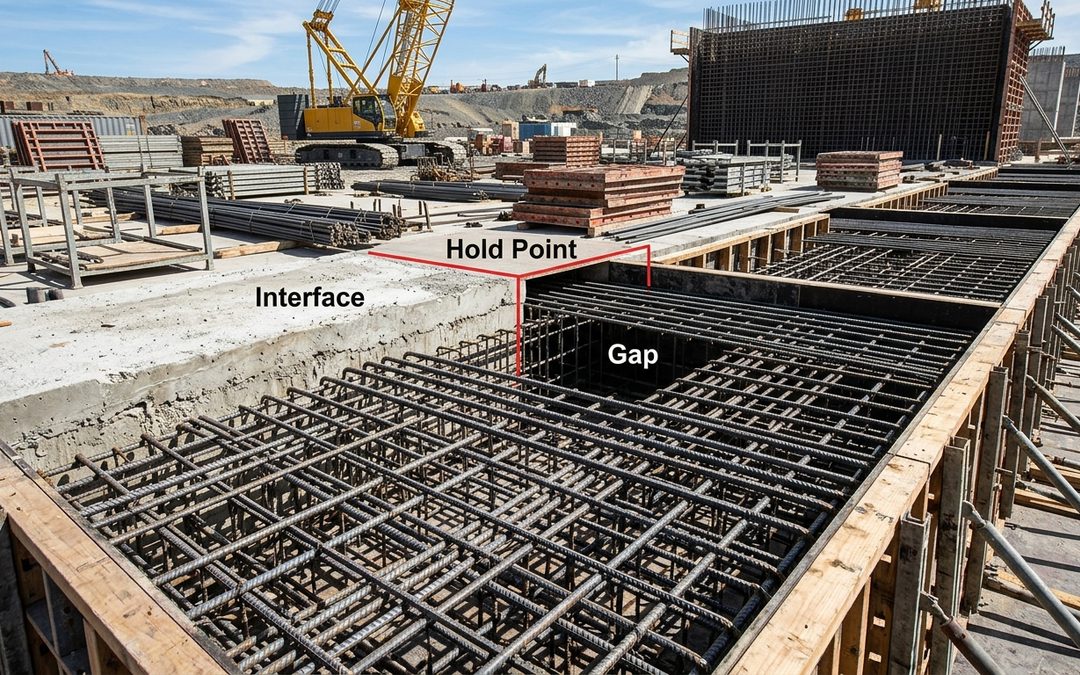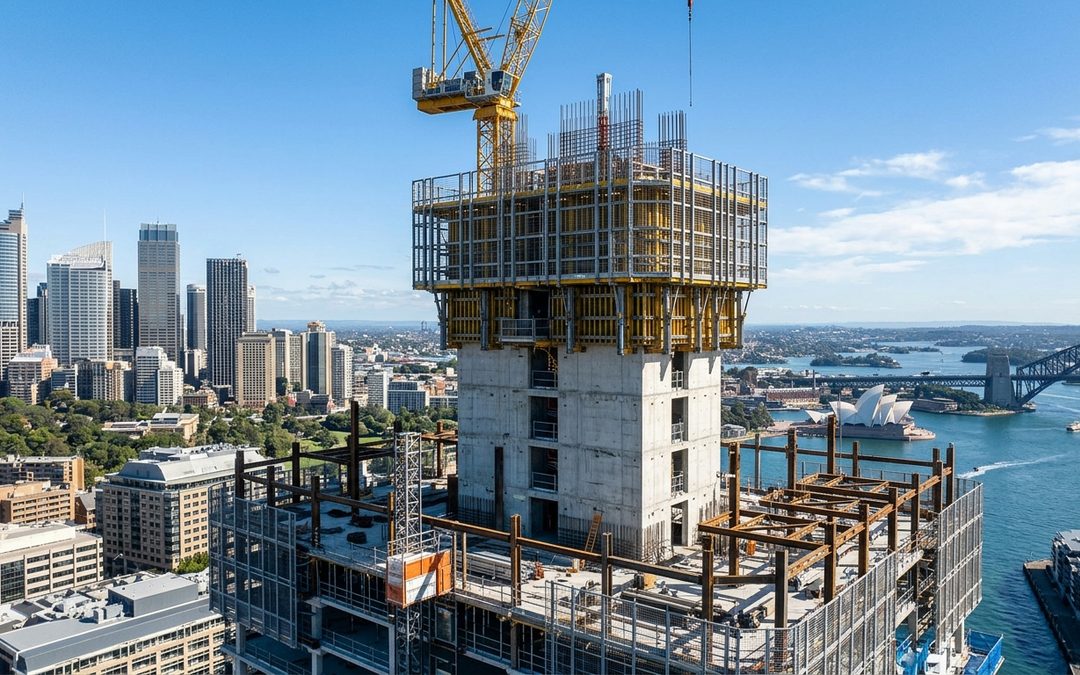
Every large-scale project reaches a point where the programme stops being a plan and starts being a problem. A wet fortnight, a late design package, a slow start out of the ground, and suddenly there are weeks to find. The question that follows is nearly always the same: can we speed the structure up?
Usually, yes. But acceleration is not a switch you flick. The pressure lands on the structural package, and whether it gets absorbed or simply passed down the line comes down to planning more than effort.
Key takeaways
- Acceleration pressures the whole structural package at once: labour, supervision, crane access, reo deliveries, formwork cycles, inspections and concrete supply.
- Adding more workers does not automatically accelerate structural works, and past a point it slows them down.
- The floor cycle is the real speed limit, and it shortens only when a genuine constraint is removed.
- Coordinated planning keeps acceleration achievable without giving up safety, quality or sequencing.
What FRP under pressure actually means
In construction, FRP means form, reo and pour: formwork, steel fixing and concrete placement brought together into one connected process. Each stage hands off to the next, so the three are only ever as fast as the slowest link between them.
FRP under pressure is that process being asked for more output in less time than it was planned around. You cannot pour faster without fixing faster, or fix faster without forming faster, and nothing moves without crane time, reo deliveries, inspections and concrete arriving when it should.
Why construction programmes end up needing acceleration
Very few programmes are lost in one dramatic event. They are lost in increments nobody logs as a delay: a design query unanswered for a week, a reo package that arrives out of sequence, a pour that slips because the inspection could not be booked.
Pressure also comes from outside the site fence. Construction market capacity reporting has flagged shortages of experienced labour and supervision as a structural constraint rather than a passing inconvenience. The usual response to a late programme assumes a deep pool of skilled people waiting to be called up, and often there is not.
What happens when structural works have to accelerate
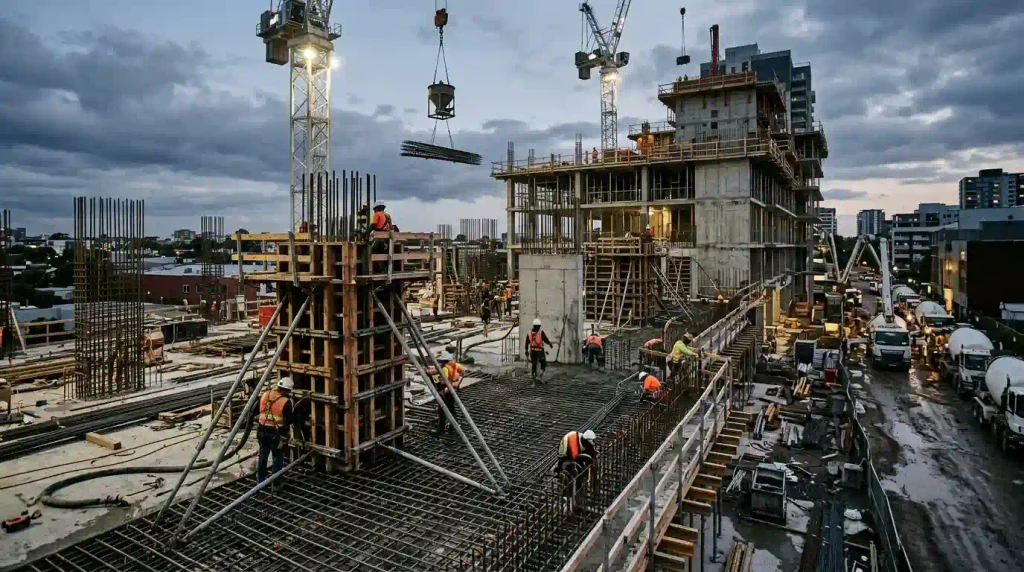
Compress a programme and every part of the structural package feels it differently.
Formwork feels it as cycle time: stripping earlier, repositioning quicker, keeping panels, props and table forms moving with almost no slack.
Steel fixing feels it as supply and access, with reinforcement needing to arrive in the right bundles, in the right order and at the right landing point, then be craned in without queuing behind everything else.
Concrete feels it as certainty, competing for plant, pumps and supply windows booked around the original dates. Inspections take as long as they take, whatever the new date says. And the crane feels all of it, tying formwork, reinforcement and pour preparation together.
Why adding more workers may not solve the problem
The first instinct when a programme tightens is to add labour. It feels decisive, and it is the least reliable way to accelerate structural works.
A working deck has finite usable space. Add a second steel fixing gang to a slab already being fixed and the two crews compete for the same landing zone, crane hook, access route and supervisor. Output per person falls, and fragmentation on site is already a known drag on construction productivity.
Supervision is the quieter limit, because experienced supervisors are rarely available at short notice. Longer shifts carry a similar catch, since regulators treat fatigue as a hazard in its own right and expect changes to working hours to be risk assessed.
Why acceleration depends on coordinated planning
The floor cycle is the engine of a multi-level programme, and genuine acceleration means shortening that cycle. A cycle only shortens when a constraint is removed, which is why coordinated planning beats instruction every time.
Some constraints are physical. Concrete has to reach adequate strength before forms are stripped and before the slab carries construction loads, which is why the standards covering concrete structures exist. Hot, dry or windy weather adds another layer, because rapid moisture loss at early ages affects strength and durability, making guidance on hot weather concreting more relevant once pours are rushed.
Every other constraint sits within the team’s control, and that is where the real gains are.
FRP coordination across form, reo and pour
Managed as three separate jobs each going faster alone, acceleration becomes a competition for the same deck, crane and hours.
Coordinated across form, reo and pour, it looks different. Formwork cycles are set around the reo sequence, reo deliveries are scheduled against crane windows and pour zones, and pour readiness, inspections and concrete placement are locked in before the dates move. The gain comes from removing waiting time between the three stages, which is usually where the lost weeks are hiding.
How acceleration affects the wider structural package
Acceleration never stays inside the structure. Pull the floor cycle in and every follow-on trade inherits new dates, often without the lead time to resource them.
Temporary works are the first pressure point. Formwork and its supporting framework must be designed for the loads it will actually carry, and general guidance on formwork and falsework is clear that extra components carrying extra load must be recalculated. Propping and back-propping details belong in the design rather than on the day, as formwork codes of practice spell out. Under acceleration, props come out earlier and material is stacked on younger slabs, which surfaces later as cracking, deflection or out-of-tolerance work. Rework is the other self-defeating cost.
Practical ways to improve output without losing control
A planned acceleration finds the real constraint first, then tests options against it: more formwork sets rather than more crews, staggered shifts rather than one crowded shift, resequencing zones so two areas progress independently, bringing supervision on earlier, pre-sorting reinforcement by pour zone, and booking inspections and concrete supply against the new dates.
Each option carries a cost and a risk, so the point is to choose deliberately rather than try everything at once. It also means being honest that some weeks can be recovered and some cannot.
How Future Form can help you accelerate structural works with control
As an experienced FRP contractor, Future Form delivers integrated FRP solutions that bring form, reo and pour together under one coordinated structural package, so acceleration can be assessed across the whole package rather than one trade at a time.
In practice, Future Form can help work out what a proposed acceleration requires: where the real constraints sit, how much extra output is achievable, and what it takes to get there safely. That covers coordinated labour and supervision planning, formwork systems suited to a shortened floor cycle, reo scheduling aligned to pour zones and crane availability, and pour readiness managed so inspections, plant and concrete supply line up with the new dates. Behind it is a hands-on site and delivery team that works through the options with builders and developers before anything is committed to.
Frequently asked questions
What does FRP under pressure mean?
FRP under pressure means form, reo and pour being asked to deliver more output in less time than the programme was planned around. It shows up as tighter formwork cycles, compressed reo deliveries, earlier pours and less float between stages.
What does FRP mean in construction?
FRP means form, reo and pour: formwork, steel fixing and concrete placement delivered as one connected process. Each stage depends on the one before it, so FRP usually sits on the critical path of large-scale projects.
How do you accelerate structural works safely?
You accelerate structural works safely by removing a genuine constraint rather than adding pressure: more formwork sets, resequenced zones, pre-sorted reinforcement, extra crane hours, earlier supervision and inspections booked ahead of the new dates, with concrete strength and temporary works requirements intact.
Why is coordinated planning more effective than adding labour?
Coordinated planning is more effective because a deck has finite space, crane time and supervision. Extra crews compete for the same resources, so output per person falls while cost rises. Planning targets the real bottleneck: formwork availability, crane access, reo supply or inspection timing.
What does FRP coordination involve on large-scale projects?
FRP coordination involves aligning formwork cycles, reo scheduling and pour readiness into one sequence, along with labour, supervision, crane windows, inspections and concrete supply. It stops the three stages competing with each other when the programme tightens.
What should you look for in FRP contractors when recovering time?
Look for FRP contractors who can tell you what an acceleration will cost in labour, plant, supply and risk before it is committed to, deliver integrated FRP solutions across form, reo and pour, and point to shortened floor cycles on comparable projects.
Bringing it all together
FRP under pressure exposes everything about how a structural package is run. Acceleration is possible, and often essential, but it is won through coordinated planning rather than more bodies and firmer instructions. The floor cycle only shortens when a real constraint is removed, and that constraint is rarely willingness to work.
For builders, developers and project teams, the test is simple: judge FRP contractors on how well they can explain what an acceleration will cost before it starts. If you are recovering time on a project already underway, get in touch with the Future Form team to work through a realistic acceleration plan. Because a programme that moves faster is only useful if the structure can keep up with it.