In today’s construction environment, delivering large-scale projects efficiently is no longer just about speed, it’s about coordination. As developments grow more complex and timelines tighten, the traditional separation of trades is increasingly exposing gaps that cost time, money, and quality.
This is where the FRP lifecycle becomes critical.
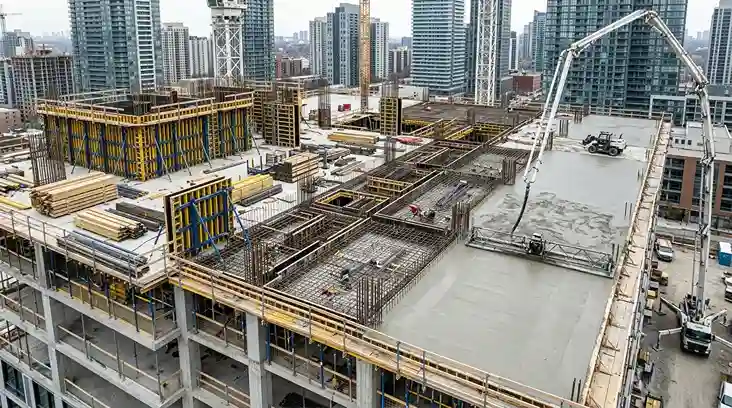
FRP, referring to form, reo, and pour, represents the structural backbone of any concrete build. When these stages are managed in isolation, inefficiencies naturally emerge. However, when approached as a unified process through integrated FRP solutions, the entire construction lifecycle becomes more streamlined, predictable, and cost-effective.
At Future Form, this philosophy sits at the centre of how projects are delivered. As a specialist in end-to-end FRP solutions, Future Form brings together formwork, steel fixing, and concreting into one coordinated structural package, helping clients reduce risk and improve build performance from day one.
Through a comprehensive range of services that span the full FRP lifecycle, from early planning through to final concrete pour, projects benefit from tighter sequencing, fewer trade gaps, and stronger execution on site.
Behind this delivery is a team of experienced professionals who understand the importance of precision, collaboration, and accountability across every stage of construction.
This article breaks down the full FRP lifecycle, highlights where time, cost, and coordination are most commonly lost, and explores how a fully integrated approach can transform outcomes from form to final pour.
Understanding the FRP lifecycle
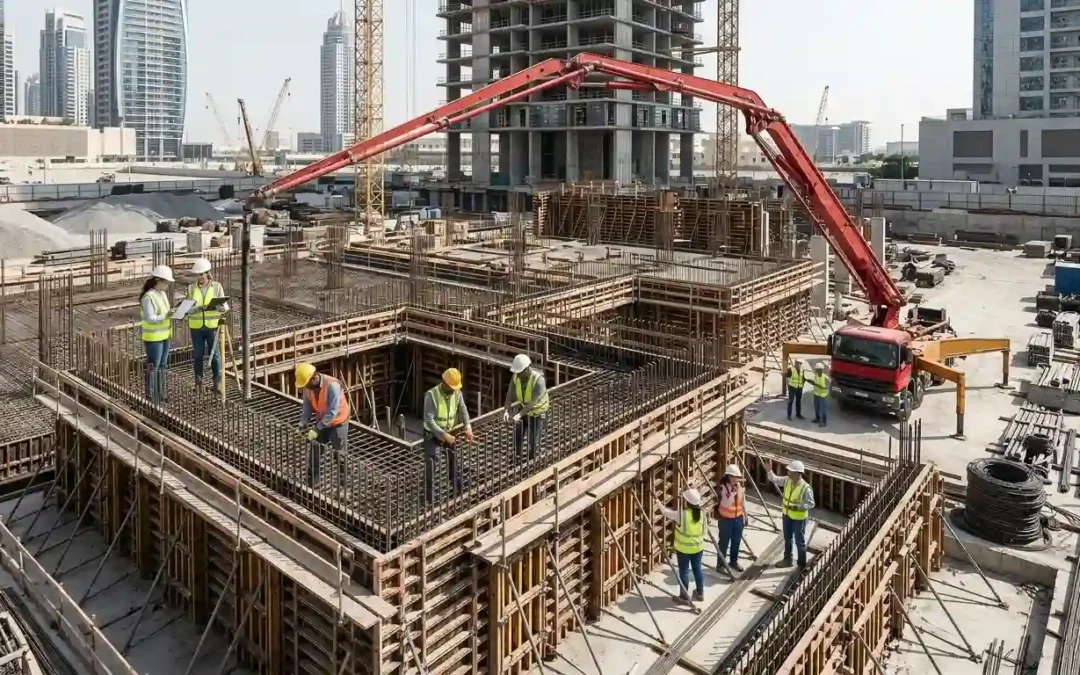
At its core, the FRP lifecycle consists of three interconnected stages:
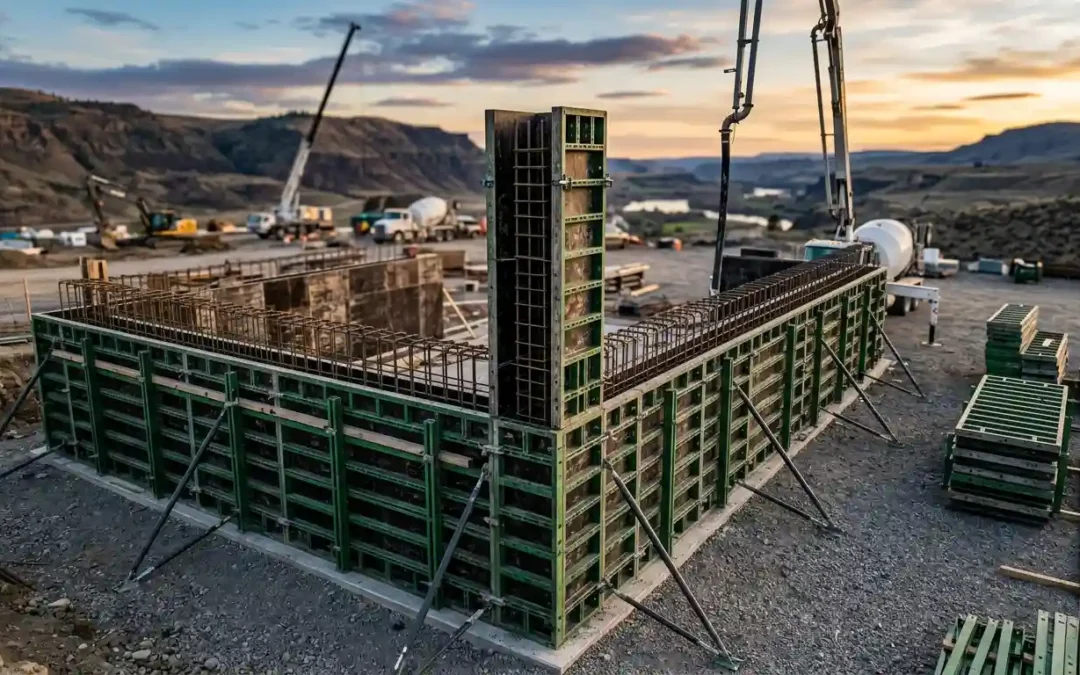
- Form (formwork): The creation of moulds or structures that shape the concrete
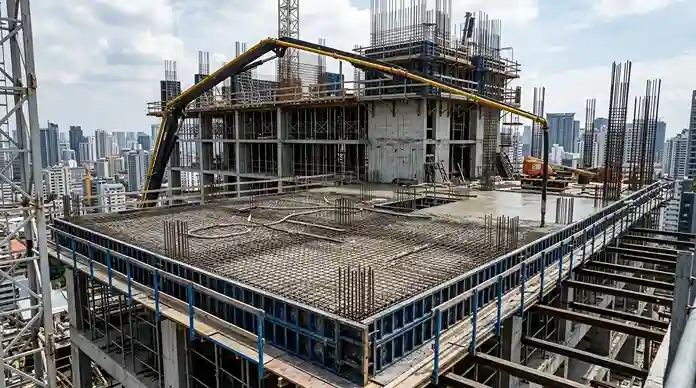
- Reo (steel fixing): The installation of reinforcement that provides structural strength
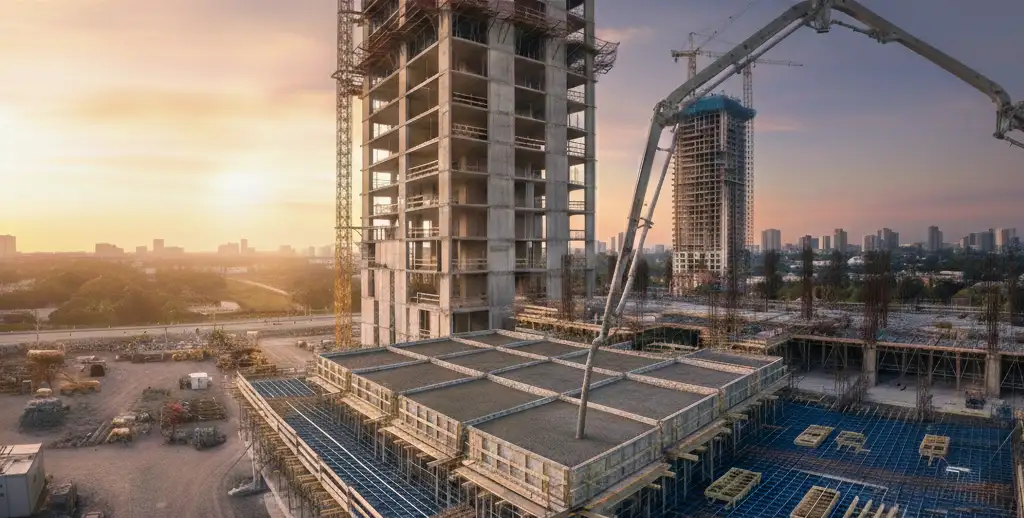
- Pour (concreting): The placement and finishing of concrete within the prepared framework
Each stage relies heavily on the accuracy and timing of the one before it. Even minor discrepancies in formwork can impact steel fixing, and any delays in reo installation can disrupt the pour schedule.
Despite this interdependence, these stages are often treated as separate scopes, managed by different contractors. This fragmented approach introduces risk at every transition point.
Where projects lose time across the FRP lifecycle
Disconnected planning between trades
One of the most common challenges in FRP delivery is the lack of alignment between trades during the planning phase. When FRP teams operate independently, coordination gaps begin before work even starts.
This often results in:
- Misaligned schedules
- Incomplete handovers
- Rework due to miscommunication
Without a unified strategy, even well-executed individual tasks can fail to align with the broader construction programme.
Inefficiencies in formwork execution
The form stage sets the foundation for everything that follows. Yet, inaccuracies in formwork are a frequent source of delays.
Common issues include:
- Incorrect dimensions or tolerances
- Poor sequencing of form installation and removal
- Limited adaptability to design changes
These problems not only slow down progress but also create cascading effects on reo placement and concrete quality.
Precision in formwork is not optional, it is essential for maintaining structural integrity and workflow continuity.
Delays in steel fixing coordination
Steel fixing is a highly detail-oriented process that requires exact alignment with both design specifications and formwork conditions.
Delays often occur due to:
- Late delivery or fabrication of reinforcement materials
- Inadequate access within formwork systems
- Clashes between reinforcement layouts and embedded services
When reo installation falls behind, the entire project timeline is affected. The pour cannot proceed until reinforcement is fully inspected and approved, creating bottlenecks that are difficult to recover from.
Pouring disruptions and quality risks
The pour stage is where planning meets execution. It is also one of the most time-sensitive phases in the FRP lifecycle.
Challenges at this stage include:
- Poor coordination of concrete supply and site readiness
- Environmental factors affecting curing and finishing
- Inconsistent quality due to rushed or delayed pours
Once concrete is placed, there is limited opportunity for correction. Any issues at this stage can lead to costly remediation or long-term structural concerns.
The hidden cost of fragmented FRP delivery
While individual inefficiencies may seem manageable, their cumulative impact can be significant.
Projects that lack FRP lifecycle integration often experience:
- Extended construction timelines
- Increased labour and material costs
- Higher risk of defects and rework
- Reduced productivity across trades
More importantly, these inefficiencies can affect stakeholder confidence, particularly on large-scale developments where consistency and reliability are critical.
The reality is that fragmentation within the structural package does not just slow projects down, it undermines their overall performance.
Why integrated FRP solutions change the game
A shift towards integrated FRP solutions addresses these challenges at their source.
By aligning form, reo, and pour under a single strategy or provider, projects benefit from:
Unified planning and scheduling
With a coordinated approach, all stages of the FRP lifecycle are planned together. This ensures:
- Seamless transitions between trades
- Reduced downtime between activities
- Greater visibility across the project timeline
Instead of reacting to delays, teams can proactively manage workflows.
Improved communication and accountability
When working with experienced FRP contractors delivering a complete service, communication becomes more direct and efficient.
This leads to:
- Faster decision-making
- Clear accountability across all stages
- Reduced risk of misinterpretation between teams
The result is a more cohesive and responsive project environment.
Enhanced precision and quality control
Integration allows for better alignment between design, execution, and inspection.
Benefits include:
- More accurate formwork systems
- Optimised steel fixing layouts
- Consistent concrete placement and finishing
Quality is no longer dependent on individual trades but is embedded within the entire process.
Reduced risk and cost certainty
By minimising trade gaps and improving coordination, integrated FRP delivery reduces the likelihood of unexpected delays and cost overruns.
This provides:
- Greater budget control
- More predictable timelines
- Improved risk management
For developers and project stakeholders, this level of certainty is invaluable.
The role of innovation in FRP lifecycle mastery
Modern construction is increasingly embracing technology and advanced methodologies to enhance FRP delivery.
Key innovations include:
- Digital modelling and planning tools to optimise sequencing
- Prefabricated formwork systems for faster installation
- Advanced reinforcement techniques to improve efficiency
- Smart monitoring systems to track concrete performance
These advancements are most effective when applied within an integrated framework, where each stage of the FRP lifecycle is aligned with the others.
Delivering better outcomes through lifecycle thinking
FRP lifecycle mastery is not just about improving individual stages, it is about rethinking how the entire structural process is delivered.
By viewing form, reo, and pour as a single, continuous workflow, projects can achieve:
- Faster build times without compromising quality
- Stronger collaboration between teams
- More efficient use of resources
- Better long-term performance of structures
This approach is particularly valuable for high-rise and large-scale developments, where complexity amplifies the impact of inefficiencies.
How Future Form supports end-to-end FRP delivery
This is where a more integrated approach begins to shift outcomes across the entire FRP lifecycle.
Future Form approaches construction with a clear focus on delivering form, reo, and pour as one coordinated system rather than separate scopes. By aligning formwork, steel fixing, and concreting from the outset, projects benefit from stronger sequencing, fewer delays, and greater control across the structural package.
Instead of managing multiple handovers between trades, clients work within a streamlined delivery model where each stage is planned to support the next. This reduces friction on site and allows for more consistent progress across every level of construction.
With experienced teams operating across all FRP stages, Future Form ensures that execution remains precise, adaptable, and aligned with project timelines. From early-stage planning through to the final concrete pour, every detail is considered within a single, unified workflow.
The result is a more efficient build process, where coordination is built in, not corrected later.
Building smarter from the ground up
The construction industry is evolving, and so are the expectations placed on developers, contractors, and project teams.
Efficiency is no longer achieved through speed alone, it is achieved through alignment.
FRP lifecycle mastery offers a practical and proven way to reduce delays, control costs, and deliver higher-quality outcomes. By integrating form, reo, and pour into a single, coordinated process, projects can move forward with greater confidence and clarity.
For those involved in large-scale developments, the message is clear: mastering the FRP lifecycle is not just an advantage, it is a necessity.
As more projects shift towards fully integrated delivery models, having the right approach to your structural package can make a measurable difference in both performance and long-term value.
If you are exploring ways to improve coordination across formwork, steel fixing, and concrete stages, it may be worth understanding how Future Form integrated FRP approach could support your next development.
References
Gibb, A. G. F. (1999). Off-site fabrication: Prefabrication, pre-assembly and modularisation. Wiley. Retrieved from: https://onlinelibrary.wiley.com/
Harris, F., & McCaffer, R. (2013). Modern construction management (7th ed.). Wiley-Blackwell. Retrieved from: https://www.wiley.com/
Illingworth, J. R. (2013). Construction methods and planning (3rd ed.). Routledge. Retrieved from: https://www.routledge.com/
Koskela, L. (2000). An exploration towards a production theory and its application to construction. VTT Technical Research Centre of Finland. Retrieved from: https://www.vttresearch.com/
Lingard, H., & Rowlinson, S. (2005). Occupational health and safety in construction project management. Spon Press. Retrieved from: https://www.taylorfrancis.com/
Tam, V. W. Y., Tam, C. M., Zeng, S. X., & Ng, W. C. Y. (2007). Towards adoption of prefabrication in construction. Building and Environment, 42(10), 3642–3654. Retrieved from: https://www.sciencedirect.com/