
Rework poses a common challenge in the construction industry, yet the closing weeks of the year worsen this issue, rendering even minor adjustments more expensive. As sites approach the holiday shutdown, the pressure of compressed schedules grows, labour availability decreases, and design responsiveness lags — precisely when structural activities such as form, reo, and pour (FRP) demand high levels of attention.
In concrete construction, where integrated FRP solutions underpin the success of the entire structural package, year-end pressure can quietly create errors that only become visible in the new year. By then, the consequences are far more expensive, disruptive and time-consuming to resolve.
This blog unpacks why end-of-year rework becomes so costly, how FRP misalignment amplifies risk, and how Future Form helps teams detect issues early so projects carry confidence — not unresolved structural surprises — into the new year.
What makes end-of-year rework so expensive
As the year draws to a close, the costs related to rework tend to rise due to FRP pressures coming together all at once. As projects approach the final quarter, tight schedules, weather delays, design changes, and procurement issues lead to a rapid push to finish FRP activities ahead before holidays. As deadlines get closer, teams find themselves making hasty decisions, inspections become hurried, and minor FRP errors go unnoticed. The workforce also decreases as employees start to depart early, while supervisors take on increased administrative responsibilities, leading to a decrease in the oversight to identify problems in formwork, reo placement, and concrete preparation.
When issues occur just before holiday, they often go unresolved right away, leading to a significant rise in costs. The start of the new year calls for teams to come together, subcontractors to be brought on board, and structural packages to be evaluated again, which means that rework must compete with all the early-year priorities. A simple correction turned into a larger programme disruption, requiring additional formwork hire, reo replacement, concrete modifications, crane rescheduling, and engineering reinspections. The long-term consequences are precisely why rework at the end of the year tends to be the most expensive rework throughout the entire project.
Why end-of-year rework carries higher risk
The end of the year presents a distinct risk landscape that isn’t found in other areas of the programme. Multiple types of mounting pressures increase the risk of structural errors and reduce the detection early.
Accelerated program pressure
Teams are working hard to finish the floors, tie reo, strip formwork, and pour the concrete before the break. This pressure promotes the use of sequencing shortcuts, including:
- Installing FRP elements before final design clarifications
- Proceeding with partial information
- Compressing inspection hold points
- Altering pour schedules to fit reduced labour
This creates ideal conditions for rework to happen unnoticed.
Less available supervision when it matters most
Regulatory authorities across various countries observe a steady decline in qualified site supervision at the end of the year. When less experienced individuals manage FRP integration, mistakes that would typically be identified early on become embedded in the structure.
Design responsiveness slows down
Design offices, certifiers and engineering consultants also enter holiday periods. RFI responses take longer. Final clarifications may be delayed. When FRP contractors need urgent design input to proceed, they may resort to best-guess assumptions — increasing the likelihood of errors that require rework later.
Concrete behaviour becomes less predictable
The late-year heat in various areas affects working windows, curing rates, and pour timing. Quick changes in heat loss can result in:
- Cold joints
- Inadequate compaction
- Settlement issues
- Misaligned finishes
These issues are frequently identified only after the site has reopened.
How FRP misalignment turns year-end pressure into structural risk
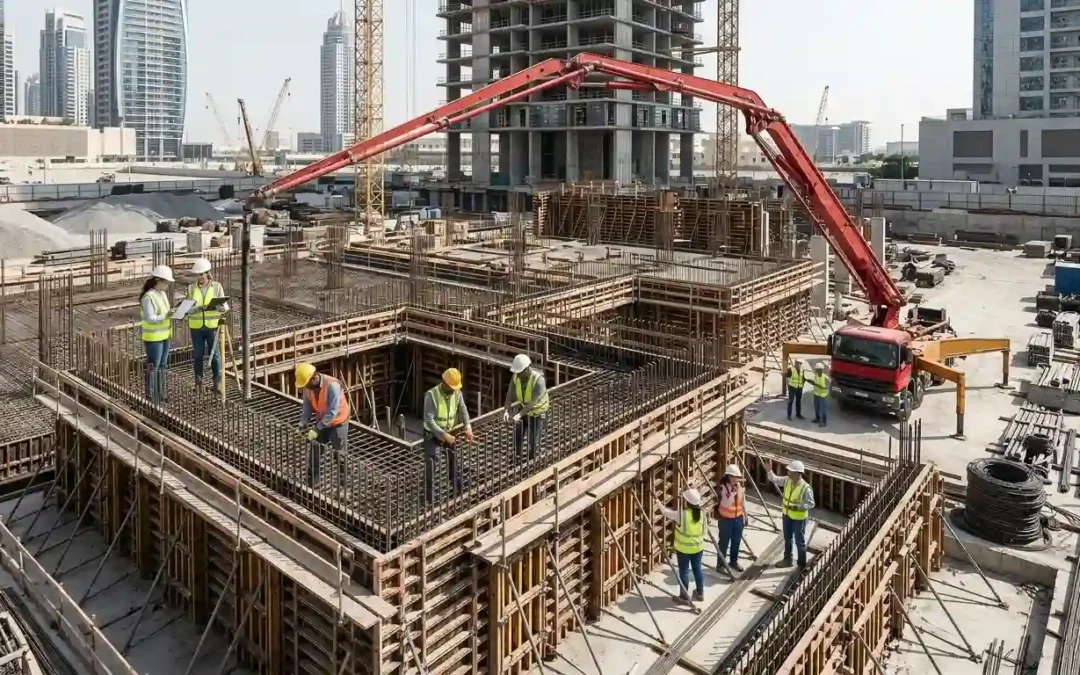
FRP — form, reo and pour — is the stage where the structure truly takes shape. This is the stage of the programme where tolerances become more strict, sequencing is essential, and even small errors can result in structural issues. The year-end pressure increases these risks, positioning FRP alignment as one of the most susceptible aspects of the entire project cycle.
When formwork sequencing slips
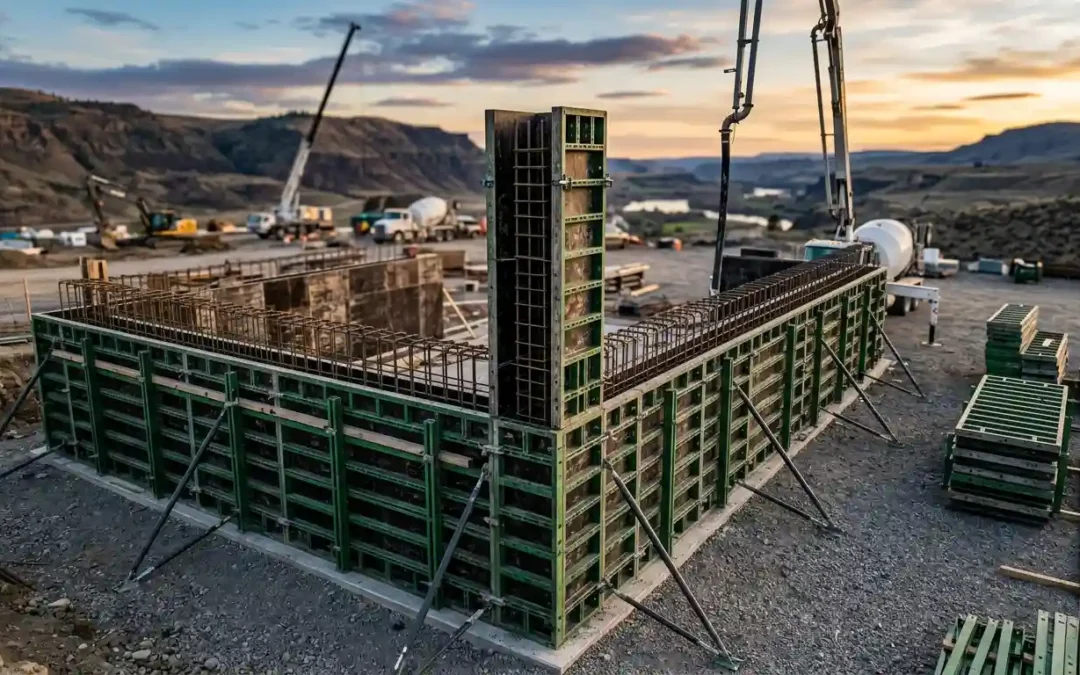
Poor formwork installation might result in incorrect measurements, improper bracing, edges that are out of standard, or hasty stripping choices. These mistakes may not be obvious right away and go unnoticed until reinforcement is used or the crew begins preparing for a pour. As the shutdown period approaches, the amount of time required to resolve these problems increases.
Misplaced reo creates downstream structural issues
Reinforcement errors are a common and costly cause of rework. Incorrectly positioned reo can lead to insufficient concrete cover, improper bar spacing, overcrowded reinforcement areas, misaligned starter bars, and improper chairing. As the year comes to an end, the development of these issues leaves little room for full inspections or adjustments before the concrete delivery, resulting in significant structural hazards.
Pour timing suffers from scheduling pressure
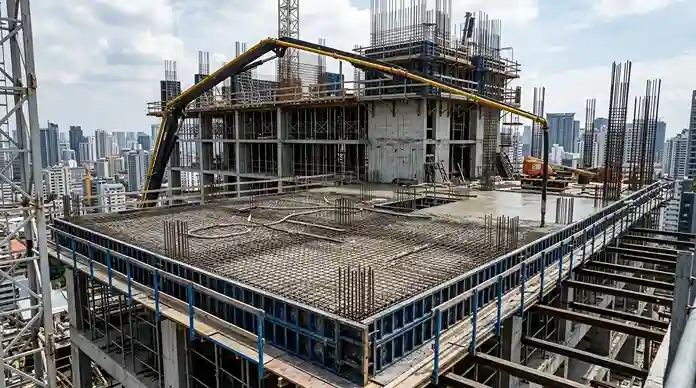
Concrete pours scheduled within the urgency of year-end deadlines frequently face challenges such as insufficient preparation time, unexpected changes in sequencing, fewer finishing teams, and a lack of attention to curing requirements. These conditions increase the chances of errors happening during placement. A poorly executed pour can result in considerable rework expenses, and when this happens at year-end, it increases the impact on program continuity and costs.
Once FRP alignment breaks, the entire structural package suffers
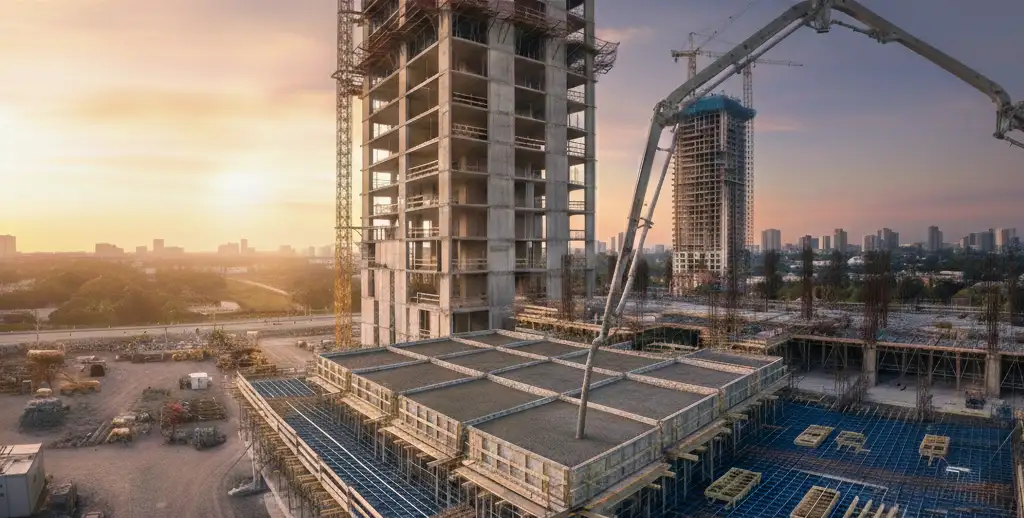
A single misalignment in the FRP cycle can affect crane operation, lead to delays in trades, delay vertical progression, and interfere with rough-in services and façade installation. The interconnected structural package indicates that even a small sequencing mistake can cause delays across the whole programme.
FRP misalignment at year-end is considered a risk factor in major projects for good reason.
Common sources of end-of-year rework in FRP cycles
Data gathered from construction audits done across multiple countries highlight a consistent trend of failure points that appear during the final quarter, differentiating this period from others throughout the year:
- Formwork constructed beyond acceptable limits because of rushed sequencing
- Reo installed without final design verification
- Insufficient supervision has led to improper concrete cover.
- Congested reinforcement discovered too late for adjustments
- Pour sequencing changed last minute without structural review
- Missing or incorrectly placed cast-in items
- Incomplete documentation for certification before shutdown
- Temporary changes not incorporated into updated drawings
- Early stripping decisions leading to structural defects
- Embeds misaligned due to reduced oversight
These challenges stay hidden until teams come back after the break — at that moment, they transform into costly, labor-intensive, and time-consuming rework.
The smartest way to avoid rework at the end of the year
Avoiding expensive rework isn’t just about putting in more effort; it’s about planning effectively.
Successful project teams implement proactive strategies to reduce risks ahead of year-end pressures:
1. Lock in FRP sequencing early
Clear, confirmed sequencing for form, reo and pour reduces rushed decisions later in the year, allowing teams to stay ahead of the program rather than reacting to it.
2. Prioritise early design resolution
All clarifications, RFIs, and final details need to be wrapped up well before the final quarter. Delaying design decisions as the year comes to an end raises the likelihood that teams move forward without having all the necessary information.
3. Strengthen supervision during the critical period
Experienced oversight is essential when labour availability drops. Many projects assign dedicated FRP supervisors specifically for the late-year cycle.
4. Build in additional review checkpoints
Regular, quick checks pinpoint sequencing misalignments immediately, preventing errors from advancing to the pour stage.
5. Avoid last-minute changes before shutdown
The conclusion of the year typically isn’t the best moment for implementing structural changes unless it’s truly necessary. Even minor changes to the design can lead to misalignment if not approached with caution.
6. Use integrated FRP solutions
Integrated FRP solutions enable teams to manage the complete structural package, ensuring that form, reo, and pour are not viewed as separate, disconnected steps. This lowers the chances of having to rework.
How Future Form helps teams prevent high-cost end-of-year rework
Future Form helps developers, contractors, and structural teams by identifying the root causes of end-of-year rework early on, well before they develop into structural problems. By implementing early detection and coordination, the team examines formwork sequencing, reinforcement placement, and pour planning to identify misalignments while they remain simple and economical to address. This involves identifying tolerance risks, clarifying design inconsistencies, and dealing with sequencing gaps that often result in rework during the shutdown period.
The Future Form team provides cohesive FRP solutions that seamlessly integrate formwork, reinforcement, and concrete processes into a unified workflow. By approaching FRP as a cohesive structural package instead of divided tasks, the team enhances programme predictability, minimises waste, boosts accuracy, and encourages safer, more dependable results. Effective communication among supervisors, engineers, formwork crews, and reo teams guarantees that everyone is aligned with the same instructions, greatly minimising errors that often arise from miscoordination—especially common during the high-pressure year-end period.
As we step into the new year, Future Form remains dedicated to empowering teams to restart with confidence. We offer updated FRP plans, thorough structural package reviews, and enhanced sequencing improvements, all formed by insights gained from the previous phase. Beginning the year with clear alignment helps avoid the persistent problems that can arise after the shutdown, ensuring that the structural cycle kicks off seamlessly, free from un
Safeguard your project this year-end
The end of the year offers significant challenges in maintaining structural integrity. When misalignment occurs in FRP, coupled with less supervision and tight timelines, the result is an increase in rework that is not only more costly but also more difficult and creates greater structural risks.
But it doesn’t have to be.
By implementing early planning, cohesive FRP solutions, and supervision in the final quarter, project teams can minimise end-of-year mistakes and protect their structural package for the upcoming year.
Future Form is here to support that process — helping teams detect issues early, align FRP workflows and avoid the costly cycle of end-of-year rework. A stronger, safer and more predictable new year starts with the decisions made now.
References
Australian Building Codes Board. (2023). Construction compliance and structural performance report. Retrieved from: https://abcb.gov.au
Engineers Australia. (2022). Engineering construction sector risk outlook. Retrieved from: https://engineersaustralia.org.au
Safe Work Australia. (2023). Workplace safety and labour force reporting. Retrieved from: https://safeworkaustralia.gov.au
Standards Australia. (2020). Concrete structures—AS 3600. Retrieved from: https://standards.org.au
Work Health and Safety Regulators. (2023). Industry guidance on construction sequencing and safe work systems. Retrieved from: https://safeworkaustralia.gov.au