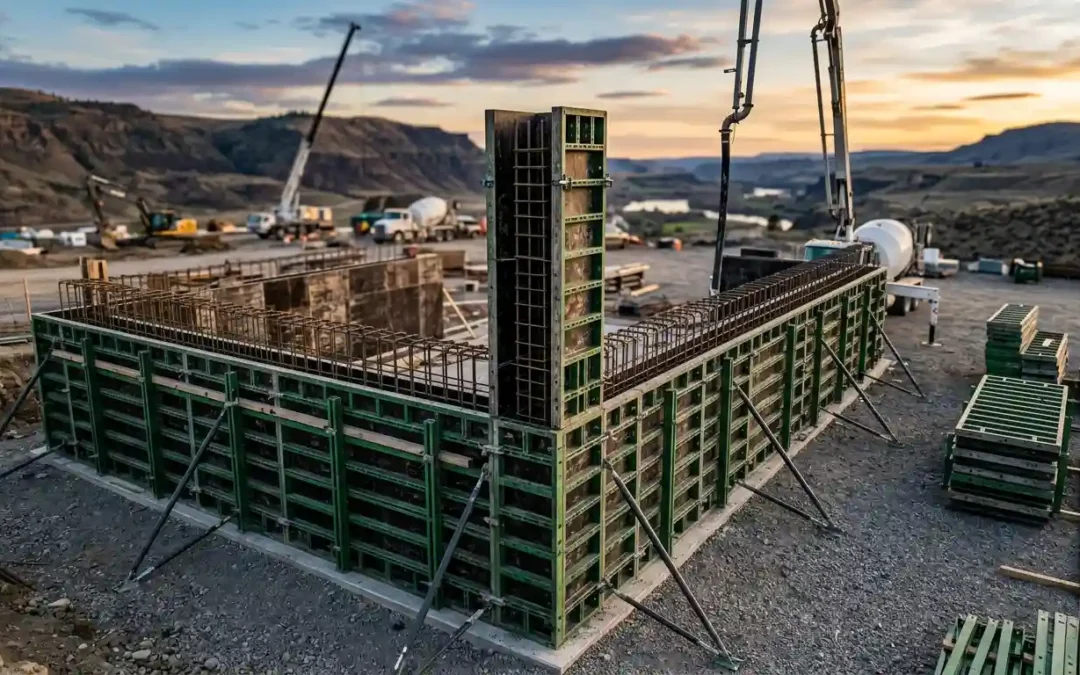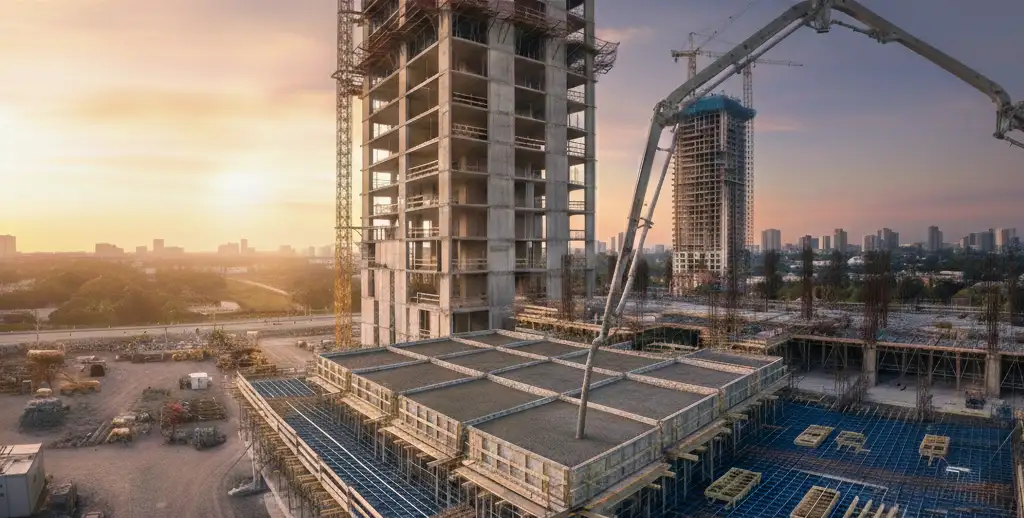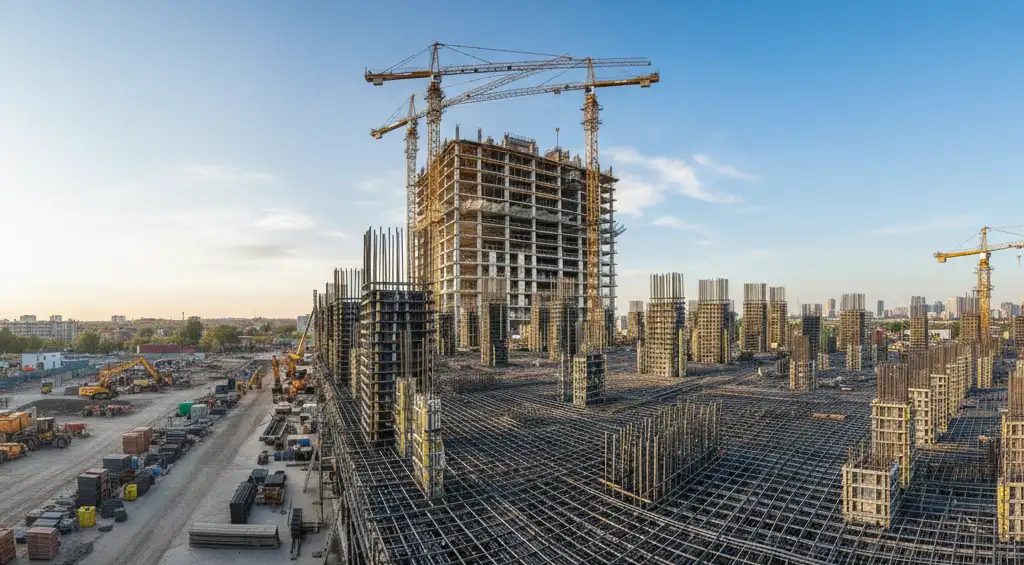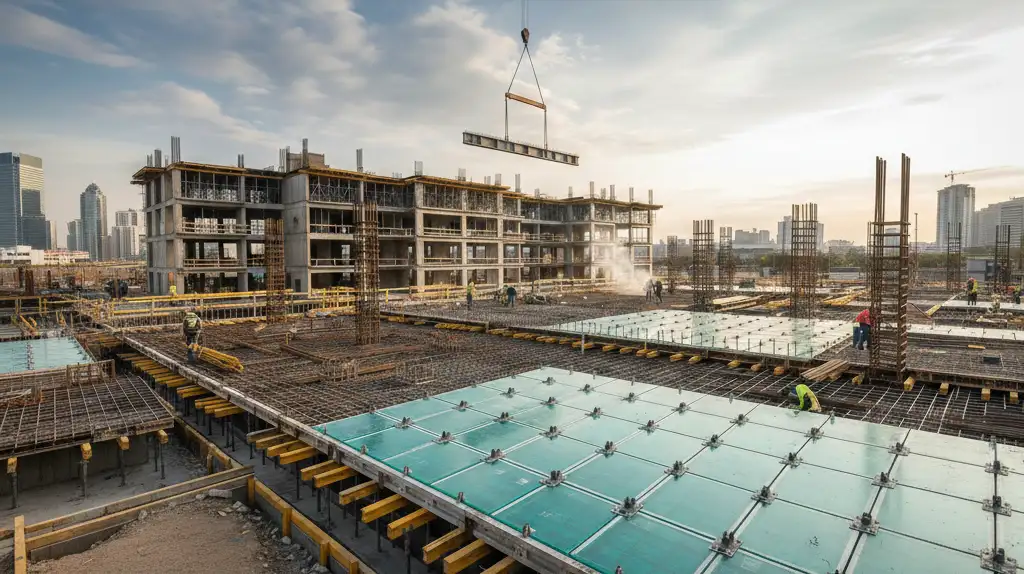

In various construction markets, the demand for quicker structural delivery, limited budgets, and reliable timelines has transformed the way developers and builders’ approach early-stage planning. This transformation revolves around advanced FRP planning, where the integration of form, reo, and pour comes together to create a cohesive and reliable system. Instead of viewing each stage as an individual process, FRP planning combines them into a cohesive approach that enhances efficiency and safeguards the budget.
FRP planning has transformed from just an operational tool into an essential component of financial strategy. Well-structured cycles result in minimised waste, decreased delays, enhanced communication, and a smooth workflow that supports ongoing vertical progress. As demands increase and construction projects grow in complexity, accurate FRP planning offers the insight and trust required to start work with confidence—avoiding potential financial errors.
Why FRP planning is key to financial stability
FRP—form, reo and pour—is essential to every structural package, and when these stages are misaligned or poorly timed, costs can rise rapidly. Labour hours frequently rise, cranes remain reserved for extended periods, and structural cycles become less predictable. The effect on a project’s financial stability can be particularly when delays lead to other projects being rushed or postponed.
Strategic FRP planning leads to reliable cycles, managed labour distribution, and seamless material flow, ultimately minimising extra costs. By scheduling form, reo, and pour as a cohesive process, builders can better anticipate requirements, manage resources with greater precision, and avoid costly errors that come from making quick decisions. With consistent sequencing at its core, FRP planning becomes one of the most reliable tools for maintaining cost certainty.
How disjointed sequencing drains project budgets
Even the most experienced teams face challenges when their workflow lacks alignment, and this misalignment is a reason behind budget overruns in structural projects. When the stages of form, reo, and pour are completed without the right order, a series of errors begins to appear. Formwork can be set up early before reinforcement being prepared, leading teams to stop and make changes that are needed. The installation of reinforcement may face delays due to incomplete essential formwork supports, and concrete pours might have to be postponed if inspections were not coordinated in time. Delays frequently lead to trades to compete for crane access, further slowing progress and leaving labourers idle as previous tasks are corrected. Occasionally, inconsistent pour volumes can throw an adjustment in concrete supply planning, leading to unexpected costs and logistical challenges.
The accumulation of these growing issues happens fast, and every delay intensifies the pressure on the following cycles. As those cycles slip, overtime increases, crane hours increase, and productivity declines—ultimately leading to considerable financial consequences when this pattern is repeated across multiple floors. Advanced FRP planning addresses these challenges by integrating form, reo, and pour into a unified process. By maintaining a clear and organised progression at every stage, teams experience fewer delays, unexpected issues, and significantly less rework, resulting in a more streamlined and cost-effective method to structural completion.
Integrated FRP solutions: a smarter way forward
The industry is progressively moving towards cohesive FRP solutions, with a single team managing the complete form, reo, and pour process. This method removes fragmentation and fosters a more seamless and accountable approach to structural delivery.
Integrated FRP solutions offer major advantages, such as:
- a single point of accountability during the structural phase
- steady communication and reduced handover mistakes
- efficient coordination among industries
- improved labour coordination and safer workflow
- reduced conflicts regarding duties or hold-ups
- minimised rework due to consistent execution
By adopting an integrated approach, the structural package achieves greater cohesion, predictability, and financial stability, providing projects with a unique advantage compared to traditional fragmented methods.
Why speed alone isn’t the goal of FRP planning
It’s a common assumption that FRP planning is only about speeding up floor cycles, but the real goal goes beyond just speed. Although quicker cycles can be beneficial, the true advantage comes from having a dependable and consistent performance. A system that moves forward at a steady rate consistently outshines one that sometimes delivers quick outcomes but frequently faces setbacks or interruptions. Consistency lays the groundwork for reliable labour forecasting, trustworthy concrete supply agreements, accurate reinforcement deliveries, and steady crane allocations—all crucial to keeping the momentum on site.
Projects rarely go over budget due to a lack of speed; rather, they exceed their financial limits because of their inconsistent progress. Unpredictable cycles lead teams to pay higher expenses on overtime, logistics, and corrective measures, threatening financial stability. Effective FRP planning guarantees that the structural phase sticks to a consistent and systematic rhythm, minimising uncertainty and ensuring that progress stays on track with the planned schedule. This reliable pattern is what ultimately protects budgets and ensures seamless, continuous building development.
Reducing rework through early detection and coordinated planning
The financial impact rework due to poor structural coordination can be serious. This often comes from issues such as misaligned reinforcement, incorrect formwork levels, missed penetrations, or mistakes in pour sequencing. These problems can build into considerable labour and material costs, particularly when they remain undetected until further stages. Early FRP planning reduces these risks by prioritising early detection. By implementing organised drawing reviews, precise sequencing, digital verification methods, and effective communication channels, teams can spot errors well in advance of reaching the slab. This initial clarity guarantees that responsibilities are recognised, expectations are well-defined, and the structural process advances with greater confidence.
Identifying potential issues before ordering concrete or assembling formwork helps the project avoid the labor-intensive and costly process of dismantling, cutting, or reworking large sections. Quick action protects the flow of the project and upholds the discipline of the programme, a crucial factor in high-rise settings where the repetition of floors increases the financial consequences of any errors. By minimising rework through effective coordination and forward-thinking planning, teams maintain the project’s momentum and protect its budget.
Technology’s role in modern FRP planning
With the ongoing evolution of construction through digital transformation, technology is emerging as a significant catalyst for enhancing efficiency in FRP planning. Contemporary digital tools empower teams to enhance accuracy, make more effective forecasts, and streamline the structural process with increased precision. The integration of 3D modelling for visualising sequencing, digital pour schedules for on-site guidance, BIM-supported reinforcement validation, and cloud platforms that provide teams with the most current drawings enhances the transparency and reliability of the entire workflow. Drone imagery and digital quality assurance records improve oversight, enabling planners and supervisors to track progress with a clarity that surpasses traditional methods.
The real value of technology lies not just in the tools we use, but in the reliability and assurance they provide throughout the FRP process. Digital systems enhance project alignment by minimising misunderstandings, preventing errors, and offering real-time visibility into formwork, reinforcement, and pour activities. This improved control allows for clearer decision-making, minimises expensive rework, and protects project budgets by ensuring that every phase of form, reo, and pour remains connected and consistent.
The financial benefits of pre-fabrication in FRP
Prefabrication is quickly changing the way FRP contractors handle the structural package. When reinforcement cages, formwork components, or connection systems are produced off-site, the installation process is expedited, enhanced in safety, and becomes much more reliable.
Common prefabricated inclusions include:
- reinforcement cages
- prefabricated reo flooring
- reusable jumpform elements
- prefabricated column and core components
Prefabrication enhances the planning of FRP by minimising the need for on-site labour, ensuring uniform dimensions, and boosting quality control. It reduces dependence on weather conditions and shortens crane operation time. When paired with refined sequencing, prefabrication transforms into a formidable asset for managing costs and enhancing structural efficiency.
How Future Form delivers cost advantages through advanced FRP planning
Future Form empowers clients through proactive planning, seamless coordination, and cohesive FRP solutions, ensuring reliable structural results. By implementing proactive FRP planning, Future Form seamlessly integrates form, reo, and pour into a unified process, utilising reusable formwork systems to minimise costs and waste.
Future Form delivers cost advantages by:
- identifying sequencing challenges early
- creating clear, coordinated FRP methodologies
- integrating formwork, reinforcement, and concrete placement
- reducing rework through early detection
- aligning crane access and logistics with structural cycles
- improving communication between engineers, site teams, and supervisors
This disciplined approach ensures clean structural cycles that stay on programme and avoid the unnecessary overruns common in poorly coordinated FRP delivery.
FRP planning is becoming a financial imperative
Modern construction demands greater accuracy, predictability, and budget control than ever before. In this environment, advanced FRP planning is no longer optional; it is a financial imperative. By coordinating form, reo and pour as a unified sequence, builders improve structural stability, strengthening programme performance, and reducing the risk of costly delays and rework.
With the added support of prefabrication, digital tools, integrated FRP solutions, and strong early planning, structural packages are delivered more efficiently, more consistently, and with greater financial confidence. Teams that embrace advanced FRP planning are better positioned to break ground efficiently—without breaking budgets. Start your next structure with clarity—speak to Future Form about smarter FRP planning.
References
Bentley Systems. (2022). Digital construction and structural workflows. https://www.bentley.com/
Concrete Institute. (2023). Formwork efficiency and concrete optimisation. https://www.concreteinstitute.com/
Doka Group. (2023). Formwork reuse and sustainable construction practices. https://www.doka.com/
Ferry, D., Brandon, P., & Ferry, J. (2018). Cost planning of buildings (9th ed.). Wiley-Blackwell.
Formwork Journal. (2024). The rise of integrated FRP solutions in global markets. https://www.formworkjournal.com/