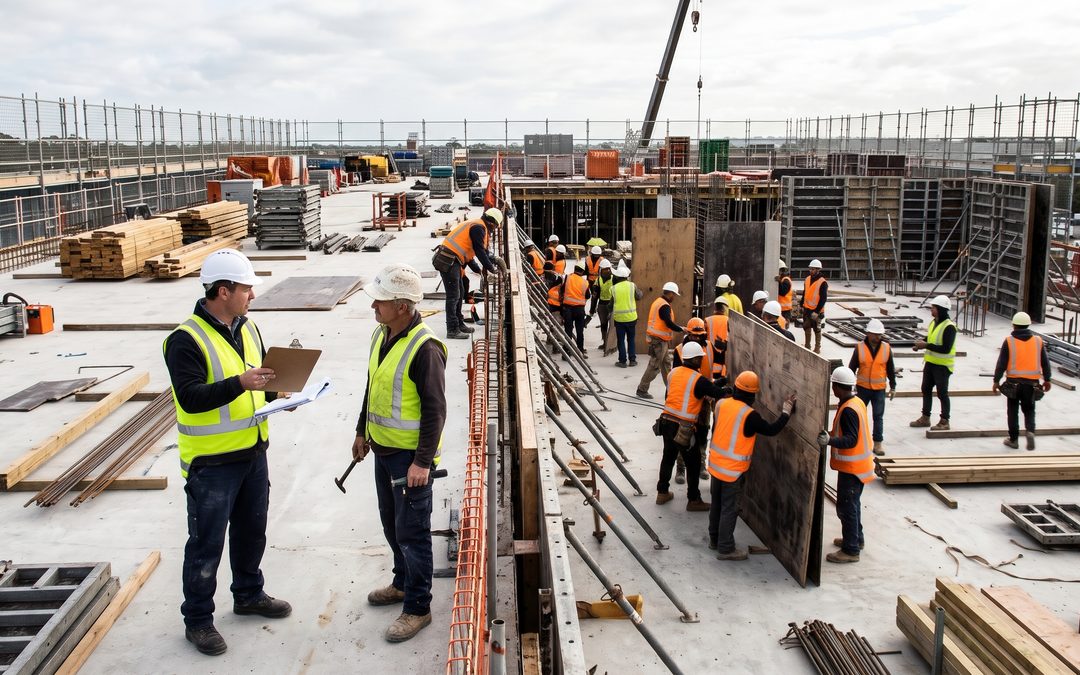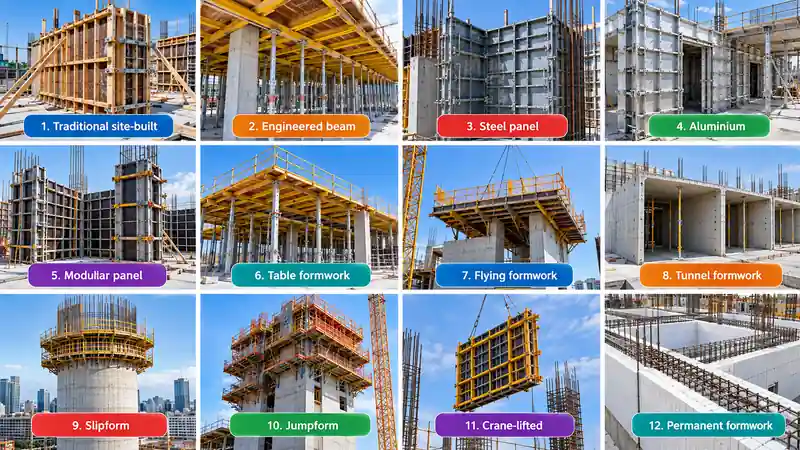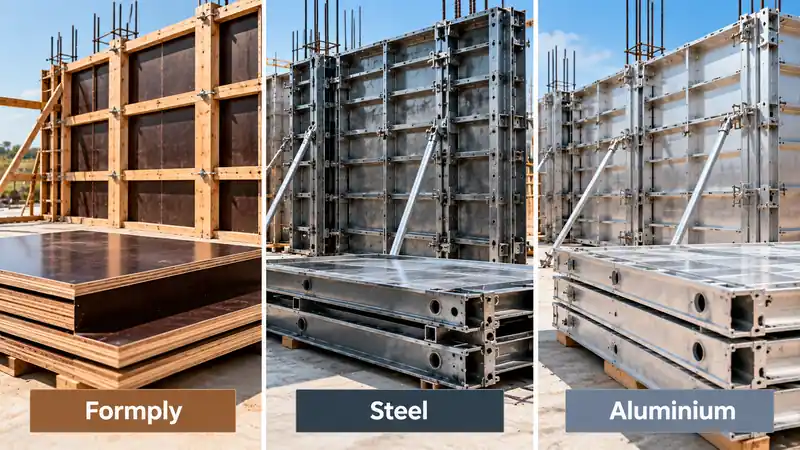
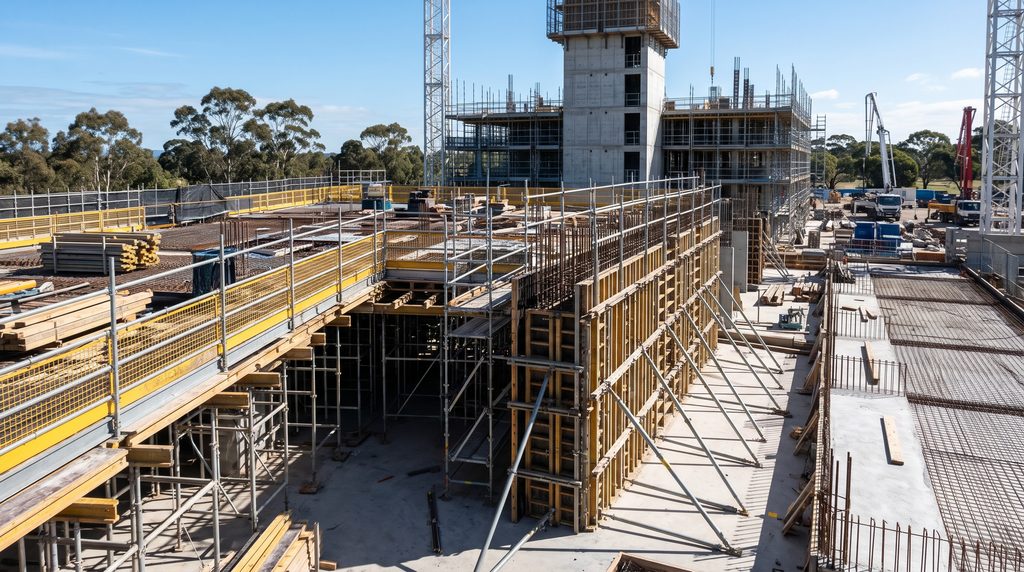
Formwork is the temporary mould that holds fresh concrete in shape until it can support itself. Falsework is the temporary structure of props, frames, bearers and bracing that carries formwork, concrete and construction loads down to a stable base. Formwork safety means designing, erecting, inspecting and dismantling both so they safely carry every load imposed during construction.
Compliance is layered. WHS laws, approved codes of practice, Australian Standards, the engineer’s design and the project specification all play a part, and they aren’t the same thing. Here is how each layer works and what a builder should see before the first pour.
Key takeaways
- Temporary does not mean low risk. Formwork needs engineered design for every construction stage.
- Most failures share a few causes. Poor foundations or bracing, overloading, incompatible components, unauthorised alterations and premature stripping.
- WHS duties are shared. A subcontractor’s certificate never discharges the builder’s own duties.
- Hold points protect the pour. Concrete shouldn’t be placed until inspections are done and release is recorded.
- Expect a clear paper trail. Design, inspection records, SWMS and a pour plan should be in place before concrete arrives.
What does structural safety mean in formwork?
In temporary works, structural safety means the system carries concrete, workers, equipment and materials, transfers those loads into sound ground or a capable supporting floor, and stays stable through erection, placement, curing and stripping, often while surrounding concrete is still gaining strength. As we explored in how temporary works decisions shape permanent structural outcomes, a failure can harm workers, other trades, adjacent structures and the permanent structure itself.
What are the main formwork safety risks?
Safe Work Australia’s Guide to Formwork and Guide to Falsework cover the hazards in detail. The failure modes that matter most on site are
- collapse, usually from several issues compounding
- prop failure from incorrect spacing, damage or missing lateral restraint
- poor foundations, such as soft ground or missing sole boards and base plates
- overloading from stacked reo, concentrated discharge or a faster pour rate than designed
- incompatible components, which void the manufacturer’s data
- unauthorised alterations and premature stripping
- falls and falling objects at open edges and penetrations.
Engineered design, erection to the drawings, edge protection, exclusion zones and inspection before loading control most of these risks.
What Australian WHS requirements apply to formwork?
Safe Work Australia develops the model WHS laws, but state and territory regulators such as SafeWork NSW enforce them. Every jurisdiction except Victoria has adopted laws based on the model WHS Act, while Victoria operates under its Occupational Health and Safety Act 2004.
Each PCBU must ensure health and safety so far as reasonably practicable, officers must exercise due diligence and workers must take reasonable care. Formwork designers carry upstream design duties, and principal contractors must prepare a WHS management plan and obtain SWMS from the trades doing high-risk work.
Because formwork is usually erected and stripped at height, much of it counts as high-risk construction work, which means a SWMS needs to be in place before the work starts. Safe Work Australia’s Construction Work model Code of Practice walks through how to prepare one, and it’s worth checking the local fall-height trigger, as it varies between some jurisdictions.
It helps to keep the layers separate. Legislation is binding, approved codes of practice set the standard you should meet or exceed, and guidance has no legal force. Australian Standards become mandatory when legislation, a contract or the design calls them up.
Safe Work Australia guidance
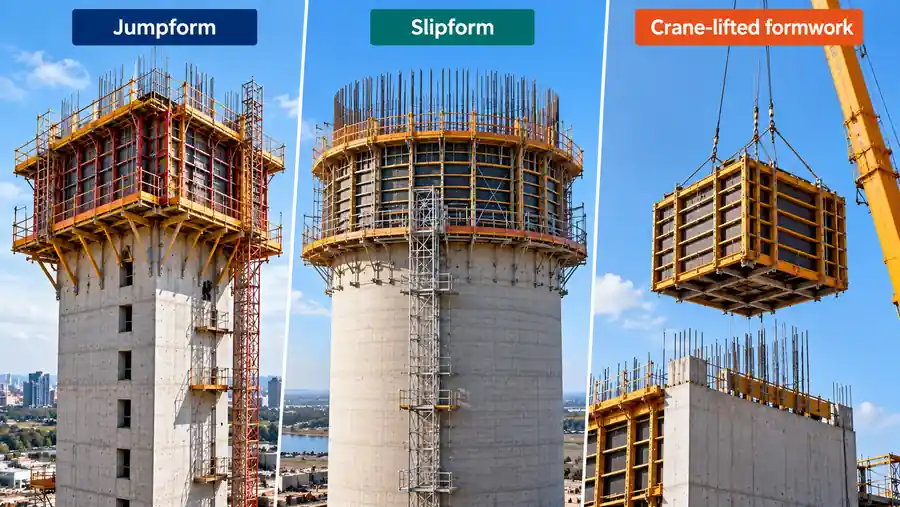
The Formwork and Falsework Information Sheet and Guide to Slip, Jump and Travelling Formwork Systems help teams plan erection, inspection and dismantling. They’re national guidance rather than law, and they note that anyone erecting formwork must be competent. For core systems, our jumpform versus slipform comparison adds practical context.
What does AS 3610 cover?
AS 3610 is a series. AS 3610.1 (2018 edition) covers specification and documentation, including surface finish classes. AS 3610.2 (Int), published in 2023, sets minimum requirements for designing, erecting and removing formwork and falsework, and Standards Australia lists it as an interim Standard superseding AS 3610–1995. Confirm which edition your design and contract reference.
What is the NSW Formwork Code of Practice?
The NSW Formwork Code of Practice is approved under the NSW WHS Act and applies in NSW only. It covers design and planning, working at height, erecting and dismantling, slipform and jumpform, and inspection.
SafeWork NSW’s November 2024 formwork installation design and certification safety alert expects site-specific designs by a competent person, designer-approved changes, certification before materials are loaded, and separate certification no more than 48 hours before the pour. Projects in other states should check their local regulator.
Who is responsible for formwork design?
The formwork designer, usually a competent engineer, is responsible for the design. Safety itself is shared, and every duty holder must consult, cooperate and coordinate.
Table 1. Typical formwork safety responsibilities
| Party | Typical responsibility | Evidence |
| Formwork designer | Site-specific design and approval of changes | Drawings, calculations, load limits, design certification |
| Formwork contractor | Erection to the design, SWMS and defect rectification | SWMS, erection and component records |
| Competent person | Inspection of the installed system at set stages | Inspection and certification records |
| Builder or principal contractor | Trade coordination, hold points and pour release | WHS management plan, hold-point records |
| Temporary works coordinator (if appointed) | Tracking designs, checks and changes | Temporary works register |
| Workers | Following SWMS and reporting defects | Pre-start records |
This is a typical allocation rather than a legal ruling, as contracts and actual control of the work decide the detail.
Formwork design and engineering requirements
Good formwork engineering accounts for concrete and construction loads, pour rate and sequence, lateral pressure, bracing, prop capacity, ground and floor capacity, wind and backpropping. A design only holds while the site matches its assumptions, so any change goes back to the designer. That’s why sequencing form, reo and pour and temporary works design belong together, particularly with high strutting.
Erection, installation and certification
Erection should follow the approved design and manufacturer instructions, with current drawings on site, compatible components, correct base plates, bracing as drawn, safe access and edge protection. “Certification” can mean design certification, erection verification, hold-point sign-off or an engineer’s statement, so the jurisdiction, design and specification should define what’s needed.
How do formwork inspections and hold points work?
Inspections run before, during and after erection, before other trades load the deck, through the pour, after any change or severe weather, and before stripping. A hold point is a stage the work cannot pass until a nominated person releases it. Our form, reo and pour slab cycle shows where these checks typically fall.
What is included in a formwork pre-pour checklist?
Treat this as a practical guide, as your project’s design and inspection plan take priority.
- Approved design on site and matching current drawings
- Erection matching the design, with approved changes only
- Props, bracing, base plates and supporting floor checked
- Edge protection and penetration covers in place
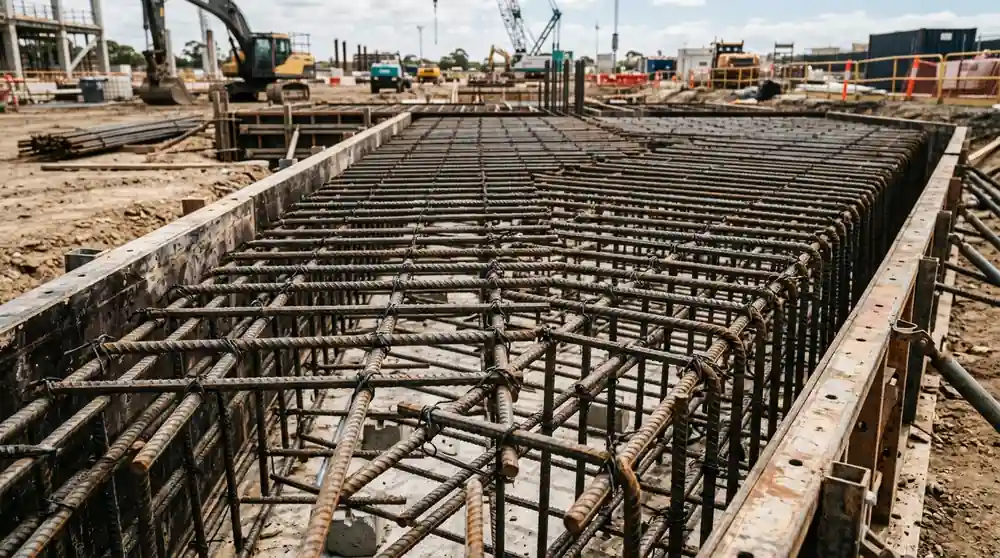
- Reo and cast-in items inspected
- Pour sequence, rate and pumping agreed
- SWMS current and briefed
- Defects rectified and re-inspected
- Certifications recorded and release to pour approved
What documentation should a builder receive before a pour?
Table 2. Documentation to review before the first pour
| Document | What it shows | Usually from | Typical basis |
| Design drawings and calculations | System suits actual loads and stages | Formwork designer | Design and NSW code expectation |
| Load limits and stripping criteria | Pour, stacking and removal limits | Formwork designer | Design |
| Design certification | Design meets the nominated standard | Engineer | Design, contract or jurisdiction |
| Inspection and pre-pour certification | Installation matches the design | Competent person | NSW code and project procedures |
| Hold-point release | Approval to pour | Builder | Contract or inspection plan |
| SWMS | Controls for high-risk work | PCBU doing the work | Legislation |
| Change and defect records | Changes approved, defects closed | Contractor or builder | Good practice or contract |
Check that drawings are site-specific and current, and that certificates are dated and unconditional.
Common compliance gaps and warning signs
Red flags include generic drawings, unclear design responsibility, missing load limits or inspection records, installation that differs from the drawings and pressure to pour early. When a discrepancy appears, stop the affected work, involve the designer, then rectify and re-inspect. Never assume a system is safe when verification is missing.
Safety performance and subcontractor prequalification
Tier 1 prequalification typically looks for a WHS management system, risk assessments, SWMS, competency records, inspection processes and corrective actions, themes we cover in choosing the right FRP contractor. LTIFR is often requested too, but as a lagging indicator it’s best read alongside how a contractor plans and supervises work.
How does Future Form approach formwork safety?
Future Form holds triple ISO certification covering occupational health and safety, quality and environmental management, with documented processes across formwork, jumpform, high strutting and concrete. Those systems support projects such as 55 Pitt Street in Sydney and the Australian War Memorial in Canberra.
From design to pour, safety built in with Future Form
We support builders with project-specific formwork planning, engineering coordination, installation to the approved design and pre-pour documentation across the full form, reo and pour package. Our formwork services run on ISO-certified systems, and we can provide prequalification information on request. Safety documentation isn’t just paperwork. It’s how everyone verifies that a temporary structure is ready for the load it’s about to take.
6 FAQ
1. What are the main formwork safety risks?
The main risks are collapse, prop instability, poor foundations, overloading, incompatible components, premature stripping, and falls or falling objects.
2. Who is responsible for formwork design safety?
The formwork designer is responsible for the design, but safety duties are shared with the formwork contractor, principal contractor and other PCBUs.
3. What does AS 3610 cover?
AS 3610.1 covers specification and surface finish, while AS 3610.2 covers design, erection and removal of formwork and falsework.
4. What safety documentation should a formwork subcontractor provide before a pour?
Typically site-specific drawings, load limits, design certification where required, inspection and pre-pour certification, and relevant SWMS.
5. Is a formwork inspection required before concrete placement?
In practice, yes. A competent person should verify completed formwork before loading, and SafeWork NSW expects certification within 48 hours of the pour.
6. What is a formwork hold point?
A hold point is a stage the work cannot pass until a nominated person inspects and formally releases it.
A safe pour starts long before the pump arrives
Every safe pour begins with a design that reflects real site conditions and an installation that matches it. Inspections and hold points confirm that before concrete goes in, and documentation proves it to every duty holder sharing the risk.
If you’re planning an upcoming structure, speak with a Future Form expert.
Get the temporary works right, and the permanent structure has a safe place to start.