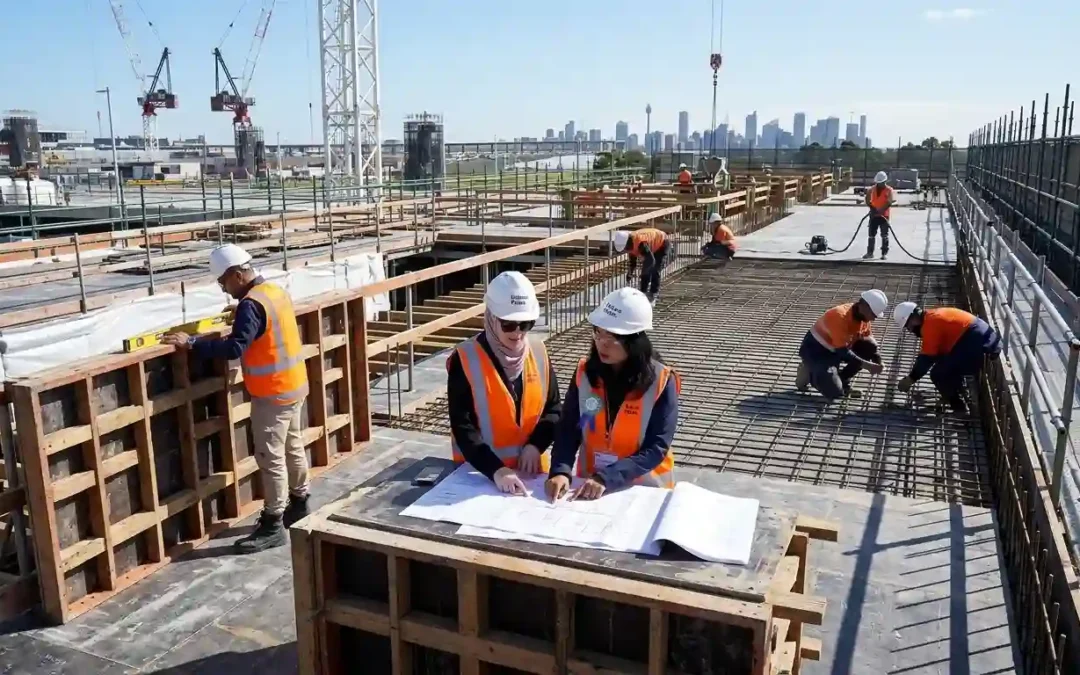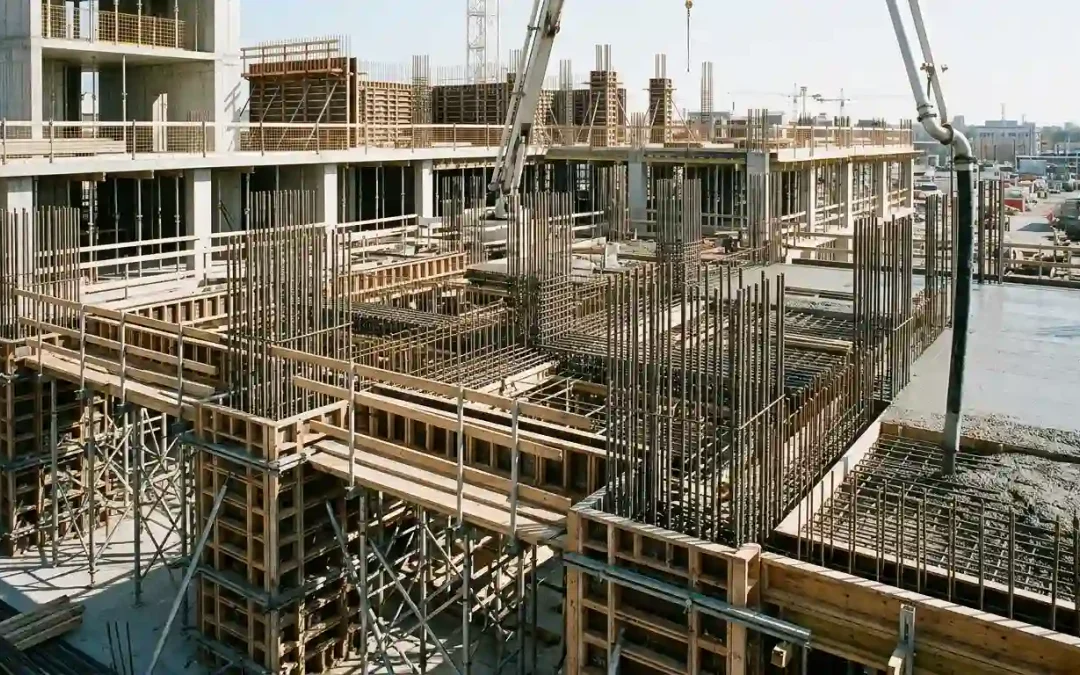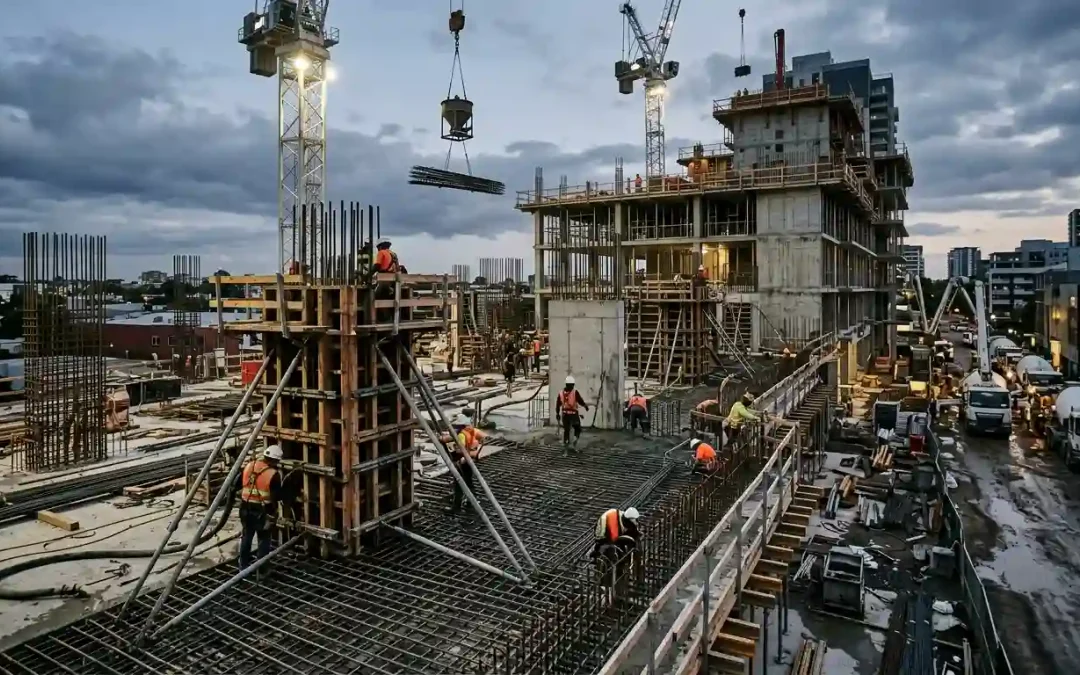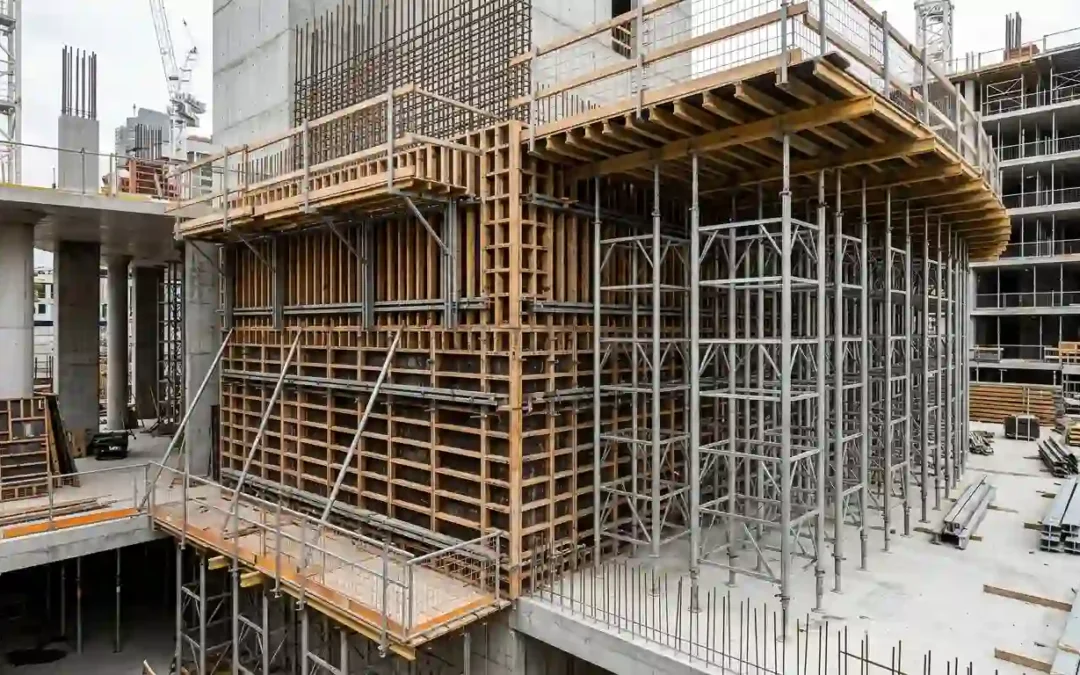

As the year comes to an end, construction schedules often come under a lot of pressure. Timelines get shorter, the availability of workers changes, and everyone in the industry is working together to finish important tasks before the holiday break. But one of the most common problems during this time isn’t weather or staffing issues. It comes from drawings that are done at the last minute and RFIs that are sent in late.
Updated drawings issued late in the programme or RFIs that require urgent clarification can quietly derail progress. What might appear to be a minor design amendment or a simple clarification request can quickly interrupt the entire FRP sequence — form, reo and pour — slowing momentum when projects can least afford it.
For large-scale developments, especially those with complicated structural packages, getting information late can have a big effect. Developers, construction professionals, industry partners, and suppliers who want to keep the programme on track until the end of the year need to know why this happens and how to better manage it.
Why last-minute drawings often appear toward the end of the year
It’s not just construction that feels the pressure at the end of the year, but the industry feels it more because it relies on coordinated sequencing. Designers, consultants, developers, contractors, and suppliers all have deadlines to meet, and they often have to do this on more than one project at a time.
Late drawings commonly arise due to unresolved design coordination, delayed approvals, or changes driven by value engineering and constructability reviews that occur later than planned. In some cases, upstream delays compress the design timeline, pushing final documentation closer to construction activities.
When these drawings arrive just days or weeks before planned works, they place FRP contractors in a reactive position. Instead of executing a planned scope, teams are required to reassess formwork layouts, reo detailing and concrete volumes at short notice, increasing the risk of delays and rework.
How late RFIs disrupt construction flow
RFIs are very important to the building process. They make sure that work is done safely and correctly by making sure that everyone knows what they want to do. But when RFIs are brought up late or answers take a long time, the effects spread through the structural package.
A late RFI response can prevent formwork installation from proceeding, even if materials and labour are already on site. Steel fixing may be paused while awaiting confirmation on bar sizes, laps or embeds. Concrete pours, which rely heavily on precise coordination, may need to be rescheduled if any uncertainty remains unresolved.
These disruptions are amplified toward the end of the year, when booking availability for concrete suppliers becomes tighter and any missed pour can mean waiting days or weeks for the next viable slot.
The FRP process relies on precision and sequencing
FRP — form, reo and pour — is not a set of isolated tasks. It is a tightly linked process where each stage depends on the accuracy and completion of the previous one.
Formwork must align precisely with structural drawings to ensure correct dimensions and load paths. Reo installation relies on detailed reinforcement schedules that integrate with formwork geometry. The pour stage requires confidence that everything below the concrete line is compliant, complete and signed off.
When drawings change late or RFIs introduce uncertainty, this sequence breaks down. Even small adjustments, such as revised penetrations or altered slab thicknesses, can require formwork modifications, reo adjustments and updated concrete calculations. These changes take time to assess and implement, regardless of how minor they may seem on paper.
The hidden cost of end-of-year delays
Delays caused by late drawings and RFIs are not limited to programme extensions. They carry hidden costs that can affect the entire project ecosystem.
Overhead costs go up when workers are idle and waiting for instructions. You might have to pay for plant and equipment that you don’t use. Cancellations or rebookings of trades can lead to penalties, and rescheduling trades can have effects on other activities that depend on them.
For developers and clients, these delays can impact financing milestones, handover dates and tenant commitments. For contractors and suppliers, they place strain on resources already stretched by year-end demand. The result is a compounding effect where a single late decision can disrupt multiple layers of the project.
Why reactive approaches no longer work for complex projects
Traditionally, some projects have relied on reactive problem-solving when late drawings or RFIs arise. While this may be manageable on smaller builds, it becomes increasingly risky on large-scale developments with complex structural systems.
High-rise towers, transfer structures and podium slabs demand a proactive approach to information management. Waiting until the last moment to resolve uncertainties leaves little room for contingency, particularly when multiple FRP contractors are working in parallel.
A reactive approach also increases the likelihood of miscommunication. Verbal clarifications, provisional assumptions and rushed decisions introduce risk, especially when teams are operating under time pressure.
The importance of early drawing reviews
One of the most effective ways to reduce end-of-year disruptions is early and thorough drawing review. Identifying inconsistencies, clashes or missing information well before construction begins allows RFIs to be raised and resolved while there is still flexibility in the programme.
Early reviews also enable FRP contractors to plan formwork systems, reo installation methodologies and pour sequencing with greater confidence. This proactive planning reduces the likelihood of last-minute surprises that force changes on site.
For structural packages, early engagement ensures that design intent aligns with buildability, helping to avoid revisions that would otherwise emerge late in the programme.
How integrated FRP solutions reduce risk
Integrated FRP solutions bring formwork, reo and pour planning together under a coordinated strategy. Rather than treating each element as a separate scope, integration allows the entire structural package to be assessed holistically.
This approach improves communication between teams and ensures that changes in one area are immediately understood in terms of their impact on the others. When drawings are updated or RFIs arise, integrated teams can assess implications faster and implement solutions with minimal disruption.
Integrated FRP solutions also support better sequencing, ensuring that formwork readiness, reo availability and concrete scheduling are aligned. This alignment is particularly valuable at the end of the year, when timing is critical.
The role of FRP contractors in managing late information
FRP contractors play a pivotal role in mitigating the impact of late drawings and RFIs. Their practical understanding of formwork systems, reinforcement requirements and pour logistics positions them to identify potential issues early.
Experienced FRP contractors do not simply wait for information to arrive. They actively track drawing revisions, monitor outstanding RFIs and engage with project teams to anticipate changes before they reach site.
This proactive involvement allows construction teams to maintain momentum, even when design information evolves late in the programme.
Keeping the structural package moving under pressure
At the end of the year, every day counts. Maintaining progress requires clarity, coordination and confidence across the structural package.
When drawings are reviewed early and RFIs are managed proactively, formwork installation can proceed without interruption. Reo fixing can be scheduled efficiently, reducing congestion and rework. Concrete pours can be locked in with certainty, protecting critical milestones.
This level of control does not happen by chance. It requires systems, experience and an integrated mindset that recognises the interdependence of FRP activities.
How Future Form supports smoother delivery
Future Form supports project teams by focusing on early engagement and continuous oversight of drawings and RFIs. By reviewing information early and tracking changes as they occur, potential disruptions can be addressed before they reach site.
This approach helps ensure that formwork systems are aligned with the latest drawings, reinforcement detailing is accurate, and pour sequencing remains achievable. The result is a smoother FRP process that reduces delays, even during high-pressure periods.
By treating the structural package as a coordinated whole, unnecessary stoppages are avoided and productivity is maintained through to the end of the year.
Why planning ahead matters more than ever
As projects become more complex and programmes more compressed, the tolerance for late information continues to shrink. End-of-year conditions magnify this reality, leaving little room for error.
Planning ahead, reviewing drawings early and managing RFIs proactively are no longer optional best practices. They are essential strategies for protecting programme certainty and controlling risk.
For developers and clients, this means fewer surprises and greater confidence in delivery timelines. For contractors and suppliers, it means a more predictable workflow and reduced pressure during peak periods.
Turning end-of-year challenges into controlled outcomes
Late drawings and RFIs will always be part of construction. However, their impact does not need to be disruptive. With the right processes, Future Form integrated FRP solutions and experienced FRP contractors, projects can absorb changes without losing momentum.
The end of the year should be a time of controlled progress, not reactive firefighting. By addressing information flow early and maintaining alignment across form, reo and pour, large-scale projects can finish strong and set the foundation for success in the year ahead.
References
Love, P. E. D., Edwards, D. J., & Irani, Z. (2012). Moving beyond optimism bias and strategic misrepresentation: An explanation for social infrastructure project cost overruns. IEEE Transactions on Engineering Management, 59(4), 560–571.
Retrieved from https://ieeexplore.ieee.org/document/6170404
Mahamid, I. (2017). Risk factors impacting construction projects: A systematic review. Journal of Construction Engineering, 2017, 1–9.
Retrieved from https://www.hindawi.com/journals/jcen/2017/1654139/
Sebastian, R. (2011). Changing roles of the clients, architects and contractors through BIM. Engineering, Construction and Architectural Management, 18(2), 176–187.
Retrieved from https://www.emerald.com/insight/content/doi/10.1108/09699981111111148/full/html
Whyte, J., & Hartmann, T. (2017). How digitising building information transforms the construction industry. Building Research & Information, 45(6), 591–595.
Retrieved from https://www.tandfonline.com/doi/full/10.1080/09613218.2017.1292319
Winch, G. M. (2010). Managing construction projects: An information processing approach. Wiley-Blackwell.
Retrieved from https://onlinelibrary.wiley.com/doi/book/10.1002/9781444313525