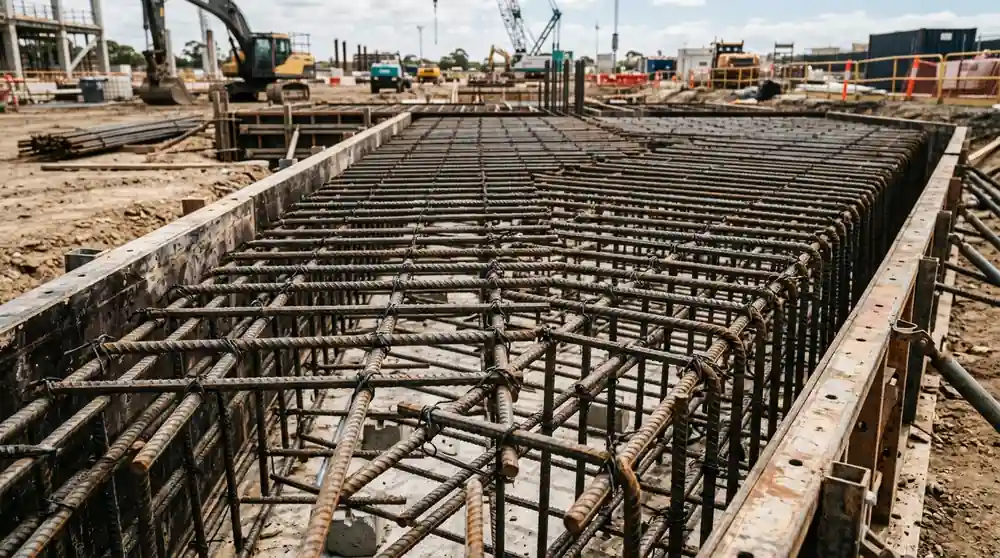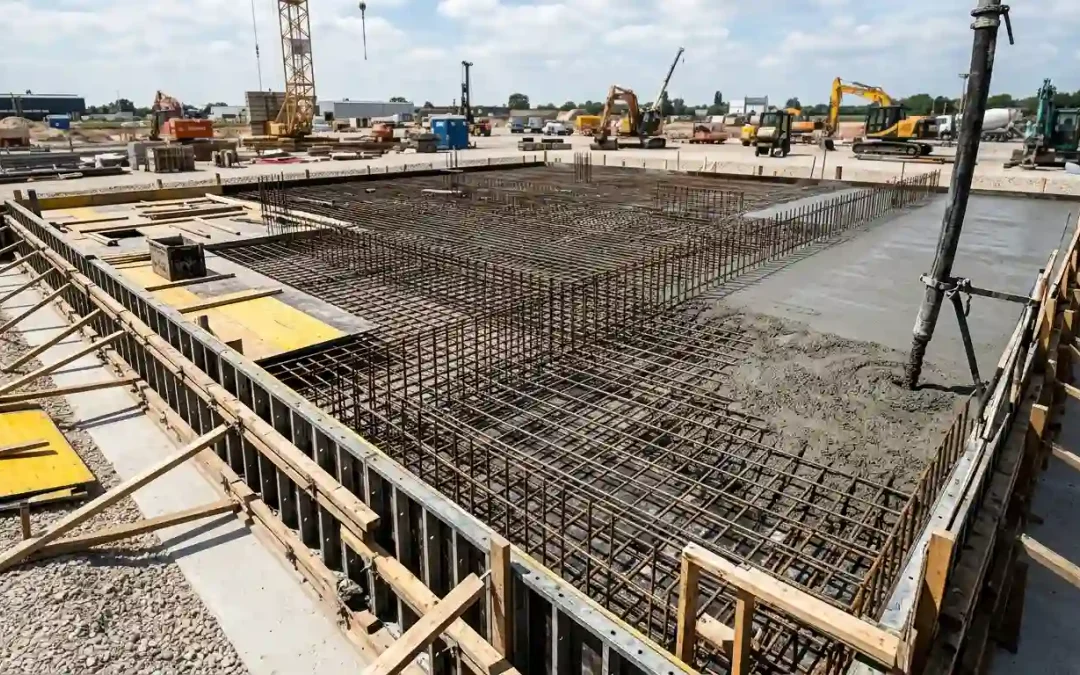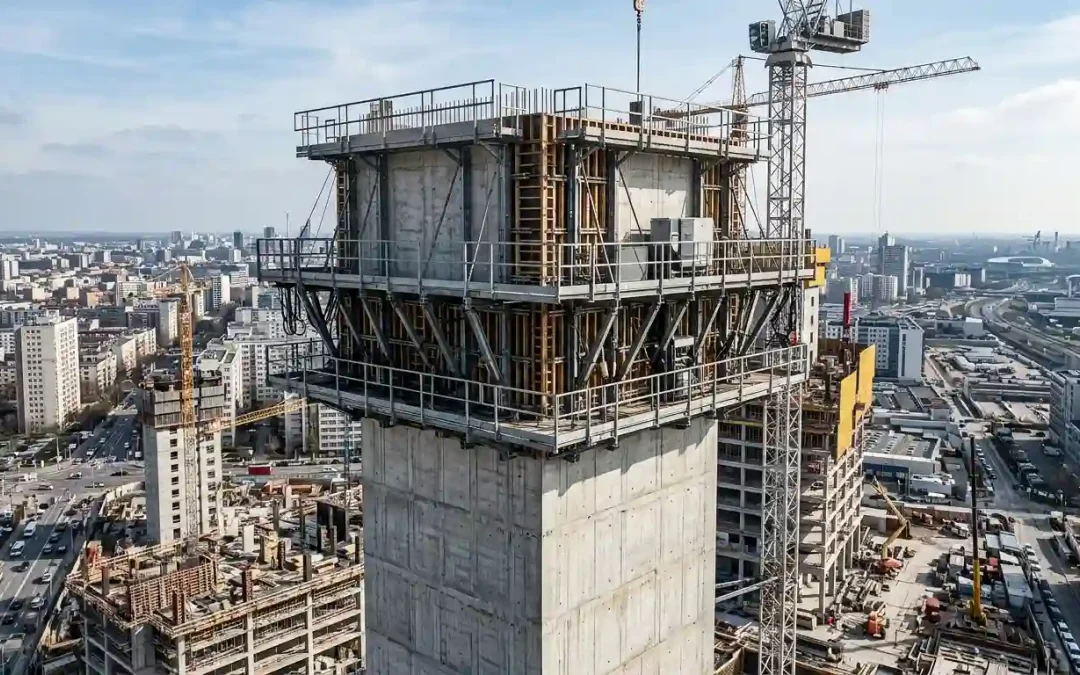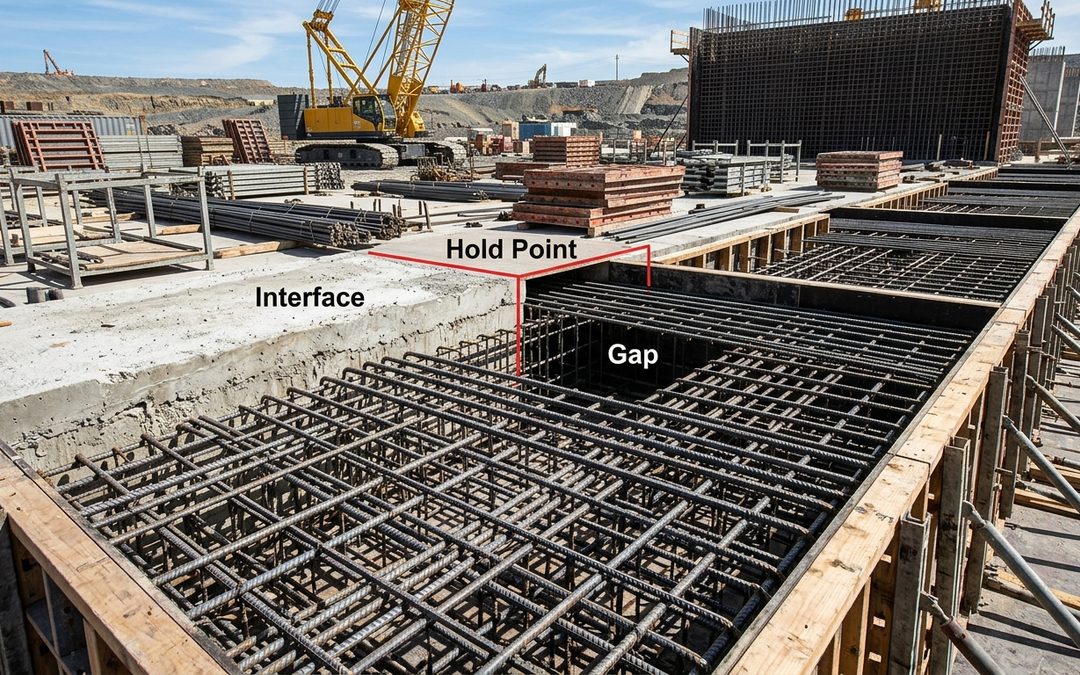
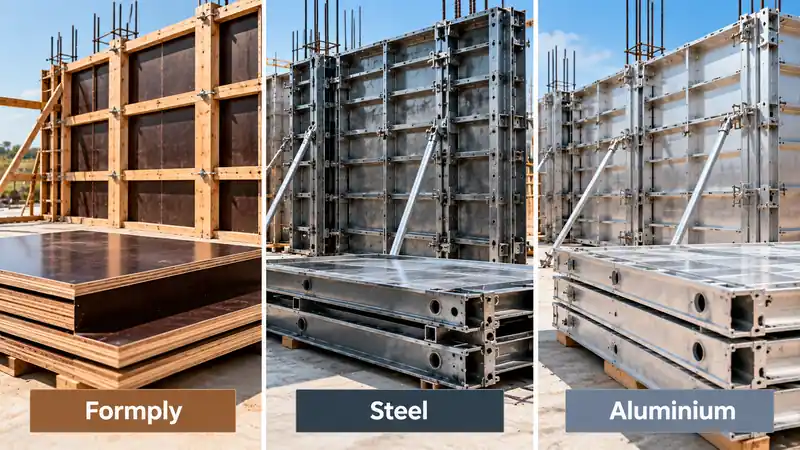
Formwork material is what the formwork is made from, mainly timber/formply, steel or aluminium, with specialist materials for some jobs. The right choice depends on the element, reuse, finish, handling and cost. Material is only part of it, because the form face touching the concrete shapes the surface.
Key takeaways
- Formwork can be made from timber/formply, steel, aluminium or specialist materials. None is universally better.
- Reuse, finish, weight, handling and crane demand all drive the choice, and they pull in different directions.
- Purchase price alone does not give whole-of-job cost. Usable reuses, labour, crane time and repairs matter too.
- The form face has a major influence on finished concrete. The material behind it does not decide the finish on its own.
- Match material and form face to each element and its finish class, not to the whole building.
What material is formwork made from?
Most high-rise formwork uses one of three material families. Timber formwork and formply is the most adaptable, steel is the most durable, and aluminium is lighter than steel and suits repetition. Anyone who wants to step back to first principles can start with the fundamentals of what formwork is and how it works.
Separate two things. The formwork system is the supporting structure: props, beams, frames and panels. The form face is the surface in direct contact with the concrete. A steel frame can carry a plywood face, so material and face are related but not the same decision.
What is the difference between timber, steel and aluminium formwork?
The table compares them qualitatively. We have left out reuse counts and cost figures, because they vary by product and project and should come from a manufacturer or project record.
| Timber/formply | Steel | Aluminium | |
| Reuse | Lowest of the three; varies with grade, coating and care | High | High where the layout repeats |
| Weight | Light per panel | Heaviest | Lighter than steel |
| Handling and crane | Cut-to-fit sheets handled by hand | Large panels often need the crane | Can reduce lifting; depends on panel size |
| Finish potential | Depends on face grade, coating, condition | Smooth faces possible; joints matter | Smooth faces possible; joints matter |
| Adaptability | Easiest to cut, alter and repair | Suits standard geometry and curves | Suits modular layouts; hard to alter once built |
| Best fit | Irregular or one-off elements | Repetitive or curved elements | Repetitive floor plates and walls |
Lighter does not automatically mean cheaper or better. Heavier systems can earn their keep through durability and rigidity.
What is formply, and how many times can it be reused?
Formply is plywood made for concrete formwork. Panels should be branded, graded and labelled to the relevant structural plywood standard. WorkSafe NT has issued a safety alert on non-compliant plywood sold for formwork, a good reason not to buy on price alone.
How many times can formply be reused? There is no universal number. Reuse depends on grade, coating, edge sealing, handling, storage, cleaning, release-agent application, concrete placement, damage and element geometry. Treat any manufacturer figure as evidence for those stated conditions, not an industry benchmark.
Grades and coatings are chosen for finish and reuse. A higher-grade coated face aims for a more consistent surface over more pours, while a cheaper sheet may suit a concealed element. Ask what the element needs, not what the sheet costs.
What makes a good form face?
A good form face is clean, flat, sealed at the edges and free of damage and contamination. Concrete copies what the face gives it: texture, joint lines, pores, colour variation and defects. A steel face can transfer panel joints as clearly as a ply face transfers grain or a damaged corner. No material guarantees a finish, because the surface depends on face condition, joints, alignment, release agent, mix, placement and vibration.
What role does the release agent play?
A release agent breaks the bond between concrete and form so it strips cleanly. It must suit the form face and follow the product and formwork requirements. Too little risks sticking and surface damage. Too much risks pooling, staining and defects, and can affect later paint or render. Apply it to a clean face, because residue causes patchy results.
When are patching and sanding appropriate?
After stripping, clean and inspect the face, then repair only as far as the finish demands. Minor damage on a concealed soffit may not need attention, while a feature wall may mean replacing the sheet. Patching and sanding can restore a face, but a patch can also show in the concrete, so acceptable condition depends on finish class, specification and methodology. Cleaning and storage between uses cost less than rectifying concrete.
How does formwork material affect crane demand and handling?
Weight sets how panels move. Lighter panels need less lifting support, though what is practical depends on the actual system and panel size, and manual handling risk is a real constraint (Safe Work Australia’s manual tasks guidance). Heavier systems lean on the crane, often the scarcest resource on a Sydney high-rise. A system that saves crane hooks may justify a higher purchase price, but only when the crane is what limits the programme.
How does formwork material affect whole-of-job cost?
Purchase price is not whole-of-job cost. A simple starting principle:
Effective material cost per m² = initial material cost ÷ usable number of reuses
This is material cost only, not installed cost. A fuller comparison adds labour, crane time, handling, transport, cleaning, repairs, replacement, storage, stripping, programme, rectification and waste. A cheap sheet replaced early can cost more than a better face used well, and a durable system used on only a few pours may never earn its cost back.
What does AS 3610 mean for formwork and concrete finish?
AS 3610.1:2018 covers formwork for concrete and includes classes of surface finish. The specified finish class should be settled before material and face are chosen. The companion formwork plywood standard, AS 6669, is written for the lower classes, so check the standards for what suits the highest. Our planned November AS 3610 finish-class article will cover this in detail (link to be added once the URL is confirmed). The SafeWork NSW formwork code of practice covers how formwork is designed, erected and stripped.
How should formwork material be selected for each structural element?
One building rarely needs one material. The table is a starting point, not a recommendation, and project design and methodology decide the final selection.
| Element | Material options | Form-face approach | Reuse | Finish | Handling and crane | Key advantage | Key limitation |
| Suspended slab | Formply on system supports, or aluminium/steel panels | Coated ply or system face | Medium to high | Often painted or lined | Weight affects moving decks between levels | Repetition suits a system | Penetrations need cut-to-fit areas |
| Columns | Steel, formply or specialist faces | Matched to exposure | Medium to high | Often visible | Panels may be crane lifted | Rigid and repeatable | Varied sections limit reuse |
| Core and shear walls | Jump or climbing panels | Matched to finish class | High across levels | Usually standard | Crane dependent | High repetition | Heavy; needs engineering |
| Lift shafts and stairs | Formply or specialist | Cut-to-fit face | Lower | Usually concealed | Smaller hand-fitted panels | Adapts to awkward shapes | Less reuse per sheet |
| Beams | Formply or system | Sealed edges | Lower to medium | Varies | Hand or crane | Easy to adjust | Many joints |
| Architectural off-form | High-grade formply, steel or aluminium face | Best-grade, well-maintained face | Often restricted | Highest class | Care in handling and storage | Control of face and joints | Cost and rectification risk |
How Future Form can help
Future Form is a Sydney-based formwork contractor with over 20 years in the industry, delivering integrated FRP packages. We specify material and form face per element rather than running one product across a building, which is where off-form finish and formply consumption are won or lost. That means weighing geometry, finish class, expected reuse, handling and crane arrangement against programme, and coordinating with builders and engineers on form, reo and pour sequencing. It is one approach, not a universal answer, and we do not promise reuse counts or finish outcomes, because they depend on the project.
Our projects show how varied the demands are: curved jump-form cores and high-strutted soffits at Smith Street, Parramatta (28 storeys), off-form concrete at Castle Residences, and an off-form wall at Green Square School. Those listings do not state materials or reuse, so we draw no material conclusions from them. Our November AS 3610 article will be linked here once published. Considering an FRP contractor? Ask how materials are matched to each element.
6 FAQ
1. What material is formwork made from?
Formwork is mainly made from timber and formply, steel or aluminium, with plastic and fabric used for specialist work. The best material depends on the element, reuse, finish and handling.
2. How many times can formply be reused?
It depends. Grade, coating, handling, cleaning, release agent, damage and element geometry all affect it. Use a manufacturer’s figure only for the conditions it states.
3. Which formwork material gives the best off-form concrete finish?
No material alone does. The form face, its condition, joints, release agent and concrete placement decide the surface. Check the specified finish class first.
4. Does steel formwork produce a better finish than formply?
Not automatically. A well-maintained formply face can outperform a damaged steel face. Steel offers durability and repeatability, but joints and condition still show.
5. Is aluminium formwork lighter than steel formwork?
Generally yes, because aluminium is less dense. Actual handling depends on the system and panel size, and lighter does not always mean cheaper.
6. How does Future Form select formwork materials?
Per element, not per building. We weigh geometry, finish class, expected reuse, handling, crane arrangement and programme before specifying.
The form face shapes the finish
Timber/formply, steel and aluminium each have strengths, and none wins everywhere. Reuse, weight, handling, finish and whole-of-job cost all need weighing together, and the face that touches the concrete does more for the finished surface than the material behind it. Start with the finish class and let it guide the rest.
If you want to understand which formwork material and form face could suit an upcoming high-rise, speak with a Future Form expert. The right formwork choice is not just what the form is made from, but what the concrete needs to look like and how many times the form needs to work.