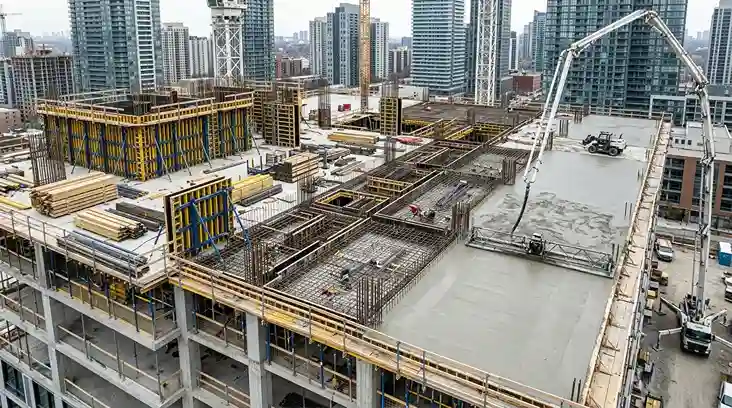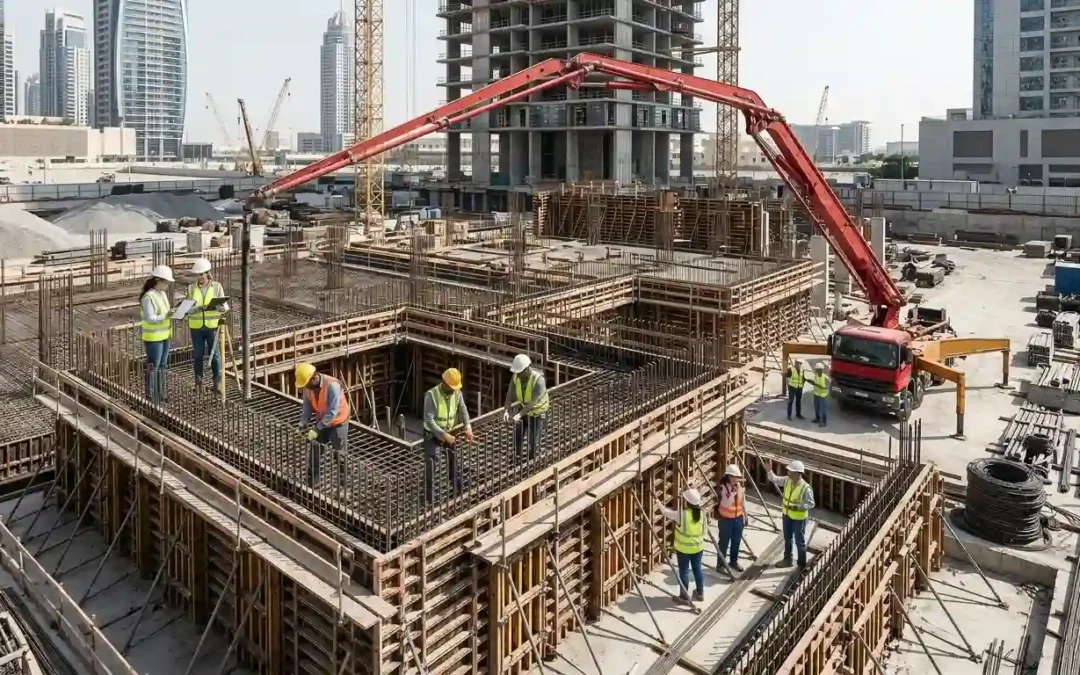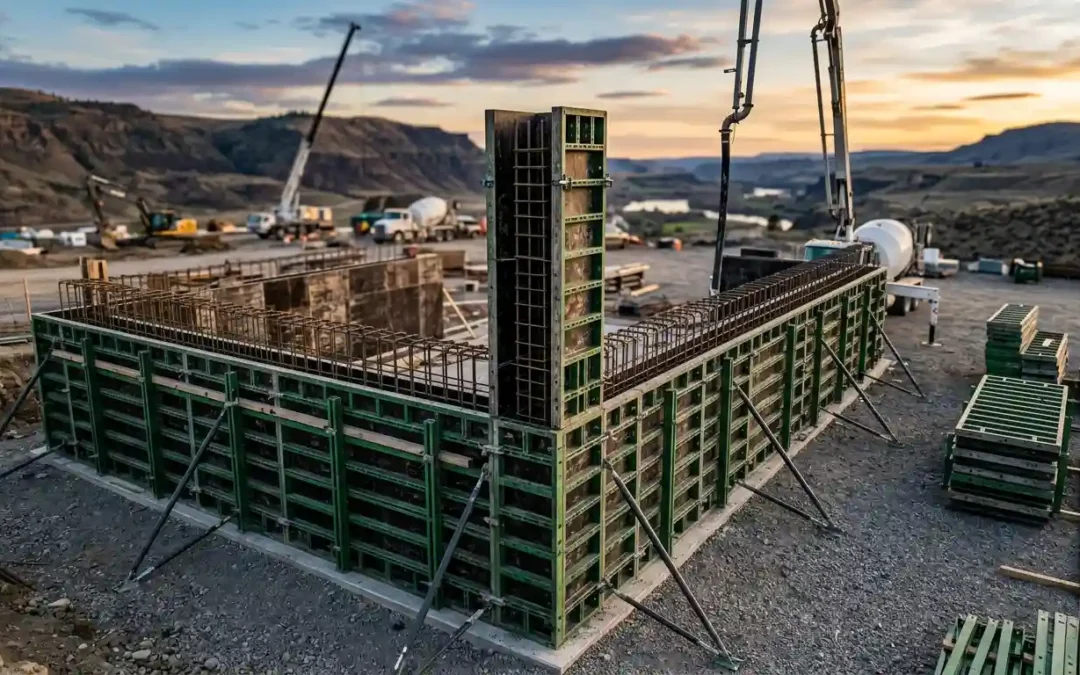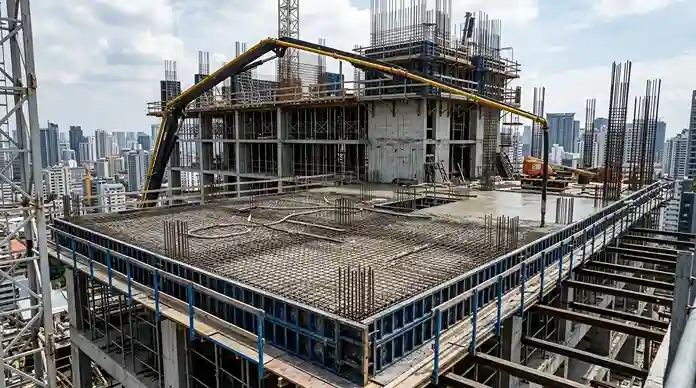
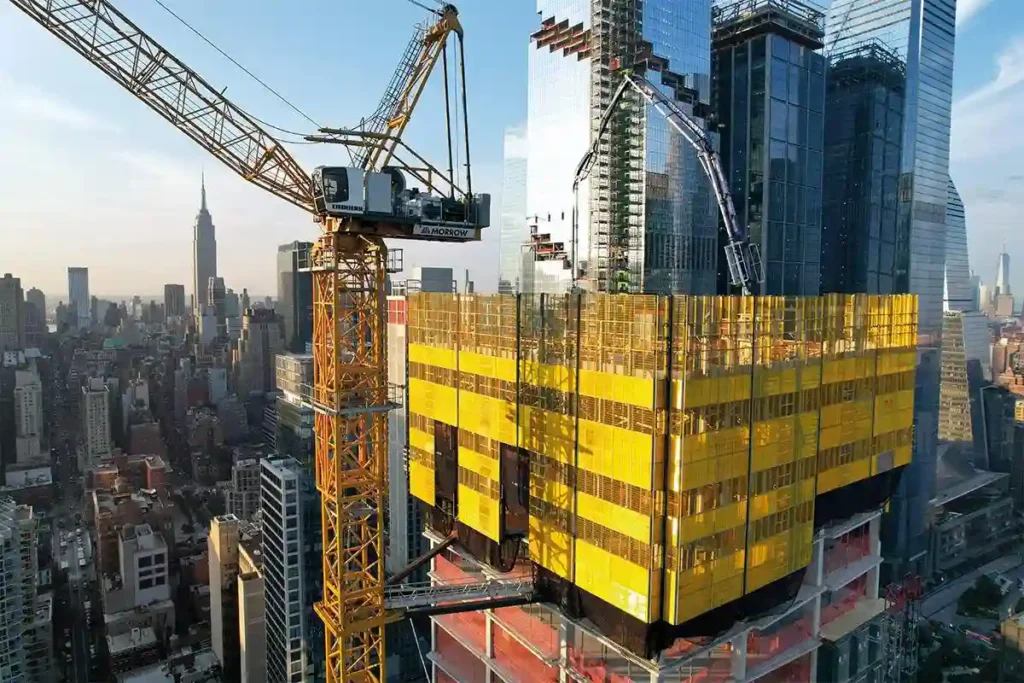
In the first few months of 2026, many large-scale construction projects are starting to follow a familiar pattern: big plans, short deadlines, and a strong push to speed up vertical progress. Fast formwork systems are moving faster than ever because of business pressure and the need to be more efficient. But a serious imbalance is quietly building up at many sites.
Formwork is moving quickly, but reo fixing and pouring concrete are having a hard time keeping up.
The result? A slow structure
This problem of fast formwork and slow structure not working together is not new, but it is getting more expensive, more obvious, and harder to fix. When FRP—form, reo, and pour—isn’t planned as one smooth flow, problems arise that slow down the whole structural package. What looks like progress on paper can often hide problems on the job site that waste time, money, and concrete quality.
This article talks about how ignoring reo and pour readiness causes structural drag, how it affects projects in their most important early stages, and why integrated FRP solutions are becoming necessary for projects that want to keep their cycle times low in 2026 and beyond.
Why fast formwork alone no longer guarantees progress
People now see fast formwork as a sign of productivity. With advanced systems, modular designs, and skilled crews, decks, cores, and walls can be made quickly. These systems work exactly as they should when used alone.
The problem comes up when the speed of the formwork becomes the most important measure of success.
Formwork is not a stand-alone thing. It makes it possible to install reo and pour concrete. When formwork moves ahead too quickly without matching the availability of reo labour, the ability to fix issues, the readiness for inspection, and the pour sequencing, the structure starts to stall.
Instead of smooth floor cycles, sites experience:
- Completed formwork waiting idle for steel fixing
- Reo crews working under pressure to catch up
- Concrete bookings being pushed, split, or rushed
- Increased rehandling and temporary works
- Compromised access, safety, and quality control
In these conditions, the structure may look advanced, but actual progress slows. The form is there, but the structure is not moving.
This is the hidden cost of fast formwork paired with slow structure.
The real bottleneck sits between reo and pour readiness
In most delayed structural programmes, the main problem is not the speed of the formwork itself, but the time it takes to get the reo ready and the time it takes to pour. Reo fixing takes a lot of work, has to be done in a certain order, and relies heavily on being able to get to the site, having clear drawings, and having inspections done on time. When reo activities are rushed or crammed into unrealistic time frames, productivity drops quickly. This leads to incomplete fixing before inspections, crowded work areas, more RFIs, late clarifications, and a higher chance of remedial work that puts extra stress on the whole structural package.
Because of this, concrete pours often don’t go as planned. Pouring doesn’t act as the last, controlled step in the FRP sequence anymore. Instead, it becomes a race to protect bookings and avoid programme blowouts, which can happen even before the structure is really ready. When this misalignment happens, the structure slows down not because the crews aren’t doing their jobs well, but because the FRP system isn’t working together anymore.
How slow structure impacts the entire structural package
Delays add up quickly when FRP isn’t integrated. One missed pour or delayed inspection can have a domino effect on many levels, affecting more than just the concrete trade.
Common impacts include:
- Extended floor cycle times that affect downstream trades
- Increased crane congestion and site logistics pressure
- Stacked workfaces that reduce safety and productivity
- Rising preliminaries due to prolonged structural phases
- Strained relationships between contractors and consultants
The structural package becomes reactive instead of controlled as time goes on. People make decisions to get back on track rather than to keep the programme stable in the long run. The costs of rework, overtime, and inefficiency are often higher than the benefits of speeding up formwork on its own.
This is why fast formwork, without balanced FRP planning, frequently delivers a slower structure overall.
Why the first year of 2026 is a critical window
The first year of a project sets the behavioural pattern for the entire build, and in 2026, with heightened cost sensitivity and tighter margins, early structural inefficiencies are far more difficult to absorb. Projects that begin with misaligned FRP sequencing often find themselves locked into recovery mode before the structure reaches full momentum, and once early cycle times slip, they rarely recover without significant intervention.
At this stage, risks commonly emerge in the form of overpromised cycle times based solely on formwork capacity, underestimated reo labour requirements and fixing durations, concrete pours being booked before full FRP readiness is achieved, and limited allowance for weather impacts, inspections, or design changes. By the time these issues surface clearly on site, the structure is already moving slowly, and corrective measures become increasingly expensive and disruptive.
The importance of treating FRP as one system, not three trades
One of the most common structural planning errors is treating formwork, reo, and pour as separate scopes managed through separate programs. While these activities may be delivered by different crews, they function as a single interconnected system, and when they are planned in isolation, inefficiencies are inevitable.
Integrated FRP solutions recognise that formwork speed must be matched to reo fixing capacity, that reo sequencing must align with pour sizes and site access conditions, and that concrete pours must reflect actual readiness rather than idealised programs. When FRP is planned holistically, each stage supports the next, allowing crews to move through the structure with clarity instead of congestion. Inspections become predictable rather than disruptive, and concrete quality improves because pours occur under controlled conditions rather than time pressure, transforming fast formwork from a structural risk into a genuine advantage.
Concrete quality is often the silent casualty
One of the less visible consequences of slow structure is its impact on concrete quality, which is often compromised long before program delays become obvious. When pours are rushed to protect dates rather than true readiness, issues such as honeycombing, inadequate compaction, and finishing defects become more likely. While these defects may not always be immediately visible, they introduce long-term durability risks and increase the likelihood of future remediation.
Concrete performs best when reo placement is complete and verified, when formwork is stable and properly prepared, when access allows for correct placement and vibration, and when pour sizes are realistic and well managed. Integrated FRP planning protects these conditions by ensuring that concrete is poured when the structure is genuinely ready, not simply when the calendar demands it.
How experienced FRP contractors protect cycle times
Experienced FRP contractors understand that speed is not achieved by pushing one trade harder than the others, but by protecting flow across the entire structural package. Rather than reacting to delays as they arise, they focus on backward planning from concrete pours, realistic assessments of reo fixing rates, clear ownership of FRP sequencing, early identification of access and congestion risks, and continuous coordination across form, reo, and pour activities.
This approach creates predictability across the structure, allowing work to progress with intent and consistency rather than constant adjustment. Projects that engage FRP contractors with integrated capability often achieve stronger outcomes even when using similar formwork systems, because the difference lies not in how fast the form goes up, but in how well the entire system is managed.
Future Form’s role in preventing fast formwork, slow structure
Future Form approaches FRP as a single, coordinated system rather than a collection of separate activities. Instead of focusing on formwork speed alone, Future Form ensures that form, reo, and pour sequencing are matched realistically from the outset, creating alignment across the structural package.
This method helps projects keep cycle times stable throughout the structure, avoid bottlenecks between the reo and pour stages, cut down on rehandling, congestion, and idle time, protect the quality of the concrete and the results of the inspection, and provide a more predictable and controlled structural programme. Future Form makes sure that formwork delivery matches the ability to fix reo and pour concrete. This helps structures move forward smoothly instead of in fits and starts. The company focuses not just on building quickly, but also on building well.
Looking ahead: Building structures that actually move
As projects continue to push for speed in 2026, the lesson is clear. Fast formwork without integrated FRP planning creates the illusion of progress while slowing the structure beneath it.
The most successful projects will be those that recognise FRP as a unified system, not a collection of isolated trades. They will plan realistically, sequence intelligently, and prioritise flow over appearances.
In doing so, they will avoid the hidden cost of slow structure and deliver buildings that rise with confidence, consistency, and quality.
References
Australian Institute of Building. (2023). Managing productivity in concrete structures. https://www.aib.org.au
Engineers Australia. (2022). Concrete construction and structural efficiency. https://www.engineersaustralia.org.au
Master Builders Australia. (2023). Best practice in structural sequencing. https://www.masterbuilders.com.au
Standards Australia. (2018). AS 3600: Concrete structures. https://www.standards.org.au
The Concrete Institute. (2021). Optimising formwork, reinforcement, and concrete placement. https://www.concreteinstitute.com.au