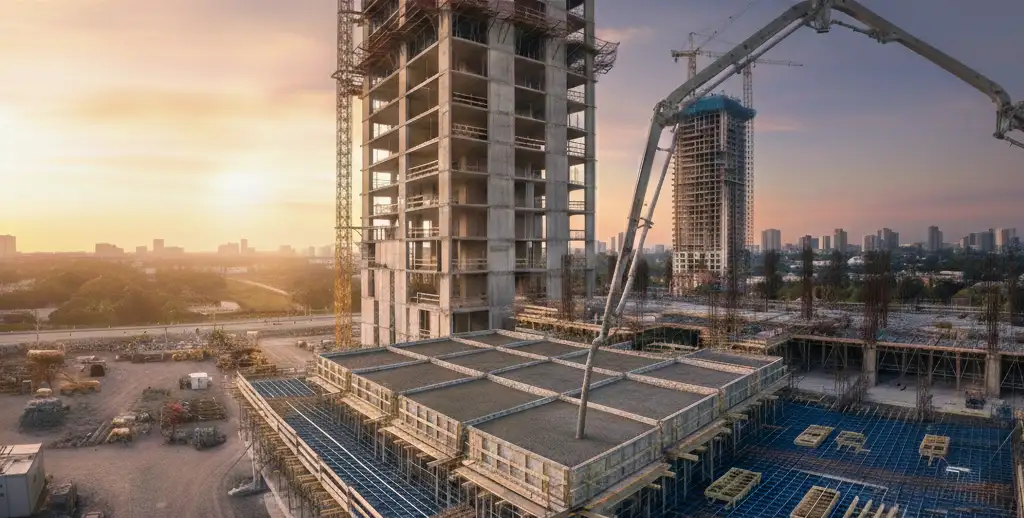
In today’s construction environment, delivering large-scale projects efficiently is no longer just about speed, it’s about coordination. As developments grow more complex and timelines tighten, the traditional separation of trades is increasingly exposing...
In 2026, the expectations for a high-performance FRP (Form, Reo, and Pour) contractor have evolved far beyond simply completing projects quickly. Today, the role of an FRP contractor extends to a broader focus on engineering...
Concrete is the backbone of modern construction. From high-rise residential towers to complex commercial developments, it forms the structural core of most large projects. Yet the environmental cost of concrete construction continues to attract growing attention...
High-rise construction projects depend on precision, coordination, and structural reliability. As towers continue to rise higher and programmes become tighter, the margin for error within the structural stage of construction continues to shrink. Even small...
In the past, formwork was often viewed as a temporary construction element. It was something assembled, used to shape concrete, then dismantled once the structural component cured. But in 2026, the role of formwork engineering has evolved significantly. Across modern...
Large-scale concrete structures are not defined by how quickly teams can book a pump or how efficiently they can mobilise labour at short notice. They are defined by consistency. When each pour proceeds as planned, when inspections are...