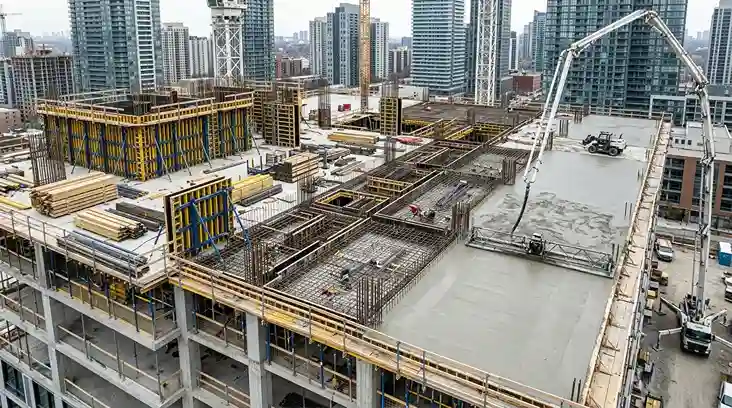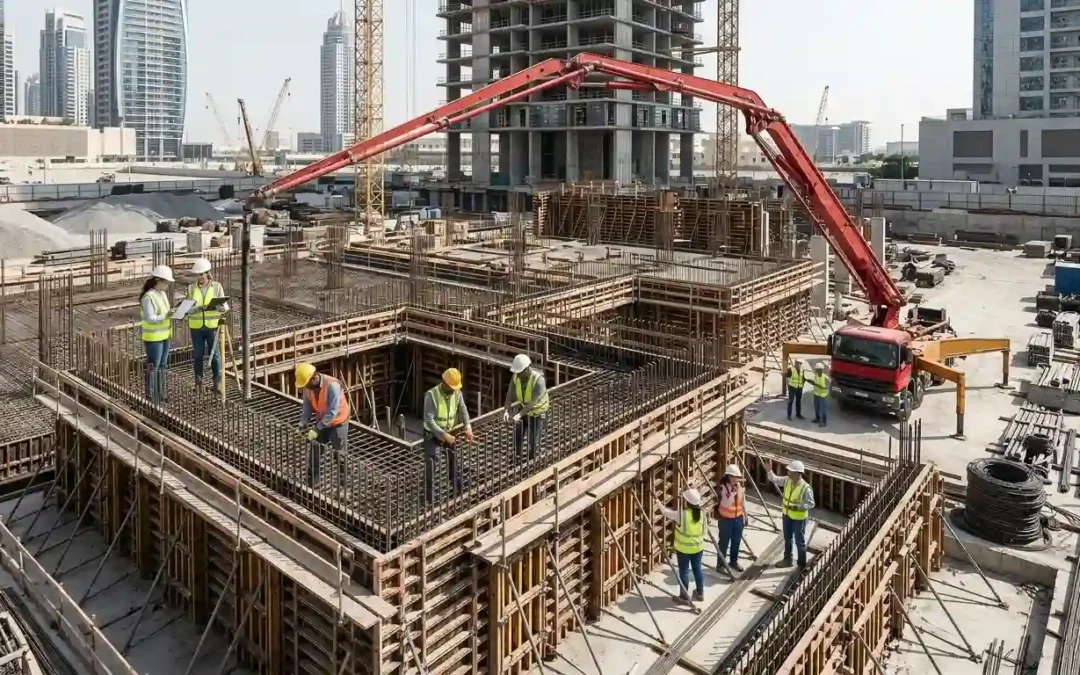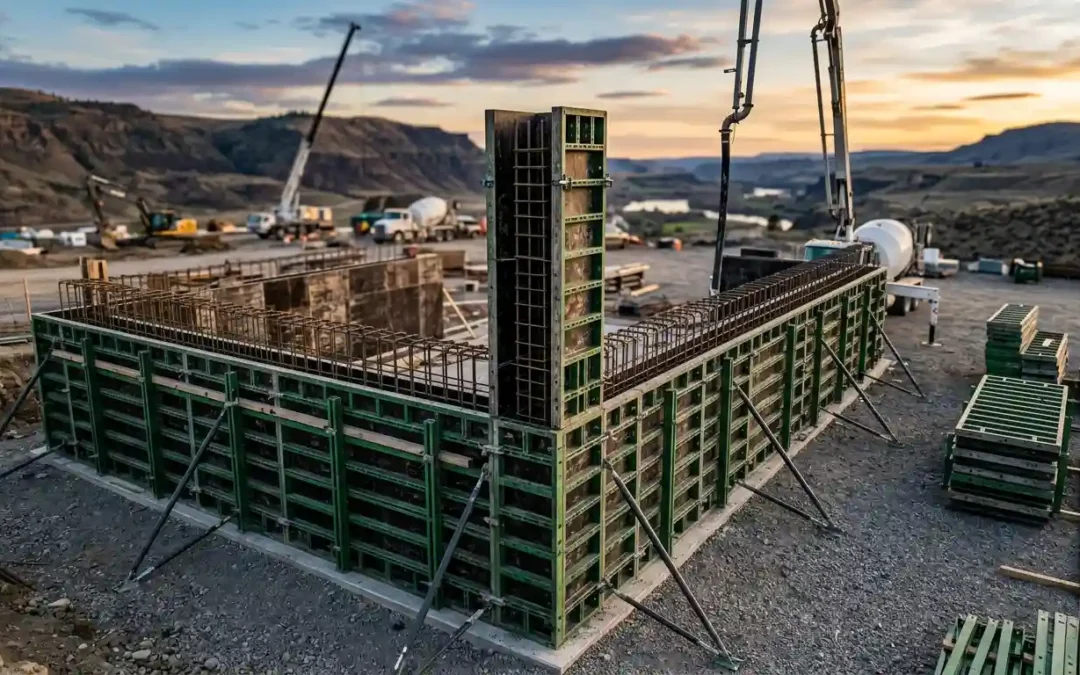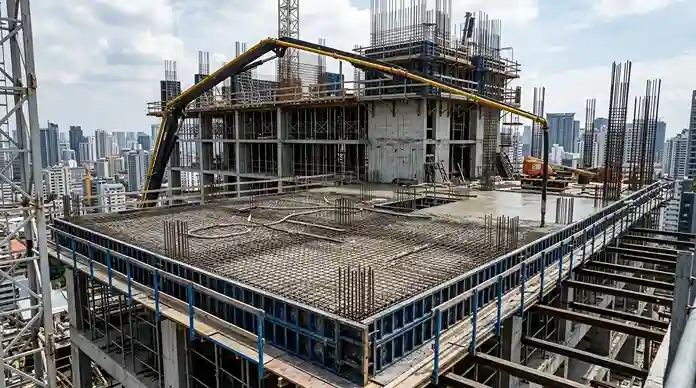
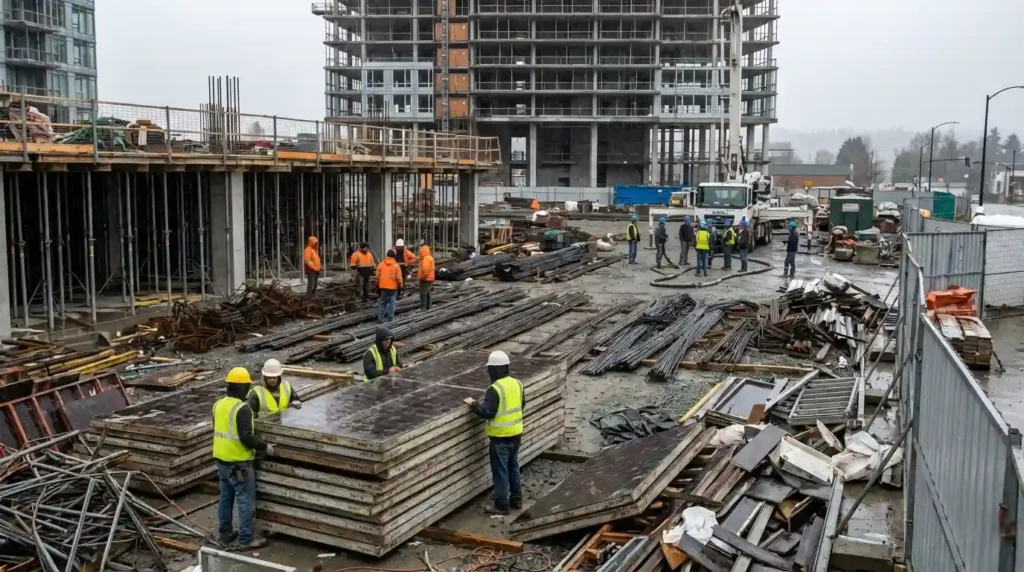
As the year comes to a close, most countries go through the same old routine: shorter workweeks, fewer workers available, industry shutdowns, and more pressure to reach important structural goals. One of the biggest problems with big projects is that FRP teams (form, reo, and pour) don’t work together as a unit. These seasonal changes make this clear. At this point, the structural package is at risk of timing gaps, sequencing problems, and delays that long after the holiday season.
Formwork teams may want to finish everything before the break, reo crews may be busy with other jobs, and concrete suppliers may not be open for a long week. Each group is doing its best on its own. But these separate efforts don’t often work together without a unified FRP coordination. Instead, small problems get worse, and a process that should go smoothly turns into a broken one that stops just when it needs to keep going.
The holiday season doesn’t have to stop a project, but it often does when FRP contractors work in their own groups. This is where unified FRP delivery becomes very important for keeping the programme on track.
Why the holiday period magnifies FRP delays
During the holidays, FRP delays get worse because important tasks need to be done at the right time, with constant work, and with reliable supply chains. These things are harder to get when the industry slows down. When FRP teams have different schedules, supervisors, and ways to talk to each other, every inefficiency gets worse because of fewer workers and shorter work hours. A delay that could be handled in the middle of the year could easily turn into days or weeks as teams try to get back together or make new plans.
During this time, this also gets harder to plan inspections, approvals, reinforcement changes, material deliveries, and concrete bookings. Engineers, certifiers, and suppliers often work with less capacity, so any mistake in the sequence has a much bigger effect. When form, reo, and pour teams don’t plan together, these pressures can turn small timing problems into big structural delays.
What happens when FRP teams work separately
When FRP teams don’t have a single, coordinated plan, it’s hard to know when the structural package will be delivered. The formwork crew might finish sooner than planned, but the reo team might not be able to work for three more days. By the time the reinforcement is done, the concrete booking slots might be full or the batching plants might not be able to work at full capacity.
This chain of misalignment doesn’t just slow down FRP teams; it also slows down cranes, deliveries, safety preparation, the next levels, and downstream trades. If there is no integration, each team works at its own pace, which causes gaps, inefficiencies, and last-minute scrambling to meet deadlines.
Formwork falls out of sync with reo installation
Formwork teams often want to complete shutters faster before the break, but if they don’t work with the steel fixing crews, finishing the formwork early doesn’t mean that the reo will be installed earlier. Instead, reo teams might get drawings that aren’t finished or are out of date, gaps that weren’t planned for, unclear load paths, or components that are missing. Even a small difference in one area can mean that steel has to be tied in later, which takes a lot of time. The result is lost time, more work to do, and a pour that doesn’t follow the planned cycle anymore.
Reo teams encounter sequencing gaps that reduce productivity
Steel fixing depends on formwork that is accurate and fully prepared. When teams work on their own, the handover between form and reo can be a pressure point. Mistakes that could be fixed quickly at other times of the year take much longer to fix around the holidays, when supervisors, cranes, and materials may not be available right away. This often means that the pour is delayed even more because of last-minute clarifications, having to go back and fix anchor points, or having to change the order in which steel is placed because the formwork is out of order.
Concrete pours shift, stretch, or fall off the cycle completely
When it comes to timing, concrete must be in time. A pour that is delayed by one or two days during the holidays can easily cause a shutdown. After that, the structural package is affected for weeks, not days. When FRP teams don’t work together, pours get moved because reo placement takes longer than expected, formwork adjustments take longer, concrete plant availability wasn’t checked early, and quality checks that need to be done together are delayed. If you lose even one pour before the shutdown, it can cause a chain reaction of delays. Post-tensioning, jumpform climbs, façade installation, and follow-on trades all get pushed back.
When FRP teams work in separate groups, every little delay adds up to a bigger problem with the programme, especially during the holidays. The expected form-reo-pour cycle turns into a broken process that uses up resources, raises costs, and pushes work into the new year. Even well-planned projects have trouble keeping up their momentum without unified coordination.
Why FRP integration is the key to avoiding delays
Integrated FRP solutions keep the structural cycle going by combining form, reo, and pour into one smooth process. Instead of dealing with three different subcontractors with different timelines and priorities, teams follow a single sequence with shared responsibility and regular communication. This method makes sure that everyone involved in the FRP cycle knows where they fit into the bigger picture and can plan accordingly.
When formwork, reo, and concrete teams communicate in real time, potential issues are identified early and resolved before they affect progress. Reinforcement adjustments, design clarifications, and sequencing requirements are managed collaboratively rather than becoming isolated problems that slow down later stages. Quality remains consistent throughout the structure because the entire FRP cycle is reviewed holistically rather than in isolated segments.
This level of integration prevents the timing gaps that typically arise during high-pressure periods like the pre-holiday rush. Instead of delays compounding, they are contained and resolved quickly. For large-scale developments, integrated FRP solutions often determine whether a project finishes several levels before shutdown or returns in the new year facing an avoidable backlog.
Why unified FRP delivery should be the industry standard
As structures become more complex, unified FRP delivery is increasingly seen as the most reliable way to maintain sequencing and reduce risk. Fragmented FRP systems create overlapping responsibilities, unclear communication, and inconsistent quality checks. A single integrated FRP provider eliminates these issues by offering one supervision structure, one communication pathway, and one accountable team.
This ensures a smoother workflow with fewer rework items, fewer delays, and a more predictable program. When all FRP stages operate as one, the structural package becomes stronger, more efficient, and more resilient to seasonal disruptions.
How the holiday period changes FRP teams coordination
The holiday period changes the way FRP teams must coordinate because its time pressures and limited resource availability demand precision. Every team must work within reduced schedules and ensure that sequencing aligns tightly enough to avoid last-minute bottlenecks. When FRP teams operate independently, these constraints become roadblocks that slow the entire structural package. Small timing mismatches between formwork, reo, and concrete contractors become larger, harder-to-resolve issues as the break approaches.
These seasonal constraints also compress project expectations. Teams race to hit specific milestones before shutdown, meaning even minor delays threaten activities such as inspections, reinforcement checks, and temporary works. Without unified FRP scheduling and shared communication pathways, the likelihood of tasks spilling into the new year increases significantly, creating early-year pressure that affects the entire program.
Practical steps to avoid FRP delays this holiday season
To keep the structural package moving through the holiday period, developers and contractors should:
- Plan FRP sequencing backwards from shutdown milestones
- Secure concrete booking windows early
- Confirm labour availability for form, reo, and pour teams
- Conduct reinforcement and formwork checks ahead of time
- Minimise last-minute design changes during the final weeks
- Establish one unified communication channel for all FRP activity
- Prioritise early inspections before industry shutdowns begin
- Partner with an integrated FRP team like Future Form to manage full-cycle delivery
A coordinated approach prevents the typical holiday bottlenecks and keeps the project moving as planned.
How Future Form keeps the FRP cycle moving during holiday slowdowns
Future Form keeps the FRP cycle moving by aligning all FRP teams through a single coordinated workflow designed specifically to prevent holiday disruption. Instead of managing separate schedules and assumptions, the entire FRP cycle follows one integrated plan that maintains momentum even when the industry slows.
This unified communication structure ensures early detection of issues and immediate resolution. Reinforcement discrepancies, design changes, and sequencing pressures are escalated quickly, minimising the delays that typically arise when multiple contractors must reconnect after scattered schedules. By removing fragmentation, Future Form ensures that every FRP stage transitions smoothly into the next.
Future Form also plans proactively around shutdown milestones, sequencing work backwards to ensure that critical levels are complete before the break. Dedicated supervision across the entire FRP cycle keeps quality consistent and ensures that teams meet pour dates without last-minute surprises. Even during the most disrupted season, Future Form keeps structural progress steady, reliable, and predictable.
Uniting teams for smoother project journeys
Holiday slowdowns are inevitable across most countries—but structural delays don’t have to be. When FRP teams work separately, projects lose momentum right when they need it most. Integrated FRP solutions bring clarity, coordination, and consistency to the form, reo, and pour cycle, ensuring that teams move together, not in isolation.
Future Form leads the way in unified FRP delivery, helping developers, contractors, and partners maintain structural progress with confidence, even during the busiest and most disrupted time of the year.
If your upcoming project needs smooth, reliable structural sequencing during the holiday period, it’s time to work with an FRP partner who keeps everything moving—no matter the season. Get in touch with Future Form to streamline your FRP delivery from the ground up.
References
Australian Constructors Association. (2023). Construction industry shutdown insights. Retrieved from: https://www.constructors.com.au/
Concrete Institute of Australia. (2022). Best practice guidelines for structural concrete sequencing. Retrieved from: https://www.concreteinstitute.com.au/
Engineers Australia. (2023). Structural coordination and project delivery guidelines. Retrieved from: https://www.engineersaustralia.org.au/
Safe Work NSW. (2022). Guidance on construction shutdown preparation and sequencing. Retrieved from: https://www.safework.nsw.gov.au/
Standards Australia. (2021). AS 3610: Formwork for concrete. Retrieved from: https://www.standards.org.au/